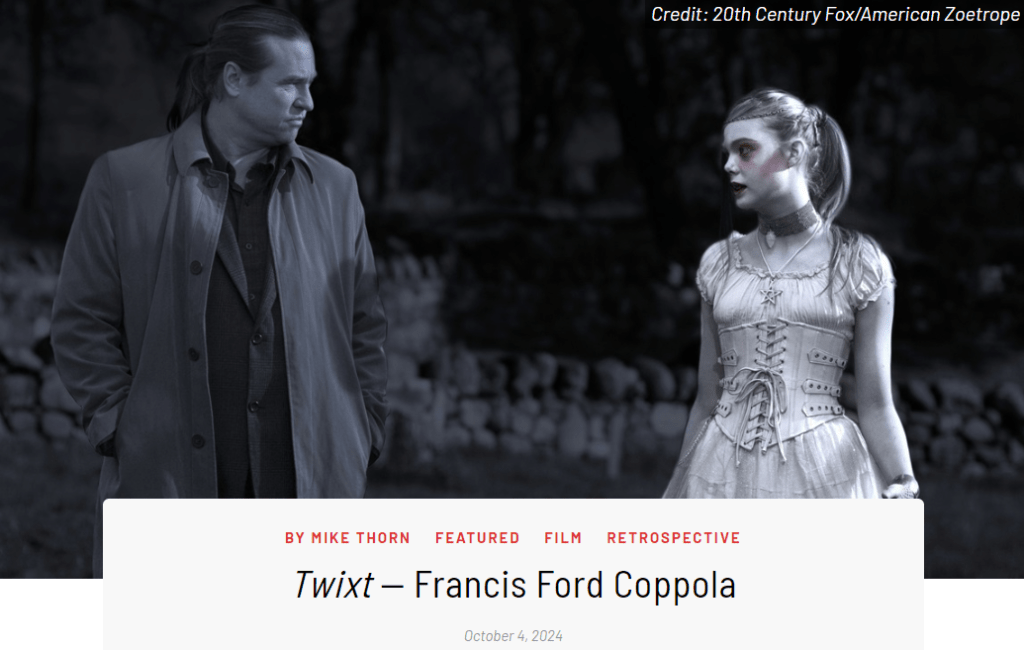
“The film’s lush, otherworldly dreamscapes foreground the theme of time by contrasting contemporary film technology against the aesthetics of Gothic pasts. Coppola fills Baltimore’s nocturnal visions with Expressionist gestures: tilted crosses and jagged shadows summon the ghosts of Murnau, Wiene, and Lang.”
“Director Alexandre Aja’s latest film, Never Let Go, occupies a deliberately liminal space. Its threadbare plot suggests a post-apocalyptic near future, but its central family is stuck in a Gothic past.”
“Sayuri makes overtures to the cultural anxieties underlying many haunted house narratives, with several lines pointedly alluding to what constitutes a ‘happy life.’ An early scene depicts a teacher asking her disinterested class to analyze a poem by posing questions such as ‘Where do we find happiness?’ and ‘What exactly is happiness?’ The film ultimately disavows the notion that domestic ownership equals anything like existential fulfillment or familial harmony. It locates horror in the conformist embrace of cultural repetitions, depicting its haunting as something like a tape stuck in a loop: the same ghostly giggle echoes through the house again and again, haunted TVs replay snippets of glitchy footage, and one character repeatedly watches the simulated reenactment of her beloved’s grisly death.”
“The Canyons and The Counselor represent an America unmoored from its own self-aggrandizing mythologies — the capitalist dream as nightmare of anxiety and violence. The films are haunted by symbols rather than subjects, made nowhere clearer than in McCarthy’s naming The Counselor’s title protagonist (played by Michael Fassbender) after his profession — he is a nameless intermediary, a metaphor.”
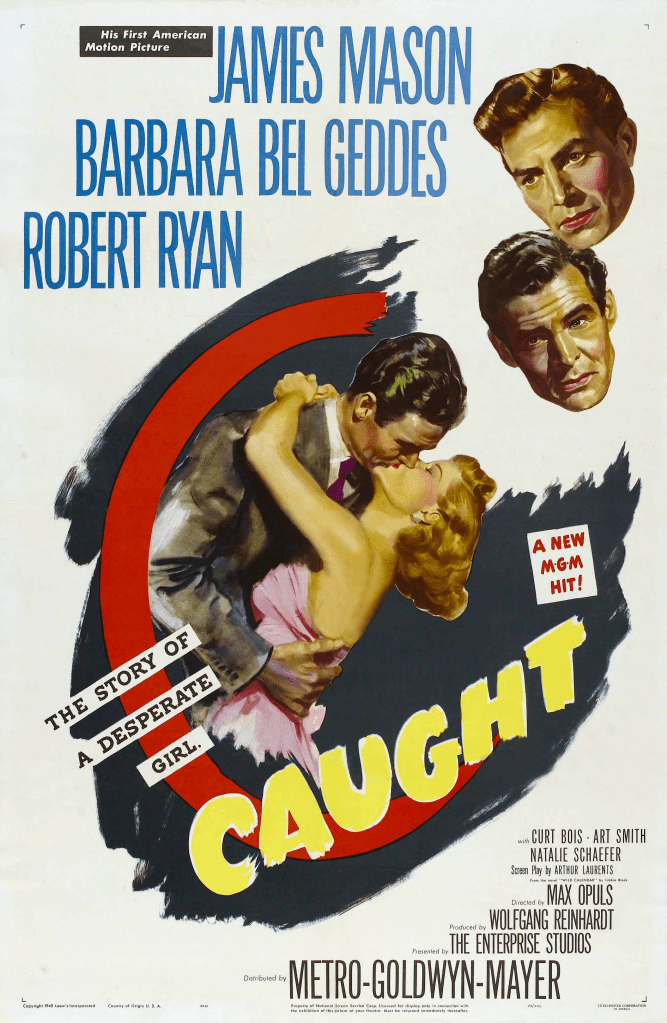
La Bête Humaine (Jean Renoir, 1938) The Best Years of Our Lives (William Wyler, 1946) Margie (Henry King, 1946) Daisy Kenyon (Otto Preminger, 1947) They Live by Night (Nicholas Ray, 1948) Caught (Max Ophüls, 1949) Lust for Life (Vincente Minnelli, 1956) The Man Who Knew Too Much (Alfred Hitchcock, 1956) See No Evil (Richard Fleischer, 1971) Trilogy of Terror (Dan Curtis, 1975) Mikey and Nicky (Elaine May, 1976) Pauline at the Beach (Éric Rohmer, 1983) A Better Tomorrow (John Woo, 1986) Patty Hearst (Paul Schrader, 1988) Jade (William Friedkin, 1995) Nixon (Oliver Stone, 1995) Stealing Beauty (Bernardo Bertolucci, 1996) Romance (Catherine Breillat, 1999) Ju-On: The Curse (Takashi Shimizu, 2000) Universal Soldier: Day of Reckoning (John Hyams, 2012)
Other standouts
After Death (Yevgeni Bauer, 1915) Satan’s Rhapsody (Nino Oxilia, 1917) Warning Shadows (Arthur Robison, 1923) A House Divided (William Wyler, 1931) Safe in Hell (William A. Wellman, 1931) Night at the Crossroads (Jean Renoir, 1932) A Night on Bald Mountain (Claire Parker & Alexandre Alexeieff, 1933) From Mayerling to Sarajevo (Max Ophüls, 1940) The Letter (William Wyler, 1940) The Woman in the Window (Fritz Lang, 1944) The Ghost and Mrs. Muir (Joseph L. Mankiewicz, 1947) The Woman on the Beach (Jean Renoir, 1947) The Reckless Moment (Max Ophüls, 1949) Stage Fright (Alfred Hitchcock, 1950) Gentlemen Prefer Blondes (Howard Hawks, 1953) French Cancan (Jean Renoir, 1955) A Kiss Before Dying (Gerd Oswald, 1956) Interlude (Douglas Sirk, 1957) The H-Man (Ishirô Honda, 1958) I Bury the Living (Albert Band, 1958) The Flesh and the Fiends (John Gilling, 1960) Allures (Jordan Belson, 1961) X: The Man with the X-Ray Eyes (Roger Corman, 1963) The Collector (William Wyler, 1965) The Birthday Party (William Friedkin, 1968) Secret Ceremony (Joseph Losey, 1968) Claire’s Knee (Éric Rohmer, 1970) The Last Run (Richard Fleischer, 1971) Super Fly (Gordon Parks Jr., 1972) Legacy of Satan (Gerard Damiano, 1974) Night Moves (Arthur Penn, 1975) The Haunting of Julia (Richard Loncraine, 1977) The Pied Piper (Jiří Barta, 1986) The Comfort of Strangers (Paul Schrader, 1990) Def by Temptation (James Bond III, 1990) Deep Cover (Bill Duke, 1992) The Tempest (Stanislav M. Sokolov, 1992) Green Snake (Tsui Hark, 1993) Affliction (Paul Schrader, 1997) Forever Mine (Paul Schrader, 1999) In the Bedroom (Todd Field, 2001) Auto Focus (Paul Schrader, 2002) Innocence (Lucile Hadzihalilovic, 2004) Universal Soldier: Regeneration (John Hyams, 2009) Nas: Time is Illmatic (One9, 2014) The Jinx: The Life and Deaths of Robert Durst (Andrew Jarecki, 2015) Beware the Slenderman (Irene Taylor Brodsky, 2016) Sick (John Hyams, 2022) Tár (Todd Field, 2022)
“Over the past few years I’ve had the privilege of enjoying an ongoing dialogue with one of my major creative influences, award-winning writer Kathe Koja. Two years ago, she and I discussed genre and process during the virtual launch for my second short story collection, Peel Back and See. Last year, we discussed our work’s relationship with cinema for In Review Online. While brainstorming about topics for future conversations, we decided to pursue the concept of numinosity: its permutations in literature in film and the role it plays in our own creative projects. This article is the result of our email thread on the subject.”
“What sets Eli Roth apart from other contemporary American horror directors is his unique braiding of current issues with high genre literacy. This holds true for his latest effort, Thanksgiving, an anti-consumerist holiday giallo that traffics openly in reflexivity.”
“Satan Wants You wisely elides ridiculing the era it depicts, instead level-headedly examining the factors that gave birth to Smith and Pazder’s book and its ensuing cultural hysteria.”










 Mike Thorn