“Horror That Grows On You: Mike Thorn’s Darkest Hours” – Alex Lander’s Review on One Critical Bitch

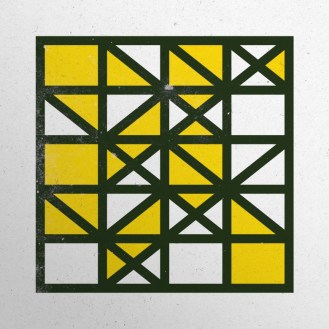
Illustration inspired by "Hair" by Mike Thorn | Review of Darkest Hours by Mike Thorn on onecriticalbitch.com
Art by Alex Landers, 2018

For her website One Critical Bitch, visual artist, critic and playwright Alex Landers wrote the most in-depth review of Darkest Hours yet. Read it here. Some of my favorite excerpts:

“As an opener, the short and sweet ‘Hair’ provides the special kind of hook that makes you afraid to continue, but somehow calls for multiple readings of its beautifully grotesque sentences. We are often made to believe that the unimaginable is the most terrifying, but the images Thorn conjures up are so horrifically imaginable that they’ll give you pause. And if you’re a true fan, you’ll probably push on.”

“Think again on Theodore’s desire: his hair lust is, in itself, horrific. But its his genuine, honest excitement as a lust-driven human that is both relatable and totally unmanageable. As hair grows on Theodore, so does our want for more: more grotesquerie, more cringeworthy vocabulary, more dunks in the hair-laden tub. It’s ingenious, really, in its metaphor for the genre itself. Horror can be an acquired taste – one that has the tendency to grow on you.”

“Darkest Hours is horror for horror people. For the ‘confirmed ghost story and horror film addict,’ if you will. But It’s also for people with strong emotions and a desire for philosophical thought. Funny, how horror often is.”

Huge thanks to Alex Landers! If you enjoy insightful and beautifully written criticism, hers is a site to follow.

Lydian Faust’s Forest Underground Ventures Through Off-Chart Internal Territory

forestunderground.jpg

Lydian Faust uses an intensive, boundary-pushing therapy session to frame her debut novella Forest Underground. The book’s “action” occurs mostly in the content of testimony and memory, but what Faust underlines most explicitly is the unexpected connection between two traumatized women—the doctor and the patient.

I’m impressed by Faust’s decision to use this structural approach to tell this story—she maneuvers through both the frame narrative and the use of multiple P.O.V.s with confidence and style. The novella benefits from her choice, because the closing revelations necessitate that readers are familiar with both main characters’ backstories.

Faust plays gleefully with many of the horror genre’s tropes—she delivers on the perverse/sacred space for ritual murder, dark familial pasts, forbidden asylum rooms, and the indeterminate line between perception and reality.  She seems to be as interested in horror’s applications to her characters as she is in the characters themselves.

There are a number of noteworthy things going on in this book, not least of which is Faust’s deliberate choice to navigate tricky structural terrain. There’s also an obvious interest in human psychology and the lasting impact of trauma and violence, and a sense for the ways in which horror can accomplish things not available to other genres.

Click here to buy your copy.

Renee Miller’s CHURCH is a fast and exciting thriller

Image result for church renee miller

“Maybe there are no gods at all.”

In her new novella Church, author Renee Miller fully commits to urgent plot development. She demonstrates obvious attentiveness to the impact of each scene’s beats and shifts, while also keeping constant sight of her overall narrative design. At under 200 pages, the book focuses always on energy and movement, and it’s all the better for it.

There’s an overarching plot about a religious cult’s psychological strangle-hold on a young woman named Carol, and her Catholic boyfriend Ray’s attempts to wrestle her free. When it comes to the cult’s machinations, Miller trusts wisely in our post-Jonestown massacre knowledge and the ever-present residue of Satanic panic. She doesn’t over-explain, instead delving into the cult’s belief system only when absolutely necessary. The results are something like a whacked-out, grown-up version of Robin F. Brancato’s young adult novel Blinded by the Light (1978). I can dig that.

Maybe what’s most interesting about this book is its management and depiction of hierarchies, both physical and psycho-spiritual. Miller pits intrepid Christian protagonist Ray against badder-than-bad cult-master Darius in a swift and tightly plotted war, and the book never pauses unnecessarily to take in the scenery. There’s a scene near the end that finds the characters arguing about the nature of evil, and at this key moment Miller slyly subverts some of the previously established expectations about religion and morality.

This is most definitely the work of a knowledgeable and experienced thriller writer. Miller delivers completely on the genre’s promise of suspense, conflict and shock, writing in lean, speedy style. The book is impressively readable; producing something so damn digestible is no easy task, and for that reason I give Renee Miller major kudos. Church is worth your time.

Order the book on Amazon.

Behind the Mask – Tales from the Id Now Available on Amazon

behindthemask
Jennifer Loring and I co-wrote a domestic Satanic thriller for BEHIND THE MASK – TALES FROM THE ID, a new anthology edited by Steve Dillon, and it’s now available on Amazon! Also features stories by Clive Barker, Ramsey Campbell, Algernon Blackwood, Edgar Allan Poe, Mark Allan Gunnells and Jeff C. Stevenson (whose work has been praised by the likes of Dean Koontz and Jonathan Kellerman)… and many other exciting contributors.

Click here to order your copy.

Top 10 Lists for 2018 (Books, Films, Albums)

Starting in 2017, I decided to post a new top 10 films list every January 1. This year, I’ve decided to do the same for books and albums. My picks for 2018:Moby-Dick_FE_title_page

Books
01. Moby-Dick; or, the Whale, Herman Melville (1851)
02. It, Stephen King (1986)
03. Songs of Innocence and of Experience, William Blake (1789)
04. Melmoth the Wanderer, Charles Robert Maturin (1820)
05. Frankenstein, Mary Shelley (1818)
06. To the Lighthouse, Virginia Woolf (1927)
07. The Monk, Matthew Gregory Lewis (1796)
08. Ulysses, James Joyce (1922)
09. McTeague: A Story of San Francisco, Frank Norris (1899)
10. The Obscene Bird of Night, José Donoso (1970)

prince_of_darkness-poster
Films

01. Prince of Darkness, John Carpenter (1987)
02. Star Wars Episode III: Revenge of the Sith, George Lucas (2005)
03. La Région Centrale, Michael Snow (1971)
04. The Crowd, King Vidor (1928)
05. The Texas Chain Saw Massacre, Tobe Hooper (1974)
06. Citizen Kane, Orson Welles (1941)
07. Jeanne Dielman, 23, Quai du Commerce 1080 Bruxelles, Chantal Akerman (1975)
08. Alae, Lillian Schwartz (1975)
09. New York Subway, Billy Bitzer (1905)
10. Intolerance: Love’s Struggle Throughout the Ages, D.W. Griffith (1916)

beachboys
Albums
01. Pet Sounds, The Beach Boys (1966)
02. Streetcleaner, Godflesh (1989)
03. Black Sabbath, Black Sabbath (1970)
04. Street-Legal, Bob Dylan (1978)
05. Pornography, The Cure (1982)
06. Electronic Meditation, Tangerine Dream (1970)
07. “Heroes”, David Bowie (1977)
08. Treasure, Cocteau Twins (1984)
09. From the Inside, Alice Cooper (1978)
10. Structures from Silence, Steve Roach (1984)

The Last Jedi: Enjoying Corporate Cinema’s Quasi-Risks While They Last

The Last Jedi

Following my Bright Lights Film Journal reviews of Attack of the Clones and Revenge of the Sith, I wrote a piece on Disney’s newest Star Wars spin-off, The Last Jedi.

“To date, Rian Johnson’s The Last Jedi has supposedly encountered ‘polarizing’ reactions. I wonder how this could possibly be the case, seeing as Johnson’s film lifts most of its framework and sensibility from the safer-than-safe ‘coming attractions’ reel that was The Force Awakens. The main difference between the two films is that Johnson’s work shows some evidence of authorial perspective and formal attentiveness, whereas Abrams’s carries the uncanny sense of something carefully and neurotically manufactured by a corporate collective in an effort to appease fans’ broadest, basest desires. Given the purportedly divisive reactions surrounding Last Jedi, I also wonder to what extent Disney’s marketing team is manufacturing or at the very least magnifying voices of dissent – why should a well-crafted and intentional variation on The Force Awakens incite animosity and disdain? Amplifying voices of disagreement would make sense as a marketing move, given Force’s swift downward critical trajectory. The first spin-off celebrated hyperbolic praise during the first month or two of its release, but its reputation seems to have drastically slipped in a surprisingly short amount of time. The popular critical and cultural narrative now deems it “too much like A New Hope,” which is puzzling, given that George Lucas’s complex and visually dense prequels have been retroactively damned for steering too far from their predecessor’s ‘roots.'”

Read the full review here.

Devious Dialogues: Mike Thorn and A.M. Stanley on the Psycho Franchise


Alfred Hitchcock’s legendary 1960 film adaptation of Robert Bloch’s Psycho is a seminal film for the horror genre’s development. That it ended up spawning a six-film franchise, and even a recent television series, is both puzzling and fascinating, but the franchise itself has provided a surprisingly varied approach to the depiction of killer Norman Bates. For their latest Devious Dialogues piece, A.M. (Anya) Stanley and Mike Thorn discuss the original film and all of its cinematic successors.

Mike: By now, the title Psycho is as bound up with Alfred Hitchcock’s film adaptation as The Shining is with Stanley Kubrick’s 1980 version of Stephen King’s book (if not more so). But, as with Kubrick’s Shining, Joseph Stefano’s script owes so much to Robert Bloch’s excellent novel, published the year before the film’s 1960 release. It’s probably impossible to write anything about this film that hasn’t already been written, but on this viewing, I noticed how effectively Hitchcock directs Norman Bates’ (Anthony Perkins) post-murder clean-up. This sequence effectively recalibrates the film’s P.O.V. and lays out all the routine details in such a painstakingly patient way. What struck you most on this recent viewing?

Anya: This time around, I ended up replaying the parlor scene a few times with a new appreciation for its bird imagery and sly suggestion of character intentions. Everything from the subtextual dialogue to the staging of the actors frames Norman and Marion (Janet Leigh) as predator and prey, respectively. As they sit among stuffed birds, Norman goes from stroking a tame, non-threatening bird at eye-level to leaning forward in a low-level frame along with intimidating, hawkish birds of prey as he becomes agitated about his mother. He notes aloud that Marion “eats like a bird.” At times, he is shot with both predatory and docile birds alongside him within the same frame, similar to his own conflicted psyche. From beginning to end, the mise-en-scene within the parlor exchange tells us everything we need to know about Norman, most notably his personality and relationship with his mother. We all talk about the shower scene and the final monologue of Psycho, but, as you’ve pointed out, there are plenty of brilliant moments worth absorbing.

Read the latest “Devious Dialogues” entry in Vague Visages.

Create a website or blog at WordPress.com

Up ↑