Review: ‘Like Jagged Teeth’ – Betty Rocksteady’s Supernatural Bad Dream Novella

Unknown's avatarVague Visages (Vawg-Vee-Sawj)

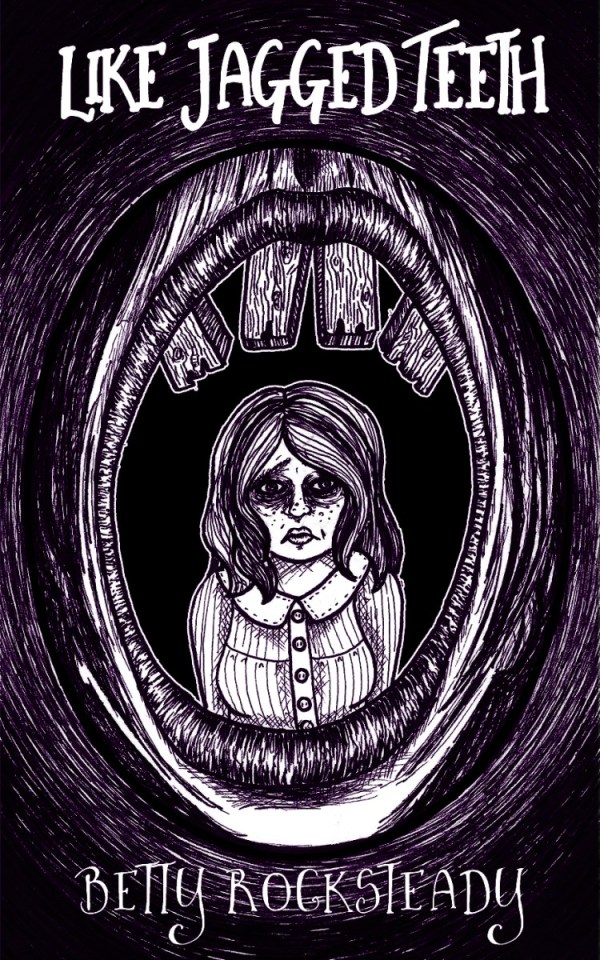
Many of the greatest supernatural horror stories revolve around mourning and loss. Often, the ghost plays not only the object of fear, but also acts as the remnants of unresolved pain or relationships cut painfully short. Betty Rocksteady’s new novella, Like Jagged Teeth, taps into this commonality, using the pain of grief as a driving force for both character psychology and narrative movement. It couches its ideas within the logic of nightmares while also attributing its plot with qualities not often associated with strictly supernatural horror. Specifically, it deals heavily and unapologetically with disgust and grotesquerie.

The plot begins with protagonist Jacalyn leaving an awkward party, feeling a little sad and hollow. When a group of men start following her down the dark street and harassing her, Jacalyn’s recently deceased grandfather (“Poppa”) suddenly drives up and interferes. He invites his granddaughter into his vehicle, and although she is surprised, her…

View original post 745 more words
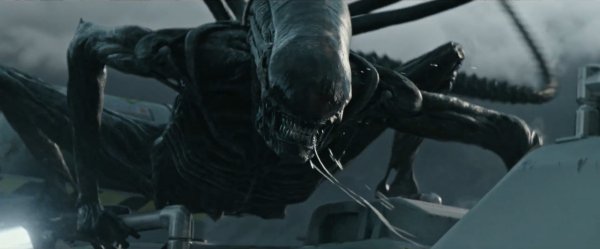
Devious Dialogues: A.M. Novak and Mike Thorn on the ‘Alien’ Franchise

Unknown's avatarVague Visages (Vawg-Vee-Sawj)

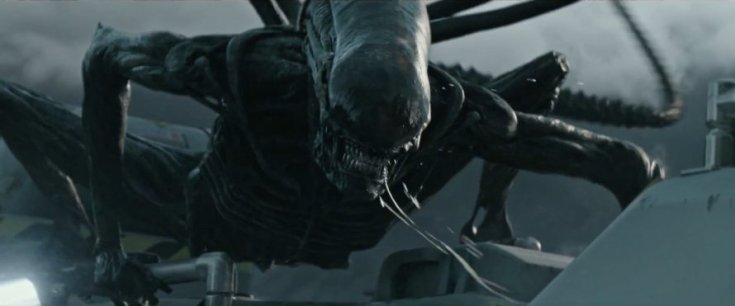
With the release of Alien: Covenant this month, the horror cineaste community has been buzzing about Ridley Scott’s latest work and the entire Alien franchise. Scott’s original film was widely acclaimed in 1979, and it’s now considered one of the top horror films of all time. Alien spawned three direct sequels, a crossover film that we dare not speak into existence, a prequel and now a new 2017 entry. In anticipation of Alien: Covenant’s release, Vague Visages contributors A.M. Novak and Mike Thorn take a look at the legendary sci-fi series.

Anya: Before we even get into each individual film, I have to ask — which film is your favorite?

Mike: I’ve looked ahead at your other questions, and I expect that some of my opinions on this franchise will be deemed scandalous at best. I love all four of the original films, and also hold Paul W.S. Anderson’s AVP:…

View original post 2,722 more words

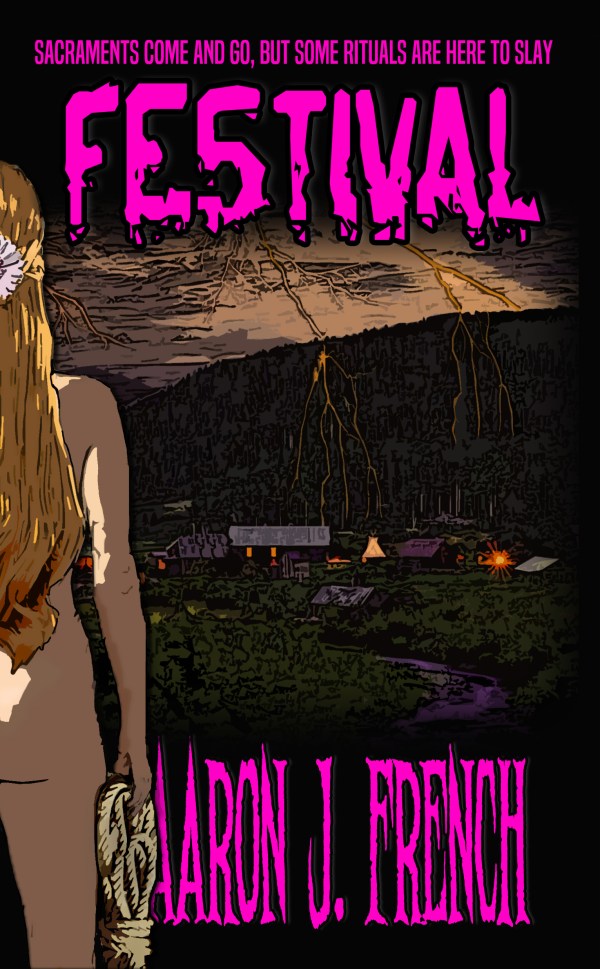
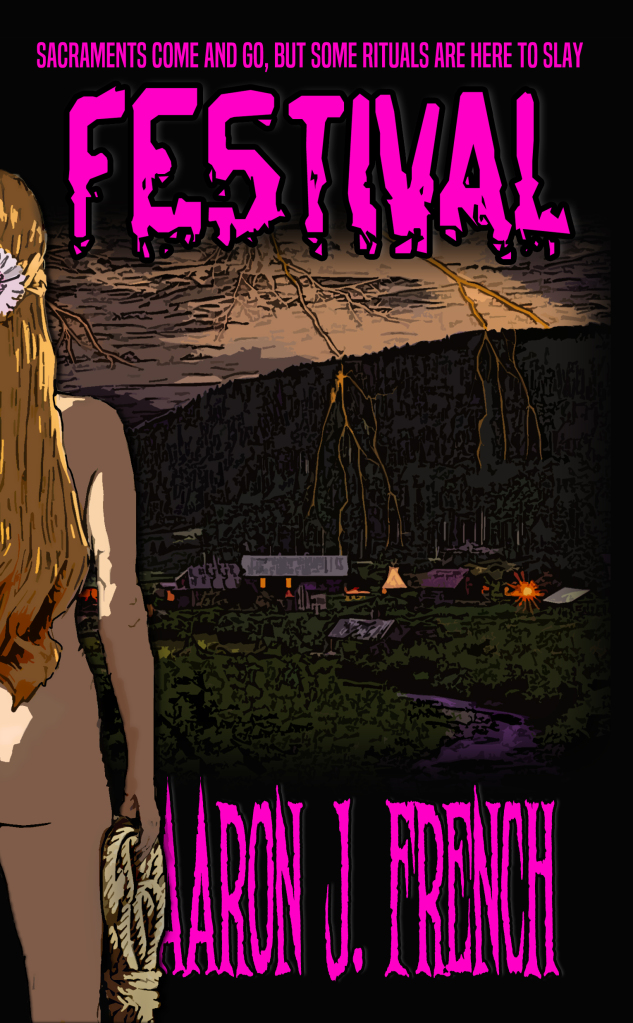
Book Review: Gender and Genre in Aaron J. French’s ‘Festival’

Unknown's avatarVague Visages (Vawg-Vee-Sawj)

Stephen King’s Danse Macabre (1981) offers a number of approaches for interpreting horror cinema and literature. Throughout his study, King touches repeatedly on the notion of “catharsis,” but also on the genre’s ability to tap into sociocultural “pressure points,” accessing what he describes as “artesian wells” of collective anxiety. At one point, he rather glibly suggests that a profound conservatism historically underlies the genre at large, stating that the horror story, beneath its fangs and fright wig, is really as conservative as an Illinois Republican in a three-piece pinstriped suit; that its main purpose is to reaffirm the virtues of the norm by showing us what awful things happen to people who venture into taboo lands. Within the framework of most horror tales we find a moral code so strong it would make a Puritan smile. The horror story most generally not only stands foursquare for the Ten Commandments…

View original post 695 more words

Vague Visages Short Stories: Speaking of Ghosts by Mike Thorn

Unknown's avatarVague Visages (Vawg-Vee-Sawj)

Jem wasn’t sure how long he’d been gazing into his scotch glass, but he came back to reality at the sound of Raymond’s cough.

According to Jem’s educated guess, Raymond was at least twice his age, but tonight the man looked even older. The aged fellow’s vast torso heaved under a shirt and dinner jacket, his bloated face gleaming red over a bowtie. Occasionally, Raymond ran an arthritis-knotted hand through the sparse gray strands floating on his skull; his reach extended just as often toward the dwindling bottle of whiskey, which he’d kept within close proximity for the majority of the evening.

Jem’s living room was a space of uncertainty: diamond orbs without visible purpose collected dust on the coffee table, a rare Edvard Munch awkwardly shared wall space with discount wall art. Raymond glanced listlessly at one particularly horrid sea turtle print, coughed his bookish cough and swilled scotch…

View original post 2,802 more words

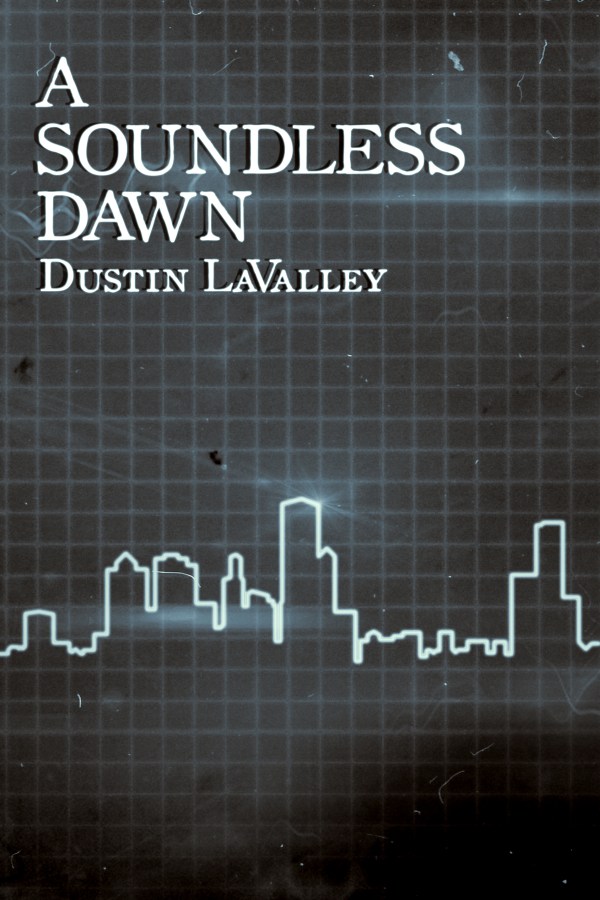
Pain and Three Kinds of Death in Dustin LaValley’s ‘A Soundless Dawn’

Unknown's avatarVague Visages (Vawg-Vee-Sawj)

So what is Dustin LaValley’s A Soundless Dawn all about? Well, for one thing, it’s about pain. Yes, there’s plenty of pain in this book… a lot of it is emotional pain, the kind that comes with bad memories, those past moments that afflict your mind with noisy insistence at ungodly hours. There are bad party vibes and eerie urban visitations and suicides and giant, lurching creatures made of rainwater. There are other kinds of pain in A Soundless Dawn, too — plenty of physical, psychological and metaphysical pain, and more often than not it’s attached to the book’s clearest thematic underpinning: Death.

“Death isn’t simple,” LaValley’s narrators and transient characters repeatedly inform readers. And one suspects that LaValley knowingly conveys this sentiment through his formal decisions; by all means, this is an unusually constructed book. The statement that “death isn’t simple” comes first from “the dirty man” who…

View original post 614 more words

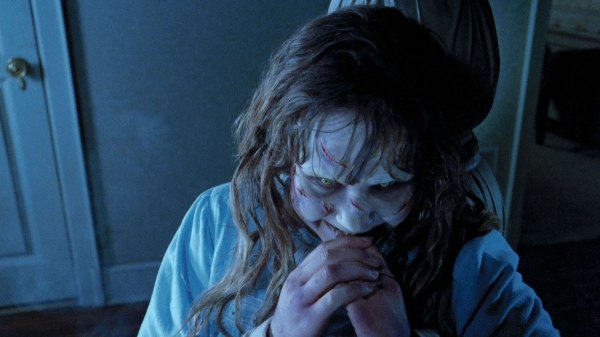
Devious Dialogues: Mike Thorn and A.M. Novak on ‘The Exorcist’ Franchise

Unknown's avatarVague Visages (Vawg-Vee-Sawj)

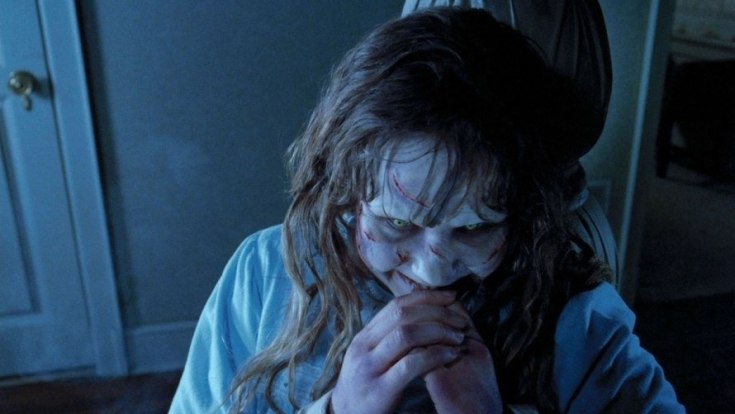
For their third horror crosstalk, Mike Thorn and A.M. (Anya) Novak discuss William Friedkin’s 1973 classic The Exorcist and its controversial sequels/prequels. Over 40 years after the initial release, the original film still enjoys widespread acclaim and constant reference, while the other installments remain divisive. Novak and Thorn compare thoughts and opinions, while also considering The Exorcist’s deeper meanings and implications.

Mike: I was only 12 or 13 when I first saw The Exorcist on TV, which almost definitely helps explain why I found it so terrifying. But I often wonder how much my upbringing might also factor into my strong response to this film; as someone who was raised in a Catholic household, am I more sensitive to the subject matter? While I identify as an agnostic at this point in my life, I feel like having that religious presence in my childhood probably affects my reaction in a big way. I think this comes through…

View original post 2,449 more words

‘No desire if it’s not forbidden’: Dread, eroticism, and text messaging in Personal Shopper

Personal Shopper text messages, Personal Shopper eroticism, Personal Shopper horror
The message comes from an unknown number: “I know you.” As Maureen (Kristen Stewart) — a medium who is grieving over the recent death of her brother, Lewis — goes through Paris transit security, the messenger continues: “And you know me…You’re off to London.” When Maureen responds with her own text, demanding that the messenger reveal her or his identity, the answer is teasingly ambiguous: “Have a guess.”

Read the full article in The Seventh Row.

Looking Back at Camp Crystal Lake: Mike Thorn and A.M. Novak on the ‘Friday the 13th’ Series

Always a pleasure to chat horror with another genre fan. This time, A.M. Novak and I take on Jason Voorhees.

Unknown's avatarVague Visages (Vawg-Vee-Sawj)

In the spirit of their previous crosstalk about the Halloween franchise, Mike Thorn and Anya Stanley sat down to discuss another iconic horror series: Friday the 13th. With recent news of the hyped F13 reboot being abandoned by Paramount, Camp Crystal Lake’s larger-than-life supervillain Jason Voorhees remains as relevant as ever. Where does the series go from here?

Anya: On February 6th, 2017, it was announced that Paramount/Platinum Dunes had canceled Friday the 13th, Part 13, citing low box office numbers for Rings. Are you disappointed?

Mike: I’m very disappointed. It seems counter-intuitive to assume that Rings’ poor earnings somehow indicate a lack of interest in another completely unrelated horror franchise. I think if they had made a stronger sequel, it’s likely that it would’ve seen better financial results. Speaking purely as a fan of genre movies, and of the movie-going experience, I was very excited…

View original post 1,389 more words

The Aesthetic and Formal Challenges of Jean-Luc Godard’s ‘Contempt’

Unknown's avatarVague Visages (Vawg-Vee-Sawj)

michel-piccoli-le-mepris

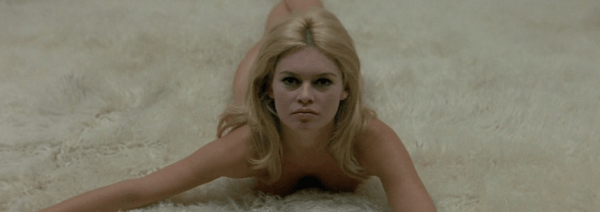
Jean-Luc Godard’s Contempt (Le Mépris, 1963) revolves around the fissures and overlaps between several artistic forms: Homer’s The Odyssey and its fictional filmic adaptation, Alberto Moravia’s 1954 source novel, and finally Contempt itself, incorporating all of the above. Rather than making gestures to enforce the suspension of disbelief, Godard’s film foregrounds its role in this complicated dialectical network; specifically, it announces itself immediately and loudly as an object of cinema. The film’s opening minutes feature a voice-over narrator reading the cast and crew credits, and a shot of a tracking shot of Francesca (Giorgia Moll). This opening resists the pact of fictional film, which strives for the importance of “building false reality.” Contempt declares itself outright as a combination of dialectical strategies wherein cinema is the central method (or, quite literally, the lens). The opening sequence concludes with a reading of André Bazin’s quote, “Cinema shows us a world…

View original post 780 more words

Create a website or blog at WordPress.com

Up ↑