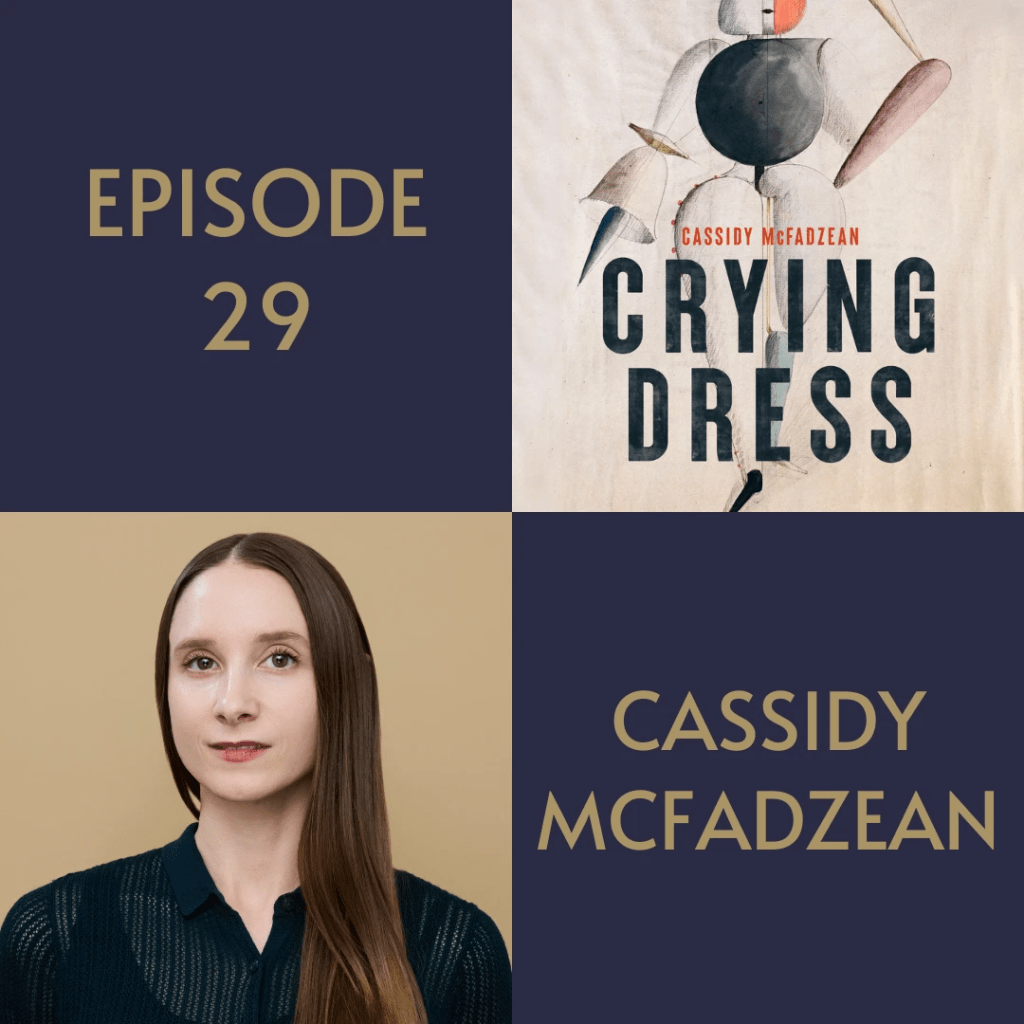
In this interview, we chat with Cassidy McFadzean about skewing prepositions, trusting the reader, opting for vibes over plot, and so much more.
Cassidy McFadzean is the author of three books of poetry, most recently Crying Dress (House of Anansi, 2024). Her fiction has appeared in Joyland, The Walrus, Hazlitt, and Dead Writers (Invisible Publishing, 2025). Cassidy was born in Regina, earned an MFA in poetry from the Iowa Writers’ Workshop, an MFA in fiction from Brooklyn College, and now lives in Toronto. She was the 2024-2025 Writer-in-Residence at Sheridan College, and is the 2025-2026 Poet-in-Residence at Arc Poetry Magazine.
Books mentioned in this episode:
The Weak Spot — Lucie Elven
Bird by Bird — Anne Lamott
Slows: Twice — T. Liem
Anne of Green Gables; Chronicles of Avonlea; Emily of New Moon; The Story Girl — Lucy Maud Montgomery
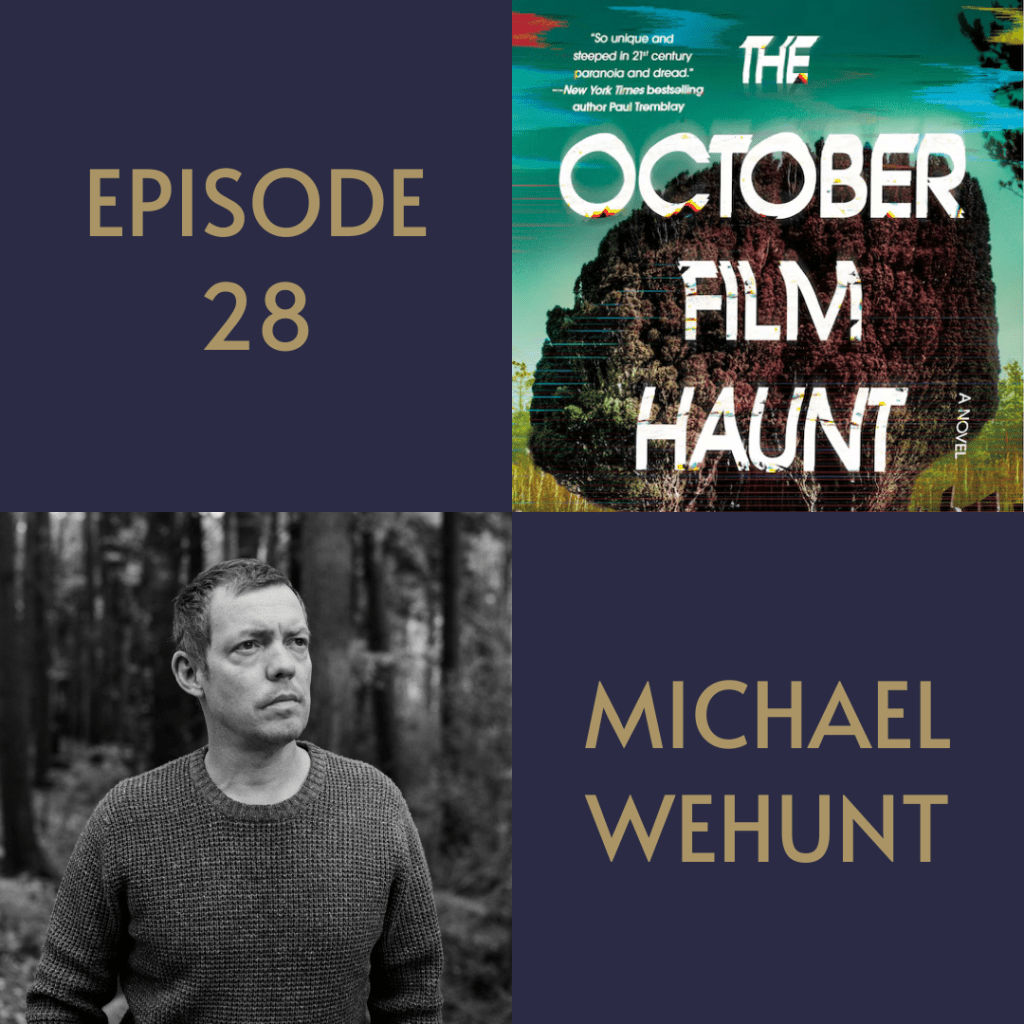
In this interview, we chat with Michael Wehunt about the administrative side of professional writing, the unanticipated weirdness of public selfhood, the “moment before the moment”, and so much more.
Michael Wehunt has been a finalist for the Bram Stoker Award, multiple Shirley Jackson Awards, and the International Association for the Fantastic in the Arts’ Crawford Award. In Spain, his translated works have garnered nominations for the Premio Ignotus and Premio Amaltea, winning the latter. He haunts the woods of Decatur, Georgia, with his partner and their dog. Together, they hold the horrors at bay. Most recently, he is the author of the novels The October Film Haunt and Nightjars.
Books and poems mentioned in this episode:
Ancient Images; The Grin of the Dark; Incarnate — Ramsey Campbell
Generation X: Tales for an Accelerated Culture — Douglas Coupland
Poems 1962-2020 — Louise Glück
Carrie — Stephen King
Beings — Ilana Masad
The God of the Woods; Long Bright River — Liz Moore
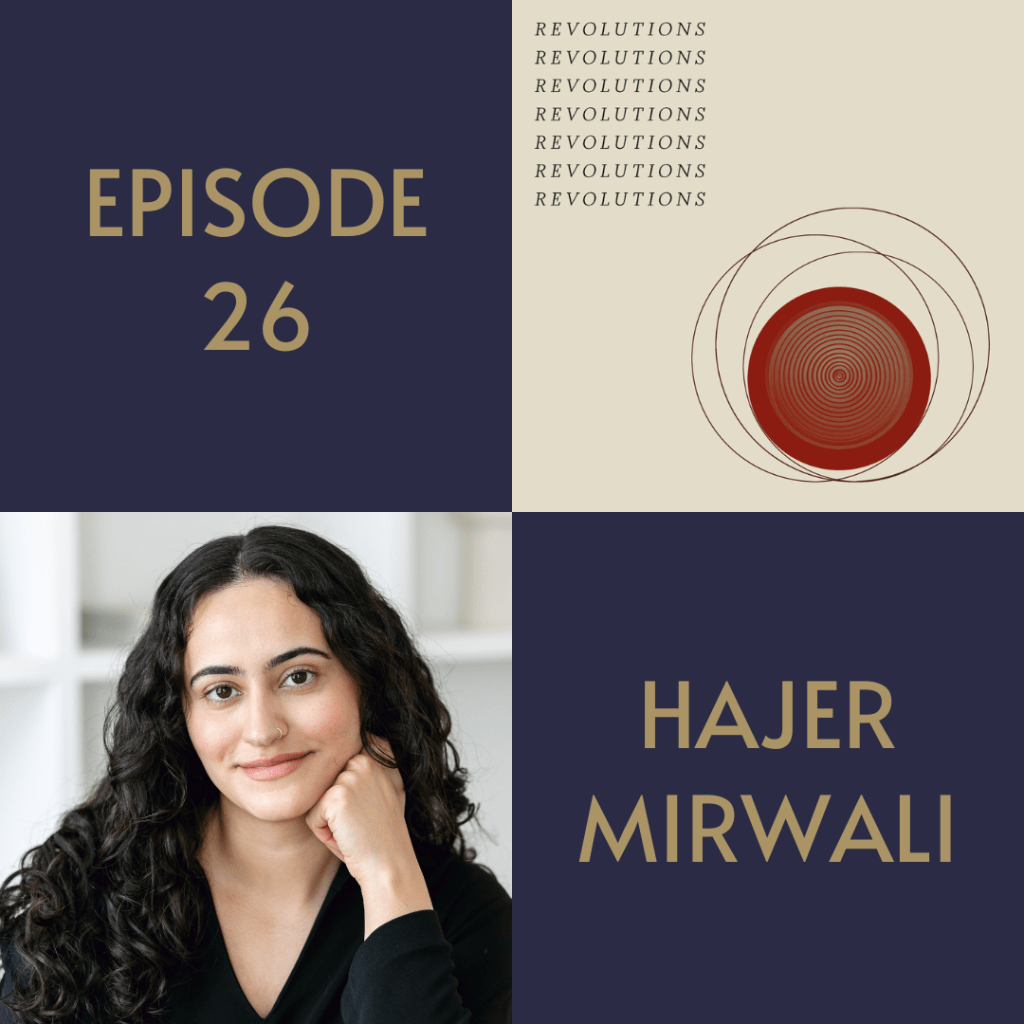
In this interview, we chat with Hajer Mirwali about cross-disciplinary work, embodied writing, poetic mad libs, and so much more.
Hajer Mirwali is a Palestinian and Iraqi writer living in Toronto. Her first book, Revolutions (Talonbooks, 2025), is a collection of poetry on shame, pleasure, and Arab Muslim girlhood. Two poems from the collection also appear in an anthology of Palestinian poetry called Heaven Looks Like Us (Haymarket Books, 2025). Hajer’s work has been published in The Ex-Puritan, Brick Magazine, Room Magazine, and Joyland. She has an MFA in Creative Writing from the University of Guelph, and a BA in Creative Writing from York University.
Reading is arguably the most crucial practice for any serious writer. In this course, you will “reverse engineer” acclaimed short stories to determine how and why they work. You will use these stories as lenses into key aspects of effective fiction (dialogue, plotting, voice, character, etc.) The course will help you to identify the key features of various distinctive prose styles, and you will participate in guided writing exercises inspired by those styles.
Winter term:
Wednesdays, Feb. 11 to March 25 (6 weeks, no class March 4) 6:30 – 8 p.m. $135 (+ HST)
In this interview, we chat with Kasia Van Schaik about reverse outlining, asking “what if”, sublimating emotion through landscape, and so much more.
Kasia Van Schaik is the author of the Giller Prize-nominated story collection We Have Never Lived on Earth and the forthcoming book of memoir and cultural criticism, Women Among Monuments. With Myra Bloom, she is the co-editor of the essay collection, Shelter in Text: Essays on Dwelling and Refuge. Kasia’s writing has appeared in Electric Literature, the LA Review of Books, Room, The Rumpus, the Best Canadian Poetry, and the CBC. Kasia holds a PhD in literature from McGill University and is assistant professor of English and co-director of Creative Writing at the University of New Brunswick in Fredericton, Wolastoqiyik territory.
Books mentioned in this episode:
Wuthering Heights — Emily Brontë
The Secret Garden — Frances Hodgson Burnett
Autobiography of Red — Anne Carson
Boyhood; Youth; Summertime — J. M. Coetzee
Outline; Transit; Kudos — Rachel Cusk
The Days of Abandonment; the Neapolitan Quartet — Elena Ferrante
In this interview, we chat with Jean Marc Ah-Sen about comic books, literary scenes, flipping the script on what a book can be, and so much more.
Jean Marc Ah-Sen is the author of Grand Menteur, In the Beggarly Style of Imitation, and Kilworthy Tanner. His writing has appeared in McSweeney’s Quarterly Concern, Literary Hub, Catapult, The Comics Journal, Maclean’s, The Walrus, and elsewhere.
Books mentioned in this episode:
The Fall – Albert Camus
I Dreamed I Was a Very Clean Tramp – Richard Hell
The Talented Mr. Ripley – Patricia Highsmith
Intimacy – Hanif Kureishi
Biography of X – Catherine Lacey
Ada or Ardor: A Family Chronicle – Vladimir Nabokov
Anti-Woo: The Lifeman’s Improved Primer for Non-Lovers; The Theory and Practice of Gamesmanship: Or the Art of Winning Games Without Actually Cheating – Stephen Potter
Lobotomy: Surviving the Ramones – Dee Dee Ramone
Endling – Maria Reva
The Dying Animal – Philip Roth
Striptease – Georges Simenon
The Handyman Method – Andrew Sullivan
Anna Karenina – Leo Tolstoy
The Island of Doctor Moreau; The Time Machine – H. G. Wells
In this interview, we chat with Ramsey Campbell about creative instincts, happy accidents, eerie children’s tales, and so much more.
The Oxford Companion to English Literature describes Ramsey Campbell as “Britain’s most respected living horror writer”, and the Washington Post sums up his work as “one of the monumental accomplishments of modern popular fiction”. His awards include the Grand Master Award of the World Horror Convention, the Lifetime Achievement Award of the Horror Writers Association, the Living Legend Award of the International Horror Guild and the World Fantasy Lifetime Achievement Award. In 2015 he was made an Honorary Fellow of Liverpool John Moores University for outstanding services to literature. His latest novels are Fellstones, The Lonely Lands, The Incubations and An Echo of Children. His Brichester Mythos trilogy consists of The Searching Dead, Born to the Dark and The Way of the Worm. His collections include Waking Nightmares, Ghosts and Grisly Things, Told by the Dead, Just Behind You, Holes for Faces, By the Light of My Skull, Fearful Implications, and a two-volume retrospective roundup (Phantasmagorical Stories) as well as The Village Killings and Other Novellas. His non-fiction is collected as Ramsey Campbell, Probably and Ramsey Campbell, Certainly, while Ramsey’s Rambles collects his video reviews, and Six Stooges and Counting is a book-length study of the Three Stooges. Limericks of the Alarming and Phantasmal is a history of horror fiction in the form of fifty limericks.
Books and stories mentioned in this episode:
The Atrocity Exhibition – J. G. Ballard
Great Short Stories of the World – Barrett H. Clark and Maxim Lieber, eds.
“A Dark-Brown Dog”; The Red Badge of Courage – Stephen Crane
The Man Within – Graham Greene
“The Residence at Whitminster” – M. R. James
Rosemary’s Baby; The Stepford Wives – Ira Levin
Tales of Mean Streets – Arthur Morrison
Lolita; Pale Fire – Vladimir Nabokov
“The Telltale Heart” – Edgar Allan Poe
At the Foot of the Story Tree: An Inquiry into the Fiction of Peter Straub – Bill Sheehan
Ghost Story – Peter Straub
The Rupert Bear series – Herbert Tourtel & Mary Tourtel
“Afterward” – Edith Wharton
At Night, White Bracken; To Those from Below – Gareth Wood
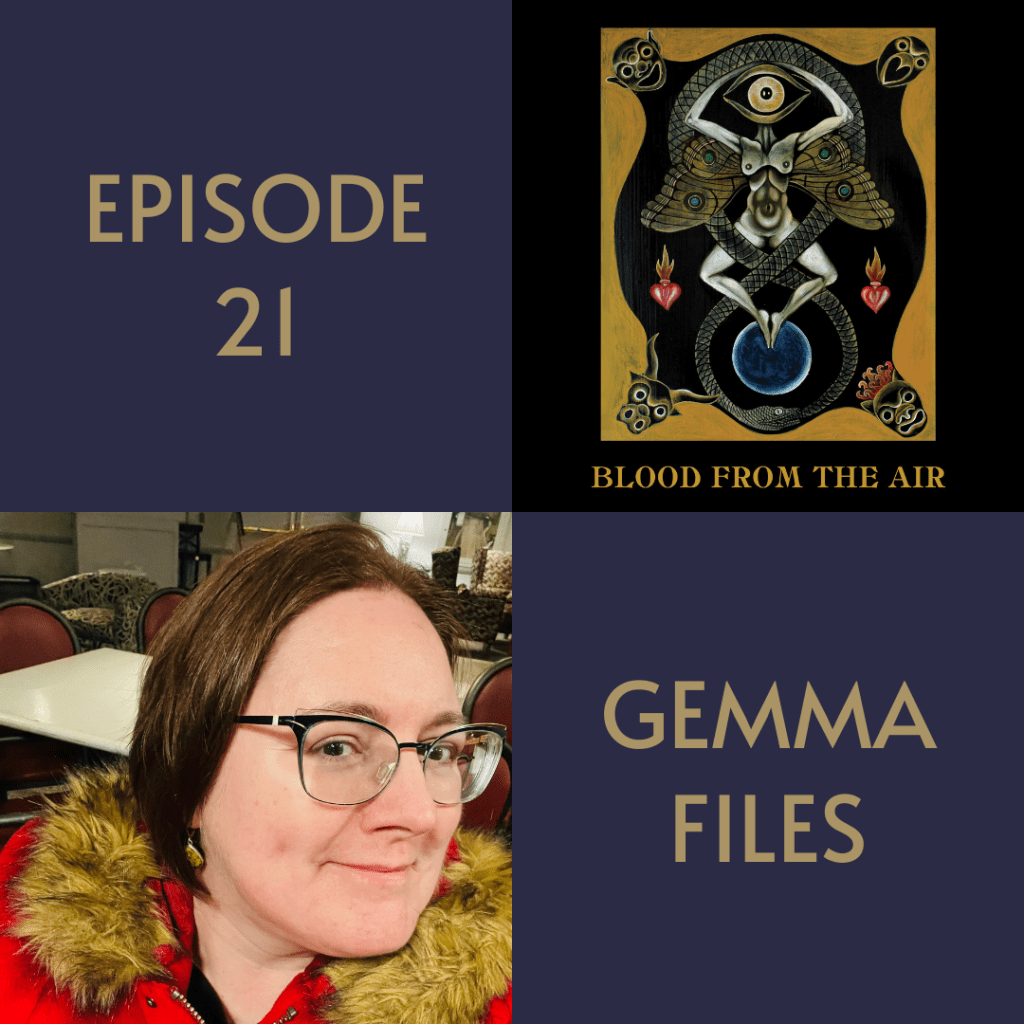
In this interview, we chat with Gemma Files about horny monsters, Lovecraftian Airbnbs, the female gaze, and so much more.
Previously a film critic, journalist and teacher, Gemma Files has been an award-winning horror author since 1999. She’s best-known for her novel Experimental Film (Open Road Media) and her collections of short fiction, including the Bram Stoker Award-winning In That Endlessness, Our End and Blood From the Air (both from Grimscribe). Her next book, Little Horn: Stories, will be out in October from Shortwave. She is the autistic mother of an autistic son. For fun she sings, and doodles pretty monsters.
Books mentioned in this episode:
Empire of the Sun – J. G. Ballard
D’Aulaire’s Book of Greek Myths; Norse Gods and Giants – Edgar Parin d’Aulaire and Ingri Parin d’Aulaire
Black Flame – Gretchen Felker-Martin
The Rotting Room – Viggy Parr Hampton
Barrowbeck; The Loney; Starve Acre – Andrew Michael Hurley
Bright Dead Star; Zoetrope Bizarre – Caitlín R. Kiernan
The Jungle Book; The Second Jungle Book – Rudyard Kipling
In this interview, we chat with S. P. Miskowski about Asian horror cinema, the power of grief, the relentless desire to shape the self, and so much more.
S. P. Miskowski is a recipient of two National Endowment for the Arts Fellowships, for literature and for drama. Her books have been recognized with four Shirley Jackson Award nominations and two Bram Stoker Award nominations. Her stories have appeared in many anthologies including Haunted Nights, Human Monsters, Looming Low I and II, The Madness of Dr. Caligari, Uncertainties III, October Dreams 2, The Best Horror of the Year Vol. 10, and Darker Companions: 50 Years of Ramsey Campbell, and in magazines including Identity Theory, Black Static, Vastarien, Supernatural Tales, and Cosmic Horror Monthly. Her grunge noir novel I Wish I Was Like You was named This Is Horror Novel of the Year 2017 and is available via Audible. An omnibus of her books set in the weird fictional town of Skillute, WA is forthcoming from Broken Eye Books in 2025.
Books and stories mentioned in this episode:
The Brothers Grimm Fairy Tales – Alfred A. Knopf, pub.
The Best American Mystery and Suspense 2024 – S. A. Cosby, ed.
D’Aulaires Book of Greek Myths – Ingrid & Edgar Parin d’Aulaire
Go, Dog. Go! – P. D. Eastman
Rock Paper Scissors – Alice Feeney
The Haunting of Hill House; “Maybe it Was the Car”; “The Summer People”; We Have Always Lived in the Castle; “The Witch” – Shirley Jackson
None of This is True – Lisa Jewell
Audition – Ryū Murakami
“Bluebeard”; “Cinderella” – Charles Perrault
“The Black Cat”; “The Cask of Amontillado” – Edgar Allan Poe
The Last Party – A. R. Torre
The Best American Mystery and Suspense 2023 – Lisa Unger, ed.
In this interview, we chat with Fawn Parker about showing the reader around the room, finding the right tense, protecting your writing time, and so much more.
Fawn Parker is the author of five books including novels What We Both Know (M&S), nominated for the Giller Prize and Hi, It’s Me (M&S), nominated for the Writer’s Trust Atwood Gibson Prize, and the poetry collection Soft Inheritance, which was awarded the JM Abraham Atlantic Book Award and the Fiddlehead Poetry Book Prize. Her work has been published in The Walrus, Hazlitt, Literary Review of Canada, and elsewhere. Fawn is a PhD candidate at the University of New Brunswick and the Poet Laureate of Fredericton.
Books and stories mentioned in this episode:
The Edible Woman – Margaret Atwood
The Mountain and the Valley – Ernest Buckler
Libra – Don DeLillo
The Guest – Emma Cline
Attack of the Copula Spiders and Other Essays on Writing – Douglas Glover