“I propose that horror literature, by definition, hinges on this vexed dialectic, between the affective destruction of thought and the creative process of thought (specifically, of cognizing the incognizable: the supernatural, the numinous, the unseen, the illegible). Within this dialectic, the horror writer oscillates between helpless prey to horror and the creative agent of horror.”
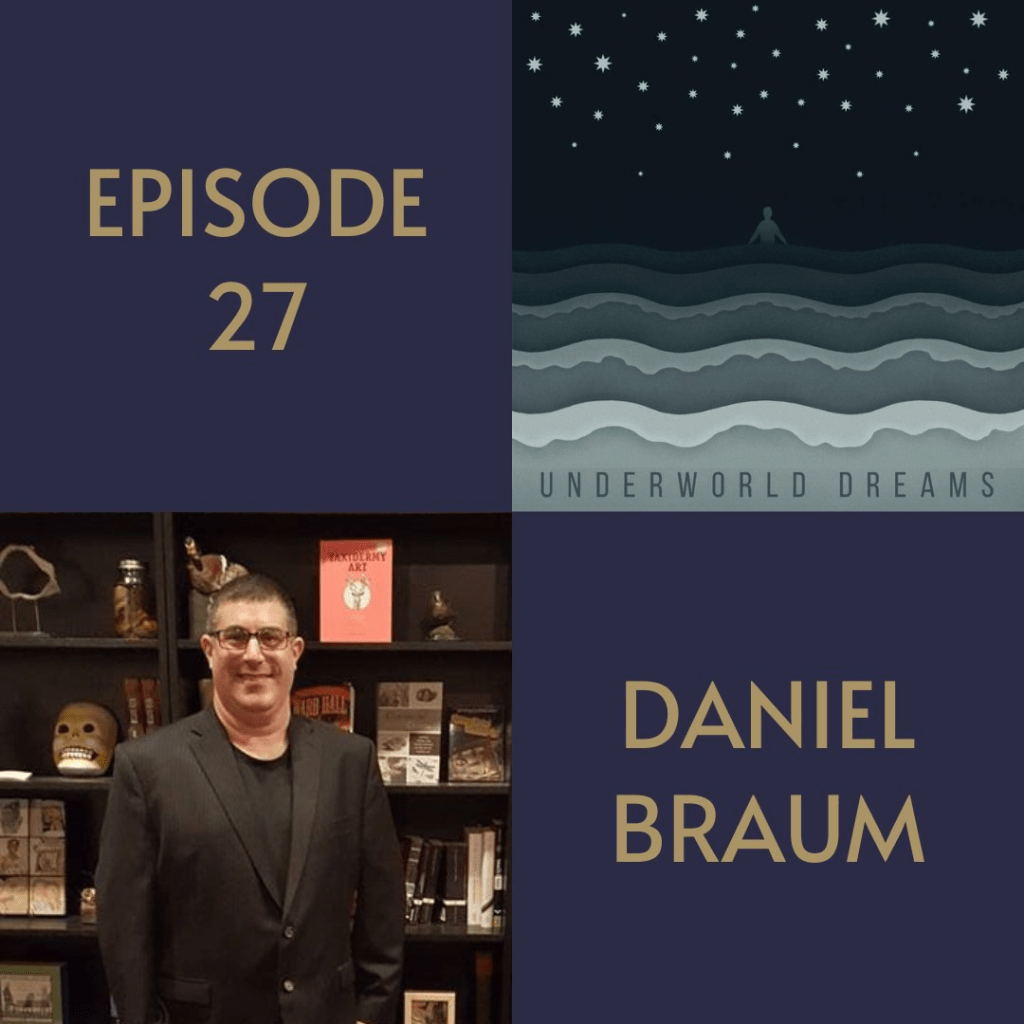
In this interview, we chat with Daniel Braum about exploring the ecology of the supernatural, finding inspiration in liminal spaces, cultivating a sense of awe, and so much more.
Daniel Braum writes short stories that explore the tension between the psychological and the supernatural. He intentionally adopts the term “strange tales” for his “Twilight Zone-like stories in homage to author Robert Aickman and the intentional ambiguities of his work. His latest collection is Phantom Constellations: Strange Tales and Ghost Stories from Cemetery Dance Publications (2025). His stories appear in places ranging from The Best Horror of the Year Volume 12, edited by Ellen Datlow, and Shivers 8, edited by Richard Chizmar.
Books and stories mentioned in this episode:
Cold Hand in Mine — Robert Aickman
The Artist’s Way — Julia Cameron
Ancient Images; The Hungry Moon — Ramsey Campbell
“Plunged in the Years” — Jeffrey Ford
“Children of the Corn” — Stephen King
The Ceremonies — T. E. D. Klein
Beginnings, Middles & Ends — Nancy Kress
Dreams of Dark and Light — Tanith Lee
Rosemary’s Baby; The Stepford Wives — Ira Levin
Story — Robert McKee
Conjunctions 83: The Ghost Issue — Joyce Carol Oates and Bradford Morrow, eds.
The Jaguar Hunter — Lucius Shepard
Shadowland — Peter Straub
Conjunctions 39: The New Wave Fabulists — Peter Straub, ed.
Harvest Home — Thomas Tryon
The Writer’s Journey: Mythic Structure for Writers — Chris Vogler
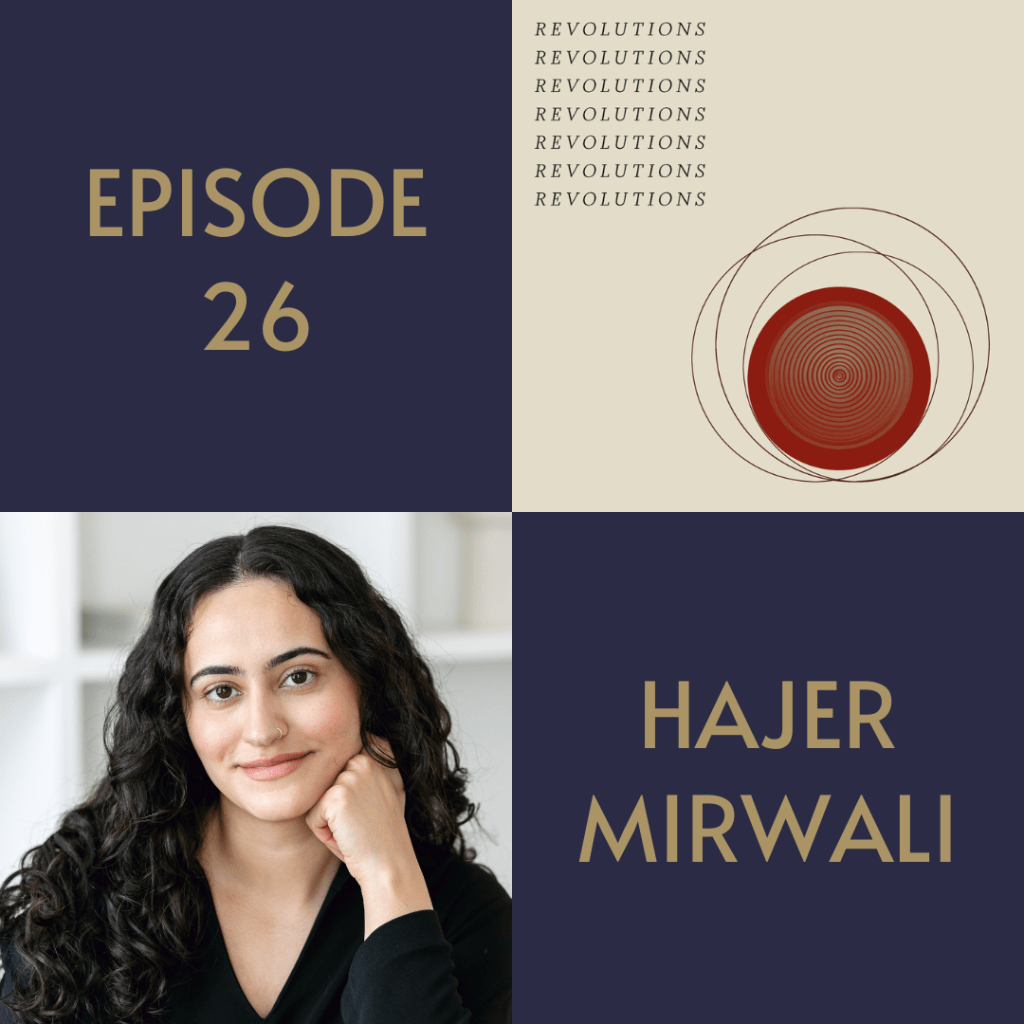
In this interview, we chat with Hajer Mirwali about cross-disciplinary work, embodied writing, poetic mad libs, and so much more.
Hajer Mirwali is a Palestinian and Iraqi writer living in Toronto. Her first book, Revolutions (Talonbooks, 2025), is a collection of poetry on shame, pleasure, and Arab Muslim girlhood. Two poems from the collection also appear in an anthology of Palestinian poetry called Heaven Looks Like Us (Haymarket Books, 2025). Hajer’s work has been published in The Ex-Puritan, Brick Magazine, Room Magazine, and Joyland. She has an MFA in Creative Writing from the University of Guelph, and a BA in Creative Writing from York University.
In this interview, we chat with Kasia Van Schaik about reverse outlining, asking “what if”, sublimating emotion through landscape, and so much more.
Kasia Van Schaik is the author of the Giller Prize-nominated story collection We Have Never Lived on Earth and the forthcoming book of memoir and cultural criticism, Women Among Monuments. With Myra Bloom, she is the co-editor of the essay collection, Shelter in Text: Essays on Dwelling and Refuge. Kasia’s writing has appeared in Electric Literature, the LA Review of Books, Room, The Rumpus, the Best Canadian Poetry, and the CBC. Kasia holds a PhD in literature from McGill University and is assistant professor of English and co-director of Creative Writing at the University of New Brunswick in Fredericton, Wolastoqiyik territory.
Books mentioned in this episode:
Wuthering Heights — Emily Brontë
The Secret Garden — Frances Hodgson Burnett
Autobiography of Red — Anne Carson
Boyhood; Youth; Summertime — J. M. Coetzee
Outline; Transit; Kudos — Rachel Cusk
The Days of Abandonment; the Neapolitan Quartet — Elena Ferrante
In this interview, we chat with Ramsey Campbell about creative instincts, happy accidents, eerie children’s tales, and so much more.
The Oxford Companion to English Literature describes Ramsey Campbell as “Britain’s most respected living horror writer”, and the Washington Post sums up his work as “one of the monumental accomplishments of modern popular fiction”. His awards include the Grand Master Award of the World Horror Convention, the Lifetime Achievement Award of the Horror Writers Association, the Living Legend Award of the International Horror Guild and the World Fantasy Lifetime Achievement Award. In 2015 he was made an Honorary Fellow of Liverpool John Moores University for outstanding services to literature. His latest novels are Fellstones, The Lonely Lands, The Incubations and An Echo of Children. His Brichester Mythos trilogy consists of The Searching Dead, Born to the Dark and The Way of the Worm. His collections include Waking Nightmares, Ghosts and Grisly Things, Told by the Dead, Just Behind You, Holes for Faces, By the Light of My Skull, Fearful Implications, and a two-volume retrospective roundup (Phantasmagorical Stories) as well as The Village Killings and Other Novellas. His non-fiction is collected as Ramsey Campbell, Probably and Ramsey Campbell, Certainly, while Ramsey’s Rambles collects his video reviews, and Six Stooges and Counting is a book-length study of the Three Stooges. Limericks of the Alarming and Phantasmal is a history of horror fiction in the form of fifty limericks.
Books and stories mentioned in this episode:
The Atrocity Exhibition – J. G. Ballard
Great Short Stories of the World – Barrett H. Clark and Maxim Lieber, eds.
“A Dark-Brown Dog”; The Red Badge of Courage – Stephen Crane
The Man Within – Graham Greene
“The Residence at Whitminster” – M. R. James
Rosemary’s Baby; The Stepford Wives – Ira Levin
Tales of Mean Streets – Arthur Morrison
Lolita; Pale Fire – Vladimir Nabokov
“The Telltale Heart” – Edgar Allan Poe
At the Foot of the Story Tree: An Inquiry into the Fiction of Peter Straub – Bill Sheehan
Ghost Story – Peter Straub
The Rupert Bear series – Herbert Tourtel & Mary Tourtel
“Afterward” – Edith Wharton
At Night, White Bracken; To Those from Below – Gareth Wood
In this interview, we chat with Michael LaPointe about navigating the pipeline between impulse and expression, breaking the genteel picture of literature, finding liberation in failure, and so much more.
Michael LaPointe is the author of The Creep, a novel published by Random House Canada. He has written for The New Yorker and The Atlantic, and he was a columnist with The Paris Review. His work has been anthologized in Best Canadian Stories and Best Canadian Essays, and he lives in Toronto.
Books mentioned in this episode:
Affliction; Continental Drift; Rule of the Bone; The Sweet Hereafter – Russell Banks
Naked Lunch – William S. Burroughs
The Adventures of Pinocchio – Carlo Collodi
Bleak House – Charles Dickens
Play it as it Lays – Joan Didion
The Lover – Marguerite Duras
Middlemarch – George Eliot
American Psycho; Less Than Zero; The Shards – Bret Easton Ellis
Madame Bovary – Gustave Flaubert
Bad Behavior; Two Girls, Fat and Thin – Mary Gaitskill
In a Lonely Place – Dorothy B. Hughes
Snow Country – Yasunari Kawabata
Playing in the Dark: Whiteness and the Literary Imagination; Sula – Toni Morrison
The Sorrow of War – Bảo Ninh
Inherent Vice – Thomas Pynchon
All Quiet on the Western Front – Erich Maria Remarque
Voyage in the Dark – Jean Rhys
Catcher in the Rye – J. D. Salinger
Last Exit to Brooklyn – Hubert Selby Jr.
Alice James: A Biography – Jean Strouse
The Invisible Woman: The Story Of Nelly Ternan And Charles Dickens – Claire Tomalin
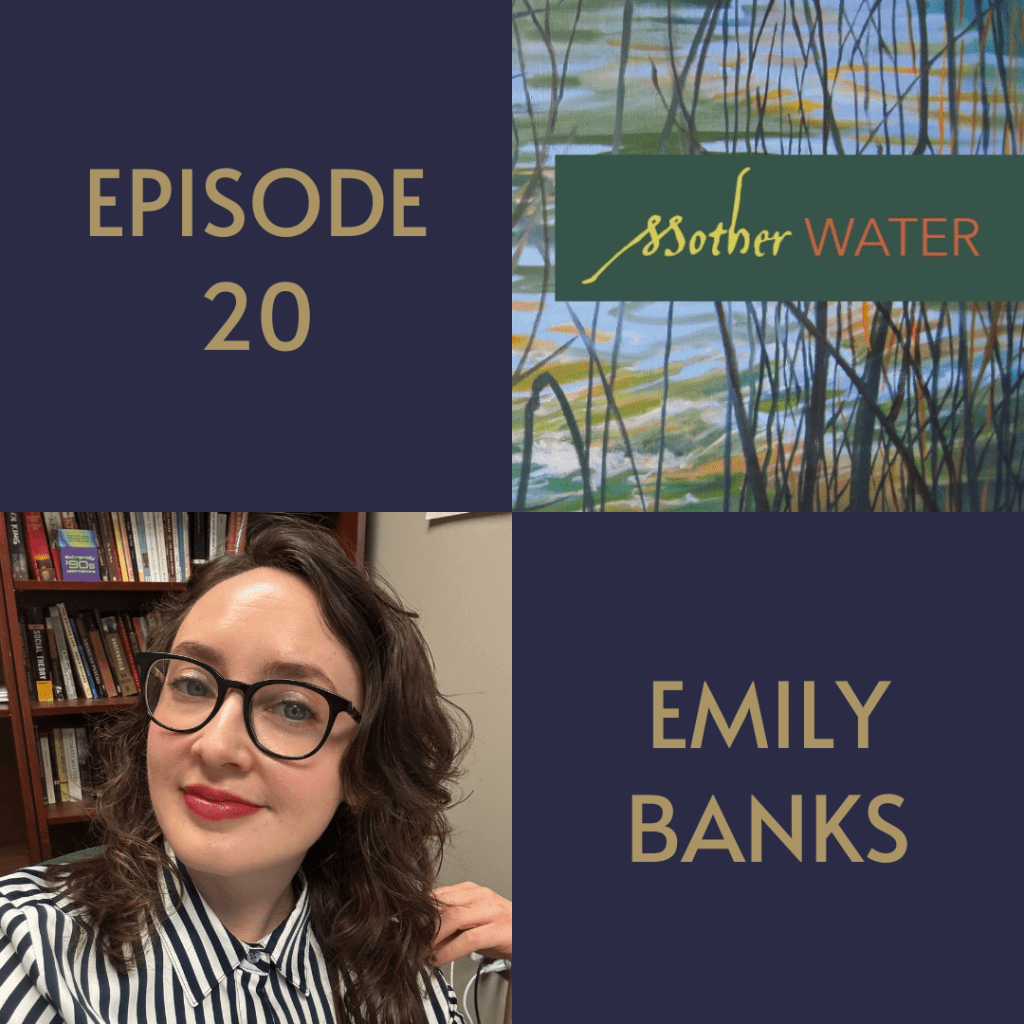
In this interview, we chat with Emily Banks about posthumous publications, linguistic allergies, the atomic nuts and bolts of imagery, and so much more.
Emily Banks is the author of Mother Water (Lynx House Press, 2020). Her poems have appeared in Plume, Copper Nickel, 32 Poems, The Rumpus, CutBank, Mid-American Review, and other journals. She publishes scholarship on American gothic literature, runs The Shirley Jackson Society, and is currently editing The Oxford Handbook of Shirley Jackson. She holds an MFA from the University of Maryland and a Ph.D. from Emory University. She lives in Indianapolis and teaches at Franklin College.
Books, poems, and stories mentioned in this episode:
“Filling Station”; “In the Waiting Room” – Elizabeth Bishop
Alice’s Adventures in Wonderland – Lewis Carroll
Turn Up the Ocean – Tony Hoagland
“Dorothy and My Grandmother and the Sailors”; Hangsaman; The Haunting of Hill House; We Have Always Lived in the Castle – Shirley Jackson
Bliss Montage; Severance – Ling Ma
How to Do Nothing: Resisting the Attention Economy – Jenny Odell
In this interview, we chat with Naben Ruthnum about character development, avoiding TV-brained writing, making sense of first-reader notes, and so much more.
Naben Ruthnum is a Toronto-based writer of fiction, cultural criticism, film and TV. His novel A Hero of Our Time was released by Penguin Random House and was optioned for development by The Littlefield Company. His books include the YA novel The Grimmer, the World Fantasy Award-nominated horror novella Helpmeet and two thrillers penned as Nathan Ripley, both of which have been optioned for development and were published internationally. He has written for Canadian television series including Murdoch Mysteries and Cardinal. As a feature screenwriter, he’s collaborated with Kris Bertin for feature and TV projects in development at Oddfellows, BoulderLight Pictures, Automatik, Skybound, and Blink49. Kris and Naben’s script Road Test made the 2024 Black List.
Books mentioned in this episode:
A Clockwork Orange – Anthony Burgess
The Sorceress in Stained Glass & Other Ghost Stories – Richard Dalby, ed.
The Name of the Rose – Umberto Eco
The Black Dahlia; Killer on the Road; L.A. Confidential; My Dark Places – James Ellroy
Black Flame – Gretchen Felker-Martin
The James Bond series – Ian Fleming
The Collector; The Magus – John Fowles
The Green Carnation – Robert Hichens
The Americans; The Tragic Muse; The Turn of the Screw – Henry James
Supernatural Horror in Literature – H. P. Lovecraft
The Beckoning Fair One – Oliver Onions
A Fatal Inversion; Master of the Moor – Ruth Rendell
Flicker – Theodore Roszak
The Tempest – William Shakespeare
Ghost Story; If You Could See Me Now; In the Night Room; Koko; The Throat – Peter Straub
The Secret History – Donna Tartt
A Dark-Adapted Eye; The House of Stairs – Barbara Vine
“Gothic cinema inherits an ongoing obsession with writers and writing from its literary ancestors, but how does it translate such text-based fixations into its own audiovisual grammar? How does it stage ‘objective’ diegeses in concert with the innately subjective representations of writers and the act of writing? This article approaches these questions, not by offering a comprehensive history of Gothic films depicting writers (that would require a long, book-length project), but by analyzing a trio of writer-focused Gothic films notable for their dealings with literary ancestry through negotiations between subjective interiority and diegetic objectivity.”







 Mike Thorn