
“Thinking of reading some horror books to celebrate Halloween? We speak with an author from Calgary about his annual list of favorite horror reads.”
Listen here.
Author | Critic

“Thinking of reading some horror books to celebrate Halloween? We speak with an author from Calgary about his annual list of favorite horror reads.”
Listen here.


Continuing a new annual tradition. Titles organized by author name.
Hawksmoor, by Peter Ackroyd (1989)
Dark Entries, by Robert Aickman (1964)
We Are Here to Hurt Each Other, by Paula D. Ashe (2022)
This Mortal Coil, by Cynthia Asquith (1947)
The Damnation Game, by Clive Barker (1985)
Tender is the Flesh, by Agustina Bazterrica (2017; 2020 translation by Sarah Moses)
The Listener and Other Stories, by Algernon Blackwood (1907)
The Scarf, by Robert Bloch (1947/1966)
Something Wicked This Way Comes, by Ray Bradbury (1962)
Long After Midnight: 22 Hauntings and Celebrations, by Ray Bradbury (1976)
Wieland; or, The Transformation: An American Tale, by Charles Brockden Brown (1798)
Ancient Images, by Ramsey Campbell (1989)
The King in Yellow, by Robert W. Chambers (1895)
The Juniper Tree, by Barbara Comyns (1985)
The Breaking Point, by Daphne du Maurier (1959)
Don’t Look Now, by Daphne du Maurier (1971)
The Between, by Tananarive Due (1995)
The Pines, by Robert Dunbar (1989)
American Psycho, by Bret Easton Ellis (1991)
Lunar Park, by Bret Easton Ellis (2005)
I Have No Mouth & I Must Scream, by Harlan Ellison (1967)
The Collector, by John Fowles (1963)
Aura, by Carlos Fuentes (1962; 1986 translation by Lysander Kemp)
Something Stirs, by Charles L. Grant (1991)
Red Dragon, by Thomas Harris (1981)
Twice-Told Tales, by Nathaniel Hawthorne (1837)
The House of the Seven Gables, by Nathaniel Hawthorne (1851)
The Woman in Black, by Susan Hill (1983)
The House on the Borderland, by William Hope Hodgson (1908)
The Private Memoirs and Confessions of a Justified Sinner, by James Hogg (1824)
The Damned, by Joris-Karl Huysmans (1891)
The Lottery and Other Stories, by Shirley Jackson (1949)
Hangsaman, by Shirley Jackson (1951)
The Sundial, by Shirley Jackson (1958)
The Haunting of Hill House, by Shirley Jackson (1959)
We Have Always Lived in the Castle, by Shirley Jackson (1962)
Ghost Stories of Henry James, by Henry James (2008, edited by Martin Schofield)
Ghost Stories of an Antiquary, by M. R. James (1904)
Blood Secrets, by Craig Jones (1978)
Uzumaki, by Junji Ito (2000; 2013 translation by Yuji Oniki)
The Girl Next Door, by Jack Ketchum (1989)
The Red Tree, by Caitlín R. Kiernan (2009)
Carrie, by Stephen King (1974)
‘Salem’s Lot, by Stephen King (1975)
The Shining, by Stephen King (1977)
Cujo, by Stephen King (1981)
Pet Sematary, by Stephen King (1983)
It, by Stephen King (1986)
Full Dark, No Stars, by Stephen King (2010)
And Her Smile Will Untether the Universe, by Gwendolyn Kiste (2017)
The Ceremonies, by T. E. D. Klein (1984)
The Cipher, by Kathe Koja (1991)
Bad Brains, by Kathe Koja (1992)
Skin, by Kathe Koja (1993)
Conjure Wife, by Fritz Leiber (1943)
The Fifth Child, by Doris Lessing (1988)
Rosemary’s Baby, by Ira Levin (1967)
The Stepford Wives, by Ira Levin (1972)
The Monk: A Romance, by Matthew Gregory Lewis (1796)
Songs of a Dead Dreamer and Grimscribe, by Thomas Ligotti (2015)
The Hounds of Tindalos, by Frank Belknap Long (1946)
Tales of H. P. Lovecraft, by H. P. Lovecraft (2007, edited by Joyce Carol Oates)
The House of Souls, by Arthur Machen (1906)
Burnt Offerings, by Robert Marasco (1973)
The Beetle, by Richard Marsh (1897)
I Am Legend, by Richard Matheson (1954)
Shock!, by Richard Matheson (1961)
Melmoth the Wanderer, by Charles Robert Maturin (1820)
Child of God, by Cormac McCarthy (1973)
Toplin, by Michael McDowell, (1985)
Heartbreaker, by Maryse Meijer (2016)
The Seventh Mansion, by Maryse Meijer (2020)
Strange is the Night, by S. P. Miskowski (2017)
Beloved, by Toni Morrison (1987)
Zombie, by Joyce Carol Oates (1995)
Jack of Spades, by Joyce Carol Oates (2015)
Widdershins, by Oliver Onions (1911)
Selected Writings of Edgar Allan Poe, by Edgar Allan Poe (1956, edited by Edward H. Davidson)
The Mysteries of Udolpho, by Ann Radcliffe (1794)
Interview with the Vampire, by Anne Rice (1976)
Traplines, by Eden Robinson (1996)
The Subjugated Beast, by R. R. Ryan (1938)
The Room, by Hubert Selby Jr. (1971)
The Demon, by Hubert Selby Jr. (1976)
New Stories from the Twilight Zone, by Rod Serling (1965)
Frankenstein; or, the Modern Prometheus, by Mary Shelley (1818)
The House Next Door, by Anne Rivers Siddons (1978)
The Dark Eidolon and Other Fantasies, by Clark Ashton Smith (2014, edited by S. T. Joshi)
Strange Case of Dr. Jekyll and Mr. Hyde, by Robert Louis Stevenson (1886)
Dracula, by Bram Stoker (1897)
Julia, by Peter Straub (1975)
Ghost Story, by Peter Straub (1979)
Koko, by Peter Straub (1988)
Houses without Doors, by Peter Straub (1990)
The Other, by Thomas Tryon (1971)
Ghosts, by Edith Wharton (1937)
The Picture of Dorian Gray, by Oscar Wilde (1890)
The Island of Doctor Moreau, by H. G. Wells (1896)
The Invisible Man, by H. G. Wells (1897)
The Sailor Who Fell from Grace with the Sea, by Yukio Mishima (1963)

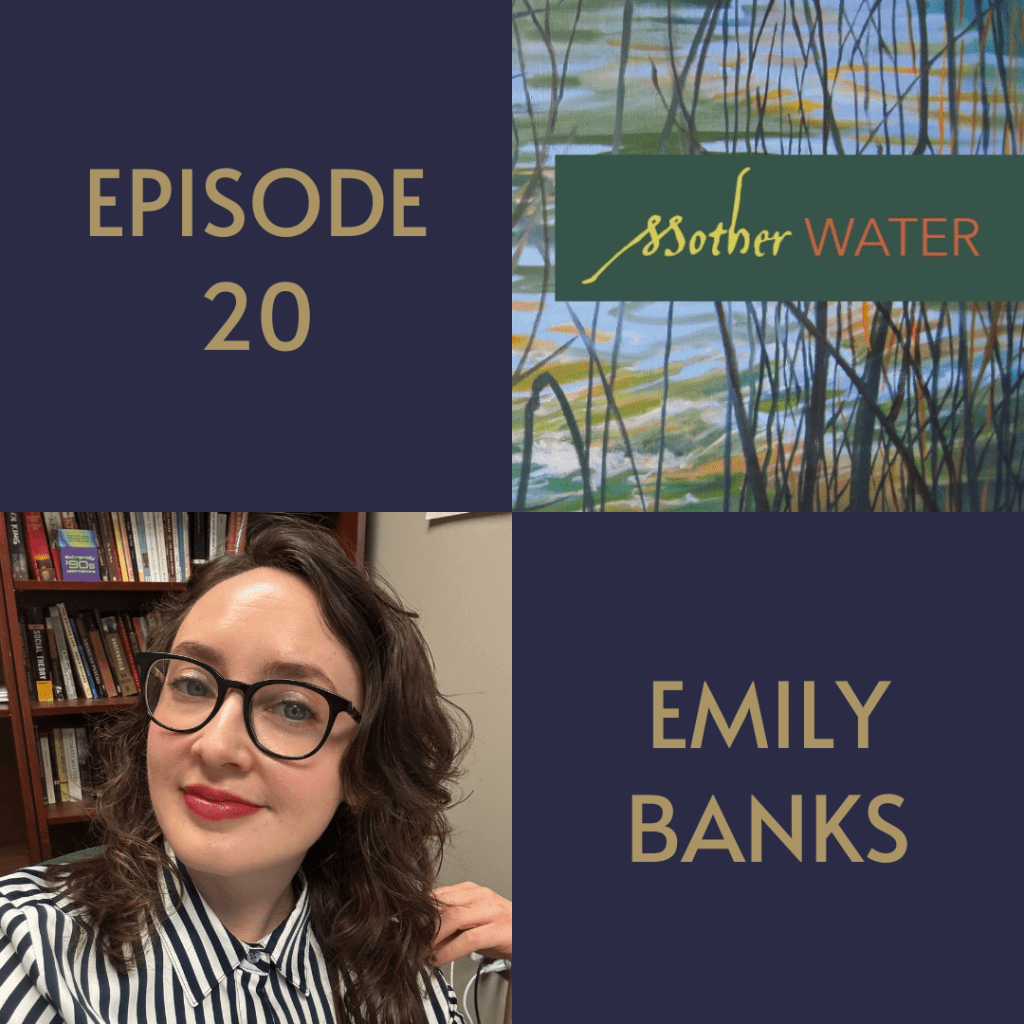
Listen to Craftwork Episode 20: Girlhood, Defamiliarization, & Poetic Excavation w/ Emily Banks.
In this interview, we chat with Emily Banks about posthumous publications, linguistic allergies, the atomic nuts and bolts of imagery, and so much more.
Emily Banks is the author of Mother Water (Lynx House Press, 2020). Her poems have appeared in Plume, Copper Nickel, 32 Poems, The Rumpus, CutBank, Mid-American Review, and other journals. She publishes scholarship on American gothic literature, runs The Shirley Jackson Society, and is currently editing The Oxford Handbook of Shirley Jackson. She holds an MFA from the University of Maryland and a Ph.D. from Emory University. She lives in Indianapolis and teaches at Franklin College.
Books, poems, and stories mentioned in this episode:


Mike Thorn is offering a Horror-Writing Workshop for Wordspring 2025 (Writers’ Federation of New Brunswick).


In this interview, we chat with S. P. Miskowski about Asian horror cinema, the power of grief, the relentless desire to shape the self, and so much more.
S. P. Miskowski is a recipient of two National Endowment for the Arts Fellowships, for literature and for drama. Her books have been recognized with four Shirley Jackson Award nominations and two Bram Stoker Award nominations. Her stories have appeared in many anthologies including Haunted Nights, Human Monsters, Looming Low I and II, The Madness of Dr. Caligari, Uncertainties III, October Dreams 2, The Best Horror of the Year Vol. 10, and Darker Companions: 50 Years of Ramsey Campbell, and in magazines including Identity Theory, Black Static, Vastarien, Supernatural Tales, and Cosmic Horror Monthly. Her grunge noir novel I Wish I Was Like You was named This Is Horror Novel of the Year 2017 and is available via Audible. An omnibus of her books set in the weird fictional town of Skillute, WA is forthcoming from Broken Eye Books in 2025.
Books and stories mentioned in this episode:


Pre-2024 releases only.
TOP 10 (one per author)
Daisy Miller, by Henry James (1879)
A Room with a View, by E. M. Forster (1908)
Pan’s Garden: A Volume of Nature Stories, by Algernon Blackwood (1912)
The Custom of the Country, by Edith Wharton (1913)
Their Eyes Were Watching God, by Zora Neale Hurston (1937)
Cassandra at the Wedding, by Dorothy Baker (1962)
Another World, by Pat Barker (1998)
Heartbreaker, by Maryse Meijer (2016)
Babysitter, by Joyce Carol Oates (2022)
The Guest, by Emma Cline (2023)
ADDITIONAL STANDOUT READS
We Are Here to Hurt Each Other, by Paula D. Ashe (2022)
This Mortal Coil, by Cynthia Asquith (1947)
The Space of Literature, by Maurice Blanchot (1955)
The Writing of the Disaster, by Maurice Blanchot (1980)
Dandelion Wine, by Ray Bradbury (1957)
Wieland; or, The Transformation: An American Tale, by Charles Brockden Brown (1798)
Edgar Huntly; or, Memoirs of a Sleepwalker, by Charles Brockden Brown (1799)
The Sublime and the Beautiful, by Edmund Burke (1757)
The Daughters of Block Island, by Christa Carmen (2023)
Gothic Metaphysics: From Alchemy to the Anthropocene, by Jodey Castricano (2021)
The King in Yellow, by Robert W. Chambers (1895)
Don’t Look Now, by Daphne du Maurier (1971)
Shirley Jackson: A Rather Haunted Life, by Ruth Franklin (2016)
Sea, Swallow Me and Other Stories, by Craig Laurance Gidney (2008)
Twice-Told Tales, by Nathaniel Hawthorne (1837)
The Marble Faun, by Nathaniel Hawthorne (1860)
The Talented Mr. Ripley, by Patricia Highsmith (1955)
The Woman in Black, by Susan Hill (1983)
The Witchcraft of Salem Village, by Shirley Jackson (1956)
Let Me Tell You, by Shirley Jackson [edited by Laurence Hyman & Sarah Hyman DeWitt] (2015)
Burn Man: Selected Stories, by Mark Anthony Jarman (2023)
Man and His Symbols, edited by C. G. Jung & M.-L von Franz (1964)
Uzumaki, by Junji Ito (2013)
The Red Tree, by Caitlín R. Kiernan (2009)
The Truth About Stories: A Native Narrative, by Thomas King (2003)
Something Like an Autobiography, by Akira Kurosawa (1981)
What Are You, by Lindsay Lerman (2022)
Existence and Existents, by Emmanuel Levinas (1947)
Peyton Place, by Grace Metalious (1956)
Who Will Run the Frog Hospital?, by Lorrie Moore (1994)
Playing in the Dark: Whiteness and the Literary Imagination, by Toni Morrison (1992)
Devil in a Blue Dress, by Walter Mosley (1990)
Black Water, by Joyce Carol Oates (1992)
New England’s Gothic Literature, by Faye Ringel (1995)
The Gothic Literature and History of New England, by Faye Ringel (2022)
The Devil’s Candy: The Anatomy of a Hollywood Fiasco, by Julie Salamon (1991)
The Last Man, by Mary Shelley (1826)
The Craft of Writing, by William Sloane (1979)
Lost Boy Lost Girl, by Peter Straub (2003)
The Door, by Magda Szabó (1987)
The Fantastic: A Structural Approach to a Literary Genre, by Tzvetan Todorov (1970)
A Fatal Inversion, by Barbara Vine (1987)
The Color Purple, by Alice Walker (1982)
Star-Begotten, by H. G. Wells (1937)
Ghosts, by Edith Wharton (1937)
The Bonfire of the Vanities, by Tom Wolfe (1987)
Strange Seed, by T. M. Wright (1978)


“Director Alexandre Aja’s latest film, Never Let Go, occupies a deliberately liminal space. Its threadbare plot suggests a post-apocalyptic near future, but its central family is stuck in a Gothic past.”


Mike Thorn joins Vince Midgard on The Dark Mind Podcast to discuss his recent novel Shelter for the Damned.
They discuss the themes and inspirations behind the book, including the exploration of the Jungian shadow and the ambiguity of supernatural versus psychological elements. They also touch on Thorn’s previous work, Darkest Hours, his podcast Craftwork, and his experiences as a writer. The conversation concludes with Thorn sharing his love for reading, the importance of maintaining a healthy lifestyle, and his upcoming projects.


Shepherd asked 949 authors and super readers to select their three favorite reads of 2023. Read Mike Thorn’s thoughts on his choices here.


“[T]he way in which the shack progressively takes over Mark reminds me of stories like The Haunting of Hill House, by Shirley Jackson or Hell House, by Matheson, due to the way in which the evil housed in these mythical buildings takes advantage of the pre-existing weaknesses in its inhabitants, either to destroy them, as in the aforementioned classics, or to, in some way, possess or transform them, as in this novel …”
 Mike Thorn