Mike Thorn reviews Satan Wants You for In Review Online


“Satan Wants You wisely elides ridiculing the era it depicts, instead level-headedly examining the factors that gave birth to Smith and Pazder’s book and its ensuing cultural hysteria.”
Mike Thorn reviews Sympathy for the Devil (In Review Online)


“Sympathy for the Devil works best when viewed purely as a vehicle (no pun intended) for Cage.”
ConsulLeo reviews Un Refugio para los Condenados (Spanish translation of Shelter for the Damned)


“[T]he way in which the shack progressively takes over Mark reminds me of stories like The Haunting of Hill House, by Shirley Jackson or Hell House, by Matheson, due to the way in which the evil housed in these mythical buildings takes advantage of the pre-existing weaknesses in its inhabitants, either to destroy them, as in the aforementioned classics, or to, in some way, possess or transform them, as in this novel …”
Mike Thorn reviews Avatar: The Way of Water for In Review Online


“If The Way of Water is a crucial work of tech Romanticism, then another of its richest central dissonances is that between past and future: it imagines a world that stands a chance against modernity’s most brutal and oppressive machinations, thus situating itself in the past, but it also uses its genre modality to speculate a future that exceeds postmodernity’s politically flattening failures.”
L. J. Zapico reviews Un Refugio para los Condenados, the Spanish translation of Shelter for the Damned

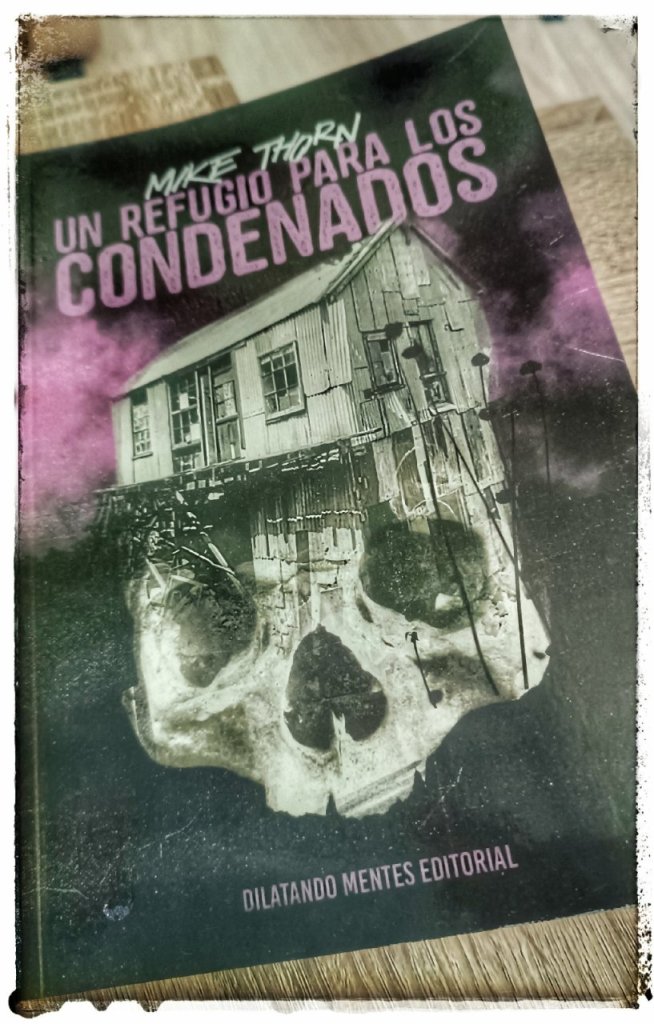
“The story, in its last third, plunges into dark depths, with touches of cosmic horror and weird , finishing off its construction of adolescent obsessions, parent-child relationships and youth psychology.”
Soraya Murillo Hernandez reviews Un Refugio para los Condenados (Spanish translation of Shelter for the Damned)


“Mike Thorn updates the psychological horror novel, taking it to cosmic horror and the most stark realism, using a scathing and sometimes excessive style, not suitable for everyone, really raw at times, he has written a brilliant exposition on the truth for urban youth. Like life itself.”
Peel Back and See reviewed on Final Women: Horror from a Woman’s Perspective


“While his first collection was great fun, this one shows his growth as a writer, and I feel like a lot of these stories are going to stick with me for a long time. If you haven’t read Thorn’s work this is the perfect place to jump on. I can’t wait to read what he writes next.”
Read the full review on Final Women: Horror from a Woman’s Perspective.
 Mike Thorn