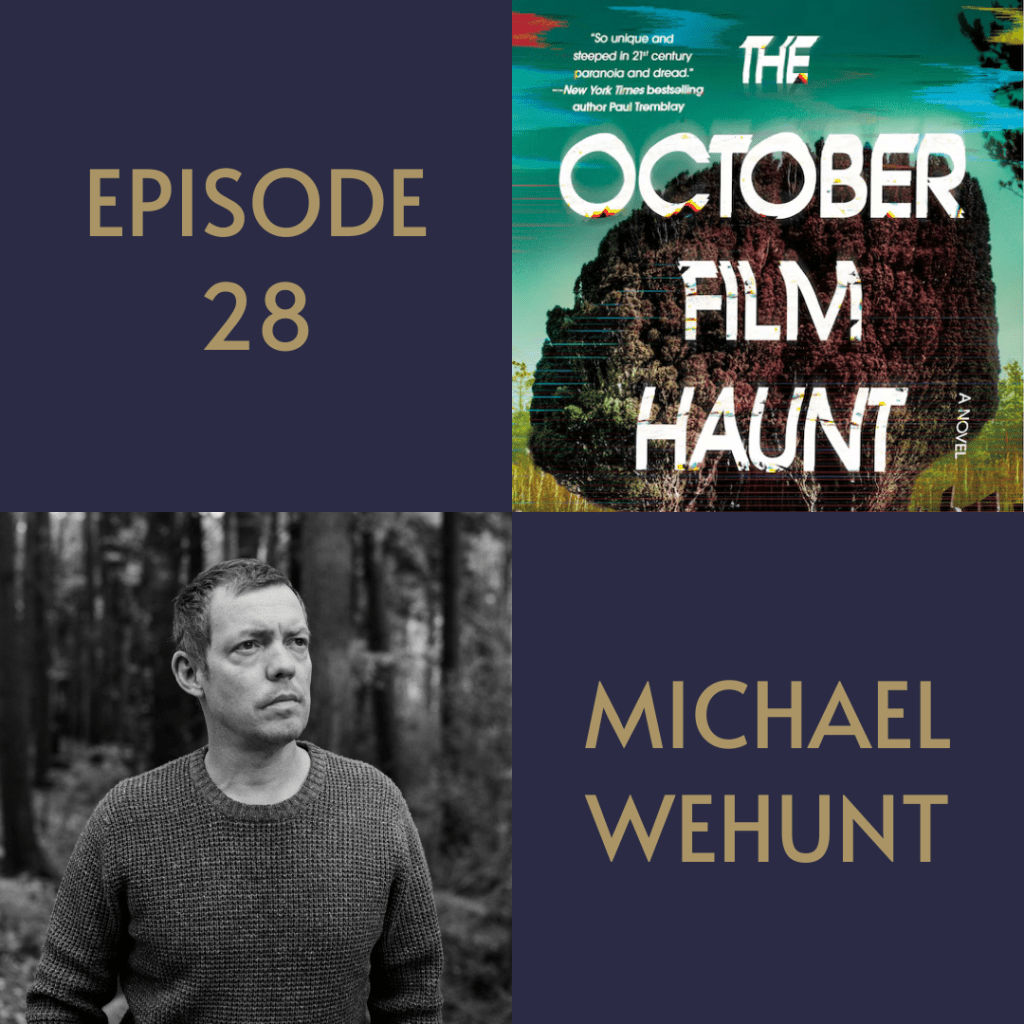
Craftwork Episode 28: Earthy Language, Scary Cupids, & Lunar Portrayals w/ Michael Wehunt

Listen to Craftwork Episode 28: Earthy Language, Scary Cupids, & Lunar Portrayals w/ Michael Wehunt.

In this interview, we chat with Michael Wehunt about the administrative side of professional writing, the unanticipated weirdness of public selfhood, the “moment before the moment”, and so much more.   

Michael Wehunt has been a finalist for the Bram Stoker Award, multiple Shirley Jackson Awards, and the International Association for the Fantastic in the Arts’ Crawford Award. In Spain, his translated works have garnered nominations for the Premio Ignotus and Premio Amaltea, winning the latter. He haunts the woods of Decatur, Georgia, with his partner and their dog. Together, they hold the horrors at bay. Most recently, he is the author of the novels The October Film Haunt and Nightjars.  

Books and poems mentioned in this episode:   

  • Ancient Images; The Grin of the Dark; Incarnate — Ramsey Campbell 
  • Generation X: Tales for an Accelerated Culture — Douglas Coupland 
  • Poems 1962-2020 — Louise Glück 
  • Carrie — Stephen King 
  • Beings — Ilana Masad 
  • The God of the Woods; Long Bright River — Liz Moore 
  • Ghost Wall; Ripeness — Sarah Moss 
  • The Violent Bear it Away — Flannery O’Connor 
  • “Archaic Torso of Apollo” — Rainer Maria Rilke
  • Coffin Moon — Keith Rosson 
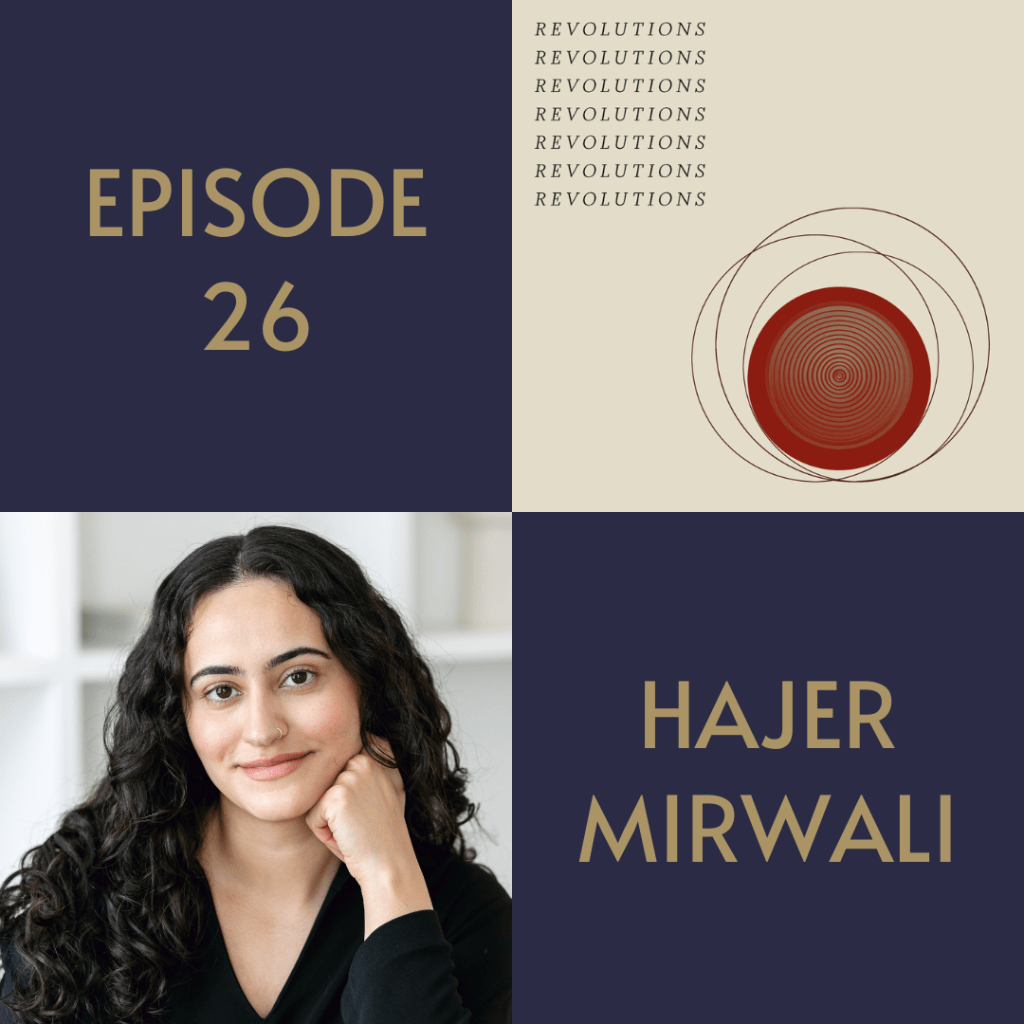
Craftwork Episode 26: Sculpture, Anaphora, & Writing by Hourglass w/ Hajer Mirwali

Listen to Craftwork Episode 26: Sculpture, Anaphora, & Writing by Hourglass w/ Hajer Mirwali.

In this interview, we chat with Hajer Mirwali about cross-disciplinary work, embodied writing, poetic mad libs,  and so much more.  

Hajer Mirwali is a Palestinian and Iraqi writer living in Toronto. Her first book, Revolutions (Talonbooks, 2025), is a collection of poetry on shame, pleasure, and Arab Muslim girlhood. Two poems from the collection also appear in an anthology of Palestinian poetry called Heaven Looks Like Us (Haymarket Books, 2025). Hajer’s work has been published in The Ex-PuritanBrick MagazineRoom Magazine, and Joyland. She has an MFA in Creative Writing from the University of Guelph, and a BA in Creative Writing from York University.

Books mentioned in this episode:  

  • Trust Exercise — Susan Choi 
  • The Butterfly’s Burden — Mahmoud Darwish 
  • Junie B. Jones series — Barbara Park 
  • Who by Fire; Who by Water — Greg Rhyno 
  • Harry Potter series — J. K. Rowling 

Craftwork Episode 25: Braided Essays, Collective Solitude, & the Objective Correlative w/ Kasia Van Schaik

Listen to Craftwork Episode 25: Braided Essays, Collective Solitude, & the Objective Correlative w/ Kasia Van Schaik.

In this interview, we chat with Kasia Van Schaik about reverse outlining, asking “what if”, sublimating emotion through landscape, and so much more.  

Kasia Van Schaik is the author of the Giller Prize-nominated story collection We Have Never Lived on Earth and the forthcoming book of memoir and cultural criticism, Women Among Monuments. With Myra Bloom, she is the co-editor of the essay collection, Shelter in Text: Essays on Dwelling and Refuge. Kasia’s writing has appeared in Electric Literature, the LA Review of Books, Room, The Rumpus, the Best Canadian Poetry, and the CBC. Kasia holds a PhD in literature from McGill University and is assistant professor of English and co-director of Creative Writing at the University of New Brunswick in Fredericton, Wolastoqiyik territory. 

Books mentioned in this episode:  

  • Wuthering Heights — Emily Brontë 
  • The Secret Garden — Frances Hodgson Burnett  
  • Autobiography of Red — Anne Carson 
  • Boyhood; Youth; Summertime — J. M. Coetzee 
  • Outline; Transit; Kudos — Rachel Cusk 
  • The Days of Abandonment; the Neapolitan Quartet — Elena Ferrante 
  • “The Robber Bridegroom” — Brothers Grimm 
  • Sweet Days of Discipline — Fleur Jaeggy 
  • Lucy — Jamaica Kincaid 
  • Her Body and Other Parties — Carmen Maria Machado 
  • Housekeeping — Marilynne Robinson 
  • Rings of Saturn — W. G. Sebald 
  • Flights — Olga Tokarczuk 

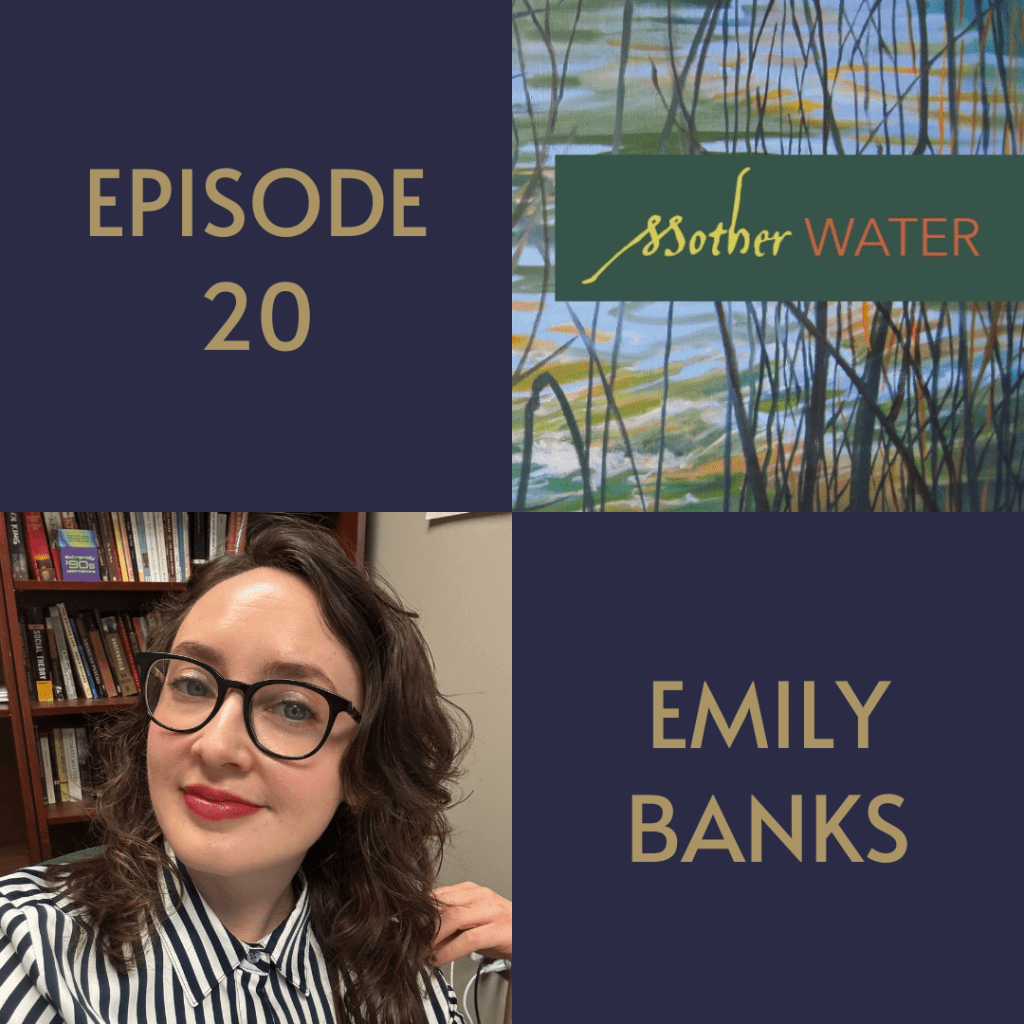
Craftwork Episode 20: Girlhood, Defamiliarization, & Poetic Excavation w/ Emily Banks

Listen to Craftwork Episode 20: Girlhood, Defamiliarization, & Poetic Excavation w/ Emily Banks.

In this interview, we chat with Emily Banks about posthumous publications, linguistic allergies, the atomic nuts and bolts of imagery, and so much more. 

Emily Banks is the author of Mother Water (Lynx House Press, 2020). Her poems have appeared in PlumeCopper Nickel32 PoemsThe RumpusCutBankMid-American Review, and other journals. She publishes scholarship on American gothic literature, runs The Shirley Jackson Society, and is currently editing The Oxford Handbook of Shirley Jackson. She holds an MFA from the University of Maryland and a Ph.D. from Emory University. She lives in Indianapolis and teaches at Franklin College. 

Books, poems, and stories mentioned in this episode:

  • “Filling Station”; “In the Waiting Room” – Elizabeth Bishop
  • Alice’s Adventures in Wonderland – Lewis Carroll
  • Turn Up the Ocean – Tony Hoagland
  • “Dorothy and My Grandmother and the Sailors”; Hangsaman; The Haunting of Hill House; We Have Always Lived in the Castle – Shirley Jackson
  • Bliss Montage; Severance – Ling Ma
  • How to Do Nothing: Resisting the Attention Economy – Jenny Odell
  • Middle Distance – Stanley Plumly
  • Pamela – Samuel Richardson
  • Modern Poetry – Diane Seuss

Craftwork S1E1: Persona Poems, Metacognition, & Vancouver Island Marmots w/ Meghan Kemp-Gee

On the first episode of Craftwork, guest Meghan Kemp-Gee talks about poetry, screenwriting, comics, and so much more.

Meghan is the author of The Animal in the Room (Coach House Books, 2023), as well as three poetry chapbooks, What I Meant to Ask, Things to Buy in New Brunswick, and More. She also co-created the webcomic Contested Strip, recently adapted as a graphic novel, One More Year. She is a PhD candidate at UNB and currently lives in North Vancouver BC.

Listen here.

Books mentioned in this episode:

  • The Writing Moment: A Practical Guide to Creating Poems – Daniel Scott Tysdal
  • Walden – Henry David Thoreau
  • The Artist’s Way – Julia Cameron
  • Bird by Bird – Anne Lamott
  • 20th Century Men – Deniz Camp, Stipan Morian, & Aditya Bidikar
  • The Adversary – Michael Crummey

Josiah Morgan’s Circles Pushes Boundaries

With the 2019 release of Inside the Castle, Josiah Morgan announced himself as a transgressive and exciting new voice, and Circles is further evidence. A freewheeling blur of poetry, film criticism, and visual art, Morgan’s latest work urges its readers to question what defines a text, and even what it means to read. Morgan pursues these complex problems through the attentive and varied use of typography, offering a mixture of blank-verse, concrete poetry, and essay fragments that gesture to the book’s title shape and its implications of auto-cannibalism and endlessness.

The content is as fascinating and rebellious as the form. Morgan draws on disparate media, religious references, and allusions both coded and explicit (I was particularly pleased to see one of my favorite lines from Elizabeth Bishop’s “One Art,” and a reading of the vegan ethos in Tobe Hooper’s The Texas Chain Saw Massacre). The author lays bare his frame of references in an appendix labeled ASSISTANCE [IN RESEARCH AND ERASURE], and his array of sources is fascinating and unique.

The result is not nearly as daunting or unapproachable as it might sound. In fact, I easily devoured the book in one quick sitting. Morgan’s work is energizing, animated by a vital and authentic voice, threaded with both coldly ironic observation and real despair. The author engages in some hilarious interplay between artificial designations of “high” and “low” art. Consider, for example, a prose-poem near the end of the book that describes a speaker masturbating to urolagniac fantasies of shock-punk icon GG Allin before reading Verlaine, Rimbaud, and Plath.

Much like Morgan’s excellent Inside the CastleCircles is a powerful testament to this brilliant young writer’s talent. Keep your eyes on him.

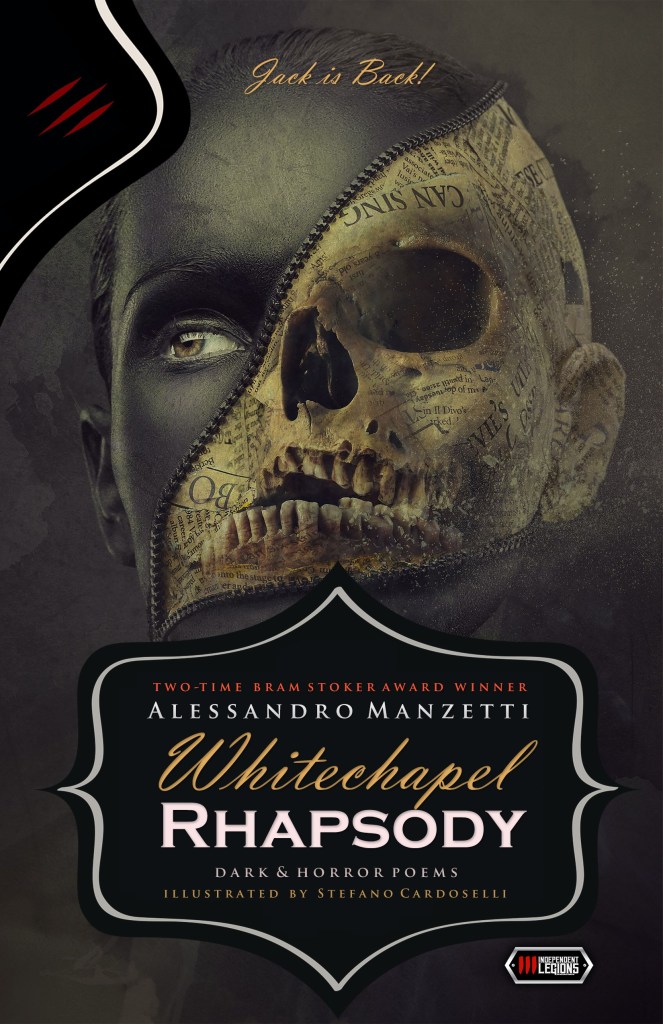
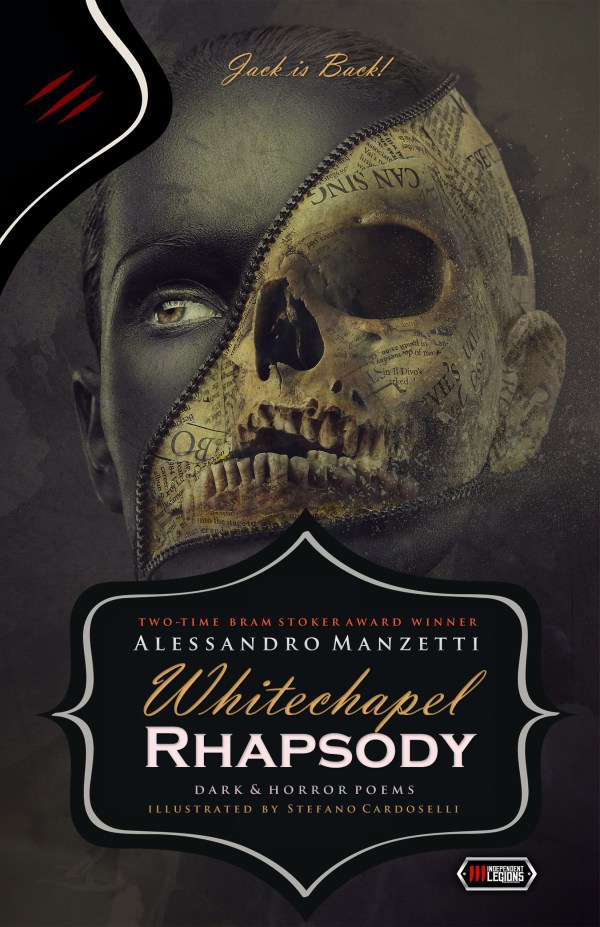
Alessandro Manzetti’s Whitechapel Rhapsody finds horror in beauty


Alessandro Manzetti’s Whitechapel Rhapsody offsets the deluded grandeur of Jack the Ripper’s psychological world against the vivid despair of his environment. Written as a series of thematically connected, free-verse poems, Manzetti’s collection functions as an interesting exercise in depicting this core dissonance: the serial killer’s self-aggrandizing, romantic view of his own violence versus the true horror of its consequences. By setting these ideas at the center of his book, Manzetti offers a worthwhile study of longstanding tensions and ideas central to the horror genre: namely, the aesthetic merits and problems of braiding beauty with violence, and the destructive potential of artists with God complexes (in an abstract way, this brings to mind Lars von Trier’s excellent and similarly complicated The House That Jack Built [2018]).

The book boasts a breadth of reference that is fascinating and, in line with its central concerns, conflicted (not only key characters from the New Testament and Greek mythology, but also Rembrandt, Poe and Dickens, among others). The book is rich with sensory detail, showcasing Manzetti’s penchant for invoking brutal imagery via gorgeous language. Taking the form of something close to prose-poetry, the collection’s verse is accompanied by evocative black-and-white illustrations by Stefano Cardoselli.

Interestingly, the final poem, “The Dark King,” deviates from the book’s fixation on the Whitechapel district of 1888. Presenting the book’s most explicitly psychosexual elements, this piece dehistoricizes Jack the Ripper and imagines him as a cipher for man’s social rot, transcending time and place: “I am … / … Bukowski’s drunk stomach,” Manzetti writes, before urging the reader to “take between [their] teeth / this ticket to a grotesque Musée d’Orsay / full of iridescent French and Tahitian vulvas.” The poem (and collection) closes with a disturbing final line that implicates the reader in this uneasy marriage between cruelty and aesthetic attraction: “I am your dark side.”

At a slim length of fewer than one hundred pages, Whitechapel Rhapsody is ambitious, richly developed, and well worth your time.

Darkest Hours author Mike Thorn talks to Josiah Morgan about writing, genre and influences

k1

Josiah Morgan and I have been online acquaintances for several years, bonding initially over our mutual passion for film. I recently read his debut poetry collection Inside the Castle and was stunned by its formal sophistication, thematic complexity and breadth of reference. I sent him a message asking if he would like to publish a chat with me about writing, genre and influences, and he kindly agreed.

Our conversation is now available to read on Kendall Reviews.

Create a website or blog at WordPress.com

Up ↑