Author | Critic

Pre-2024 releases only.
TOP 10 (one per author)
Daisy Miller, by Henry James (1879)
A Room with a View, by E. M. Forster (1908)
Pan’s Garden: A Volume of Nature Stories, by Algernon Blackwood (1912)
The Custom of the Country, by Edith Wharton (1913)
Their Eyes Were Watching God, by Zora Neale Hurston (1937)
Cassandra at the Wedding, by Dorothy Baker (1962)
Another World, by Pat Barker (1998)
Heartbreaker, by Maryse Meijer (2016)
Babysitter, by Joyce Carol Oates (2022)
The Guest, by Emma Cline (2023)
ADDITIONAL STANDOUT READS
We Are Here to Hurt Each Other, by Paula D. Ashe (2022)
This Mortal Coil, by Cynthia Asquith (1947)
The Space of Literature, by Maurice Blanchot (1955)
The Writing of the Disaster, by Maurice Blanchot (1980)
Dandelion Wine, by Ray Bradbury (1957)
Wieland; or, The Transformation: An American Tale, by Charles Brockden Brown (1798)
Edgar Huntly; or, Memoirs of a Sleepwalker, by Charles Brockden Brown (1799)
The Sublime and the Beautiful, by Edmund Burke (1757)
The Daughters of Block Island, by Christa Carmen (2023)
Gothic Metaphysics: From Alchemy to the Anthropocene, by Jodey Castricano (2021)
The King in Yellow, by Robert W. Chambers (1895)
Don’t Look Now, by Daphne du Maurier (1971)
Shirley Jackson: A Rather Haunted Life, by Ruth Franklin (2016)
Sea, Swallow Me and Other Stories, by Craig Laurance Gidney (2008)
Twice-Told Tales, by Nathaniel Hawthorne (1837)
The Marble Faun, by Nathaniel Hawthorne (1860)
The Talented Mr. Ripley, by Patricia Highsmith (1955)
The Woman in Black, by Susan Hill (1983)
The Witchcraft of Salem Village, by Shirley Jackson (1956)
Let Me Tell You, by Shirley Jackson [edited by Laurence Hyman & Sarah Hyman DeWitt] (2015)
Burn Man: Selected Stories, by Mark Anthony Jarman (2023)
Man and His Symbols, edited by C. G. Jung & M.-L von Franz (1964)
Uzumaki, by Junji Ito (2013)
The Red Tree, by Caitlín R. Kiernan (2009)
The Truth About Stories: A Native Narrative, by Thomas King (2003)
Something Like an Autobiography, by Akira Kurosawa (1981)
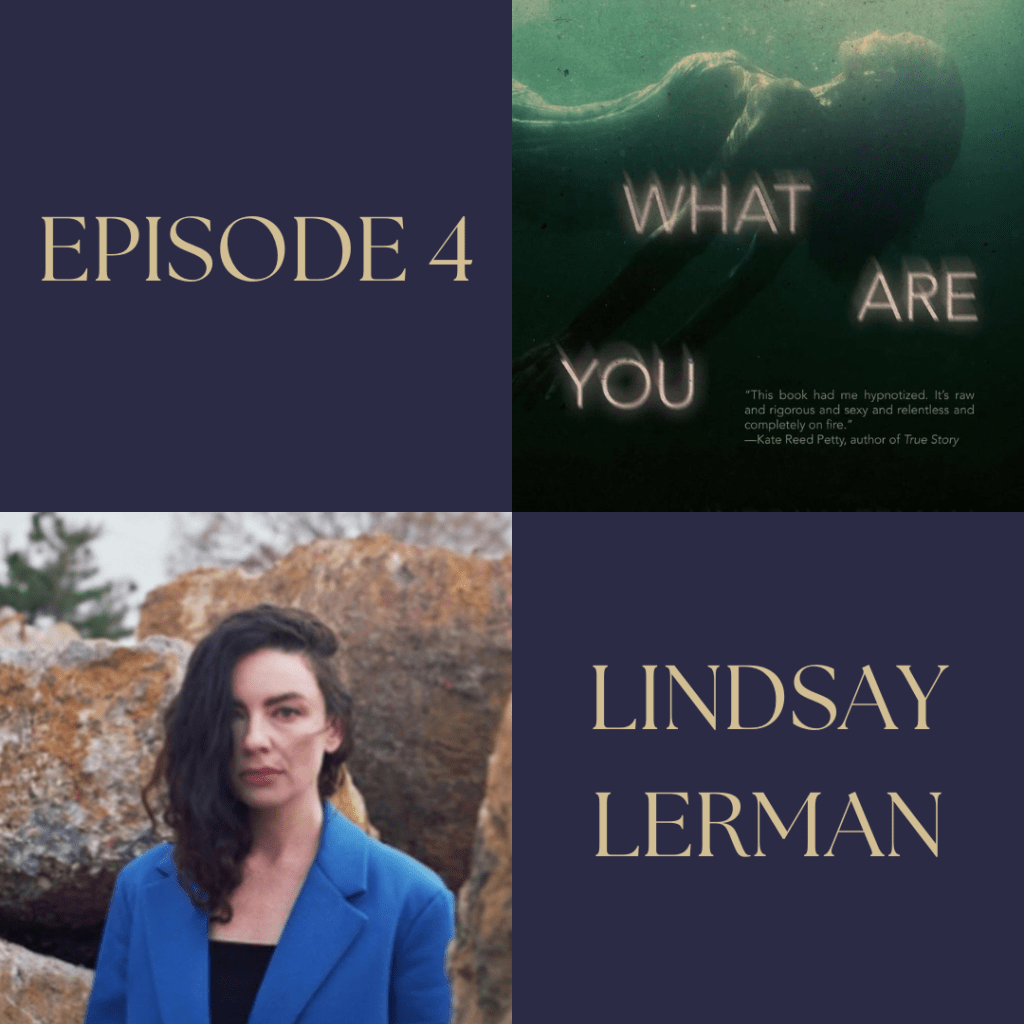
What Are You, by Lindsay Lerman (2022)
Existence and Existents, by Emmanuel Levinas (1947)
Peyton Place, by Grace Metalious (1956)
Who Will Run the Frog Hospital?, by Lorrie Moore (1994)
Playing in the Dark: Whiteness and the Literary Imagination, by Toni Morrison (1992)
Devil in a Blue Dress, by Walter Mosley (1990)
Black Water, by Joyce Carol Oates (1992)
New England’s Gothic Literature, by Faye Ringel (1995)
The Gothic Literature and History of New England, by Faye Ringel (2022)
The Devil’s Candy: The Anatomy of a Hollywood Fiasco, by Julie Salamon (1991)
The Last Man, by Mary Shelley (1826)
The Craft of Writing, by William Sloane (1979)
Lost Boy Lost Girl, by Peter Straub (2003)
The Door, by Magda Szabó (1987)
The Fantastic: A Structural Approach to a Literary Genre, by Tzvetan Todorov (1970)
A Fatal Inversion, by Barbara Vine (1987)
The Color Purple, by Alice Walker (1982)
Star-Begotten, by H. G. Wells (1937)
Ghosts, by Edith Wharton (1937)
The Bonfire of the Vanities, by Tom Wolfe (1987)
Strange Seed, by T. M. Wright (1978)

Listen to Craftwork Episode 4: Scaffolding, Dionysus, & Mental Bonfires w/ Lindsay Lerman.
In this interview, Lindsay Lerman talks about philosophy, procedural knowledge, writing dialogue, and so much more.
Lindsay Lerman is a writer and translator. Her first book, I’m From Nowhere, was published in 2019. Her second book, What Are You, was published in 2022. Her first translation was published in 2023. She holds a PhD in Philosophy from the University of Guelph in Ontario, Canada. She is working on a novel, a philosophy manuscript, and here and there, some screenplays. She lives in Berlin.
Books mentioned in this episode:

“Over the past few years I’ve had the privilege of enjoying an ongoing dialogue with one of my major creative influences, award-winning writer Kathe Koja. Two years ago, she and I discussed genre and process during the virtual launch for my second short story collection, Peel Back and See. Last year, we discussed our work’s relationship with cinema for In Review Online. While brainstorming about topics for future conversations, we decided to pursue the concept of numinosity: its permutations in literature in film and the role it plays in our own creative projects. This article is the result of our email thread on the subject.”

Shepherd asked 949 authors and super readers to select their three favorite reads of 2023. Read Mike Thorn’s thoughts on his choices here.
Bleedthrough and Other Small Horrors, by Scarlett R. Algee (2020)
The Flowers of Evil, by Charles Baudelaire [edited by Marthiel and Jackson Mathews, multiple editors] (1857)
The Unnamable, by Samuel Beckett (1953)
Selling the Splat Pack: The DVD Revolution and the American Horror Film, by Mark Bernard (2014)
The Brigadier and the Golf Widow, by John Cheever (1964)
On the Heights of Despair, by E. M. Cioran [translated by Ilinca Zarifopol-Johnston] (1933)
The Trouble with Being Born, by E. M. Cioran [translated by Richard Howard] (1973)
Porno Valley, by Philip Elliott (2021)
Less Than Zero, by Bret Easton Ellis (1985)
The Rules of Attraction, by Bret Easton Ellis (1987)
American Psycho, by Bret Easton Ellis (1991)
The Informers, by Bret Easton Ellis (1994)
Glamorama, by Bret Easton Ellis (1998)
Lunar Park, by Bret Easton Ellis (2005)
Imperial Bedrooms, by Bret Easton Ellis (2010)
The Shards, by Bret Easton Ellis (2021)
Carmilla, by J. Sheridan Le Fanu (1872)
The Queer Art of Failure, by J. Jack Halberstam (2011)
In the Presence of Schopenhauer, by Michel Houellebecq [translated by Andrew Brown] (2017)
Humanimus, by David Huebert (2020)
The Damned, by J. K. Huysmans [translated by Terry Hale] (1891)
The Europeans, by Henry James (1878)
Washington Square, by Henry James (1880)
The Bostonians, by Henry James (1886)
Ghost Stories, by Henry James (1898)
Billy Summers, by Stephen King (2021)
The Wingspan of Severed Hands, by Joe Koch (2020)
Straydog, by Kathe Koja (2002)
The Blue Mirror, by Kathe Koja (2004)
Dark Factory, by Kathe Koja (2022; forthcoming)
I’m from Nowhere, by Lindsay Lerman (2019)
Shock!, by Richard Matheson (1961)
The Birds and Other Stories, by Daphne du Maurier (1952)
The Running Trees, by Amber McMillan (2021)
The Seventh Mansion, by Maryse Meijer (2020)
Circles, by Josiah Morgan (2020)
The Barrens, by Joyce Carol Oates (2001)
1984, by George Orwell (1949)
White is for Witching, by Helen Oyeyemi (2009)
The World as Will and Representation, Volume I, by Arthur Schopenhauer [translated by Judith
Norman and Alistair Welchman] (1818)
Wes Craven: Interviews, edited by Shannon Blake Skelton (2019)
Of One Pure Will, by Farah Rose Smith (2019)
The Secret History, by Donna Tartt (1992)
A History of Touch, by Erin Emily Ann Vance (2022; forthcoming)
Miss Lonelyhearts, by Nathanael West (1933)
The Ax, by Donald E. Westlake (1997)

“A list of favorite books is always more a snapshot of a moment in time than it is some unmoving, monumental thing: if you asked me to assemble this list ten years ago, it would look a lot different, and undoubtedly it will continue shifting as I continue aging and reading and aging and reading.”


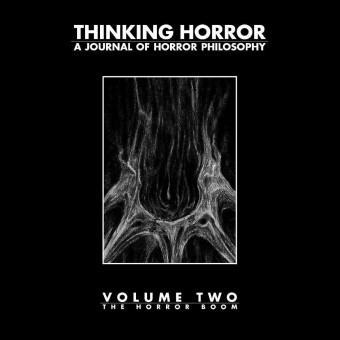
Thinking Horror: Volume 2 is now available to order. It includes Mike Thorn’s essay “Collective Abjection: Social Horror in Stephen King’s It,” cover art by Stephen Wilson, interviews with genre giants (Steve Rasnic Tem, Lisa Tuttle, John Skipp and Nick Mamatas) and essays by many contemporary luminaries (including Gemma Files, Michael Cisco and Christopher Burke).