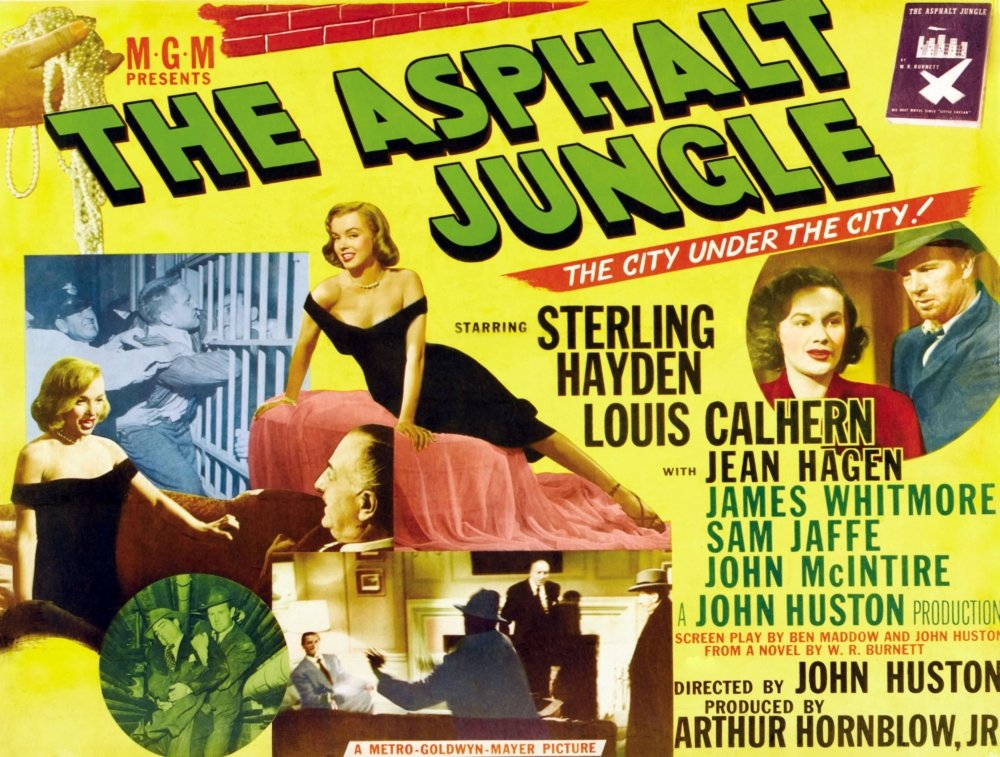
Merrily We Go to Hell (Dorothy Arzner, 1932) Duel in the Sun (King Vidor, 1946) Forever Amber (Otto Preminger, 1947) Secret Beyond the Door (Fritz Lang, 1947) Raw Deal (Anthony Mann, 1948) The Asphalt Jungle (John Huston, 1950) Don’t Bother to Knock (Roy Ward Baker, 1952) Magnificent Obsession (Douglas Sirk, 1954) Pushover (Richard Quine, 1954) Senso (Luchino Visconti, 1954) Cleopatra (Joseph L. Mankiewicz, 1963) Valley of the Dolls (Mark Robson, 1967) Looking for Mr. Goodbar (Richard Brooks, 1977) Looker (Michael Crichton, 1981) The Appointment (Lindsey C. Vickers, 1982) Mike’s Murder (James Bridges, 1984) Cold Heaven (Nicolas Roeg, 1991) Single White Female (Barbet Schroeder, 1992) Color of Night (Richard Rush, 1994) Torment (Claude Chabrol, 1994) Double Team (Tsui Hark, 1997) Unfaithful (Adrian Lyne, 2002) How Do You Know(James L. Brooks, 2010) The Eternal Daughter (Joanna Hogg, 2022) Cloud (Kiyoshi Kurosawa, 2024)
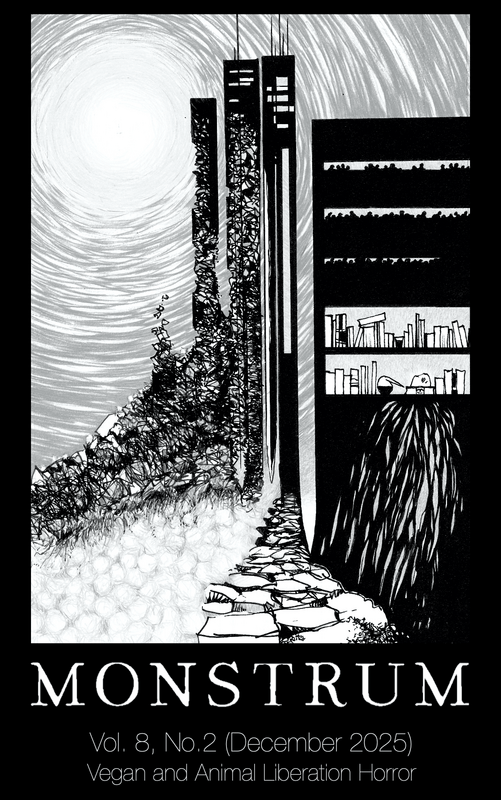
Guest-edited by horror scholar and fiction writer Mike Thorn, this robust issue presents six feature essays, two works of original fiction, a dossier of retrospective reviews, and two essays in our student forum. Feature essays cover both literature and the moving image from a broad range of perspectives. From reorienting human and more-than-human animal perspectives in the essays by Poulomi Choudhury, Dru Jeffries, and Britt MacKenzie-Dale, to epistemological and ontological shifts in the way we think of human and more than-human ecologies in the essays by Zoë Anne Laks, Jenni Makahnouk, and William Taylor, and the Introduction by Mike Thorn, the contributions to this special issue explore the challenge of thinking beyond harmful anthropocentric and hegemonic capitalist world systems.
For the first time, this issue of Monstrum includes original fiction. In “The Playground,” celebrated horror author Kathe Koja (The Cipher, Under the Poppy, Straydog) traces a shift in ecological sensibility to what might be called a necessary violence. And with “Cogno,” Mike Thorn (Darkest Hours, Peel Back and See) brings us into the terrifying world of tech-bro longevity at the expense of … maybe everything.
A selection of retrospective reviews considers literary and cinematic texts that strive to reorient human and nonhuman animal perspectives, including a critical reassessment of the (anti-)anthropocentrism in Nobel laureate Olga Tokarczuk’s novel Drive Your Plow Over the Bones of the Dead (2018), the vegan aesthetic of Rob Zombie’s films via House of 1000 Corpses (2003), and the brutal struggle against becoming-animal in Stuart Gordon’s grim King of the Ants (2003).
The student forum includes two essays by emerging scholars that continue the issue’s investigations of radical otherness. A product of the SSHRC-funded “Horror Ecologies” workshop by CORERISC held in summer 2024 at Dawson College, Emerson Reault’s essay reads Ginger Snaps as a trans allegory, reconsidering the film’s metaphorical “curse” as less one of becoming a woman, than that of an understanding of one’s embodiment. In their essay, Luka Romney looks at radical empathy for the “animal” Other via Julia Kristeva’s concept of herethics in two of Larry Cohen’s most provocative 1970s films, It’s Alive! (1976) and It Lives Again (1978).
Hosts Josh and Jamie and special returning guest Mike Thorn kick off SPOOKTOBER by discussing two different eras of largely faithful Stephen King adaptations: Mary Lambert’s playful, colorful and yet still effectively upsetting and morbid realization of PET SEMATARY (1989) and Lawrence Kasdan’s attempt at keeping a straight (expensive Hollywood production) face while King bizarrely remixes many of his career-long obsessions in the painkiller induced fever dream of DREAMCATCHER (2003).
Taweewat Wantha’s Attack 13 is unabashedly commercial entertainment — a horror movie made with the kind of cleanness, galloping pace, and pulsing score typical of much contemporary action cinema. However, within its mainstream parameters, it finds openings for some genuinely nasty imagery and social observation, and it creatively crossbreeds high school melodrama and supernatural horror conventions.
“Missing Child Videotape’s most significant virtues are in the intricacies of its folklore-steeped plot, which patiently unfolds with carefully administered moments of eerie revelation, especially surrounding the site of its central mystery.”
Die Nibelungen, Part II: Kriemhild’s Revenge (Fritz Lang, 1924) Cleopatra (Cecil B. DeMille, 1934) Three Comrades (Frank Borzage, 1938) Mogambo (John Ford, 1953) Johnny Guitar (Nicholas Ray, 1954) The Girl in the Red Velvet Swing (Richard Fleischer, 1955) Peyton Place (Mark Robson, 1957) The Big Country (William Wyler, 1958) The Hound of the Baskervilles (Terence Fisher, 1959) Imitation of Life (Douglas Sirk, 1959)
ADDITIONAL STANDOUT VIEWINGS
City Girl (F. W. Murnau, 1930) Dodsworth (William Wyler, 1936) The Philadelphia Story (George Cukor, 1940) The House of the Seven Gables (Joe May, 1940) Carnival of Sinners (Maurice Tourneur, 1943) The Spiral Staircase (Robert Siodmak, 1946) The Passionate Friends (David Lean, 1949) Wagon Master (John Ford, 1950) The Tall Target (Anthony Mann, 1951) Rancho Notorious (Fritz Lang, 1952) Pickup on South Street (Samuel Fuller, 1953) The Long Gray Line (John Ford, 1955) The Quatermass XPeriment (Val Guest, 1955) Summertime (David Lean, 1955) Quatermass 2 (Val Guest, 1957) The Last Hurrah (John Ford, 1958) The Reluctant Debutante (Vincente Minnelli, 1958) A Summer Place (Delmer Daves, 1959) Tender is the Night (Henry King, 1962) Jason and the Argonauts (Don Chaffey, 1963) Danza Macabra (Antonio Margheriti, 1964) War-Gods of the Deep (Jacques Tourneur, 1965) Island of Terror (Terence Fisher, 1966) Quatermass and the Pit (Roy Ward Baker, 1967) Dracula Has Risen from the Grave (Freddie Francis, 1968) The Unfaithful Wife (Claude Chabrol, 1969) The Age of the Medici (Roberto Rossellini, 1972) The Stone Tape (Peter Sasdy, 1972) Messiah of Evil (Willard Huyck & Gloria Katz, 1974) The Parallax View (Alan J. Pakula, 1974) Burnt Offerings (Dan Curtis, 1976) The Nixon Interviews with David Frost (Jørn Winther, 1977) Losing Ground (Kathleen Collins, 1982) The 4th Man (Paul Verhoeven, 1983) Angel Dust (Gakuryū Ishii, 1994) Devil in a Blue Dress (Carl Franklin, 1995) Perfect Blue (Satoshi Kon, 1997) Serpent’s Path (Kiyoshi Kurosawa, 1998) Ju-On: The Curse 2 (Takashi Shimizu, 2000) Nightcap (Claude Chabrol, 2000) Moulin Rouge! (Baz Luhrmann, 2001) Shallow Hal (Bobby Farrelly & Peter Farrelly, 2001) Ju-On: The Grudge 2 (Takashi Shimizu, 2003) Swimming Pool (François Ozon, 2003) The Bridesmaid (Claude Chabrol, 2004) Speak (Jessica Sharzer, 2004) The Staircase (Jean-Xavier de Lestrade, 2004/2018) Reincarnation (Takashi Shimizu, 2005) A Girl Cut in Two (Claude Chabrol, 2007) Australia (Baz Luhrmann, 2008) Missing (Tsui Hark, 2008) Bluebeard (Catherine Breillat, 2009) Occult (Koji Shiraishi, 2009) Watchmen [director’s cut] (Zack Snyder, 2009) Untold History of the United States (Oliver Stone, 2012) A Cure for Wellness (Gore Verbinski, 2016) The Putin Interviews (Oliver Stone, 2017) Sharp Objects (Jean-Marc Vallée, 2018) The Staircase (Jean-Xavier de Lestrade, 2018) I Love You, Now Die: The Commonwealth v. Michelle Carter (Erin Lee Carr, 2019) Hemingway (Ken Burns & Lynn Novick, 2021) The Deep End (Jon Kasbe, 2022) Eureka (Lisandro Alonso, 2023) Immersion (Takashi Shimizu, 2023) Last Summer (Catherine Breillat, 2023) Tell Them You Love Me (Nick August-Perna, 2023) The Zone of Interest (Jonathan Glazer, 2023)
“Chime traffics in the ‘eerie’ titular concept of Mark Fisher’s The Weird and the Eerie: a kind of placid, almost subliminal detachment that Fisher argues ‘can give us access to the forces which govern reality but which are ordinarily obscured, just as it can give us access to spaces beyond mundane reality altogether.’ The chime, then, is an auditory metonym for the eerie, an experience that exceeds the visceral shock of horror to inhabit the more transcendent power of terror — 18th-century gothic novelist Ann Radcliffe defines these terms as two distinct phenomena: ‘Terror and horror are so far opposite, that the first expands the soul, and awakens the faculties to a high degree of life; the other contracts, freezes, and nearly annihilates them.’ In Chime, the high degree of life is the very thing that contracts, freezes, and annihilates.”
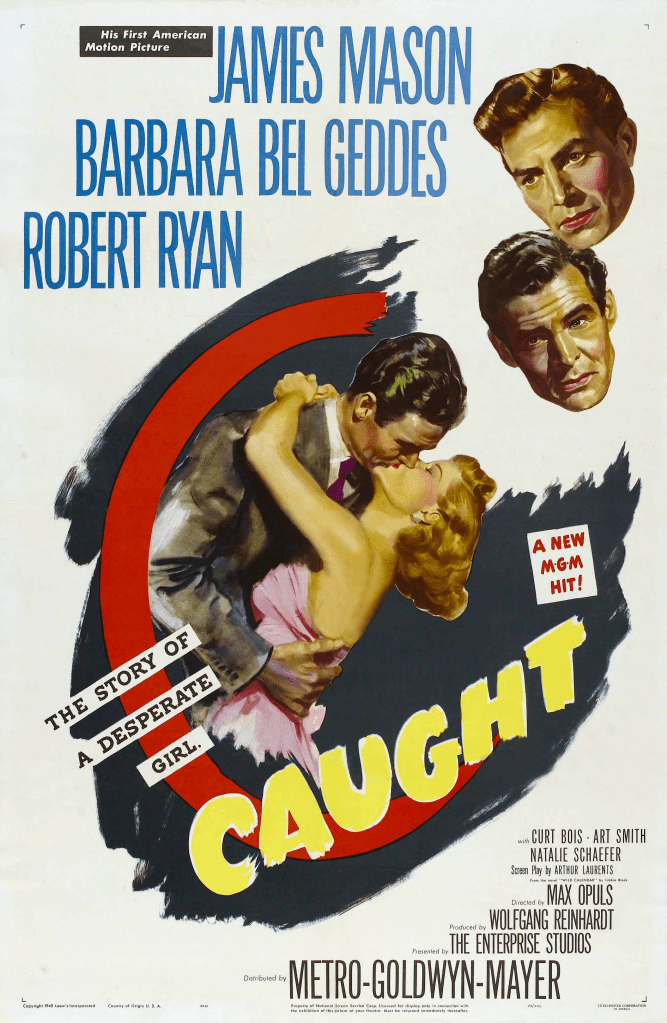
La Bête Humaine (Jean Renoir, 1938) The Best Years of Our Lives (William Wyler, 1946) Margie (Henry King, 1946) Daisy Kenyon (Otto Preminger, 1947) They Live by Night (Nicholas Ray, 1948) Caught (Max Ophüls, 1949) Lust for Life (Vincente Minnelli, 1956) The Man Who Knew Too Much (Alfred Hitchcock, 1956) See No Evil (Richard Fleischer, 1971) Trilogy of Terror (Dan Curtis, 1975) Mikey and Nicky (Elaine May, 1976) Pauline at the Beach (Éric Rohmer, 1983) A Better Tomorrow (John Woo, 1986) Patty Hearst (Paul Schrader, 1988) Jade (William Friedkin, 1995) Nixon (Oliver Stone, 1995) Stealing Beauty (Bernardo Bertolucci, 1996) Romance (Catherine Breillat, 1999) Ju-On: The Curse (Takashi Shimizu, 2000) Universal Soldier: Day of Reckoning (John Hyams, 2012)
Other standouts
After Death (Yevgeni Bauer, 1915) Satan’s Rhapsody (Nino Oxilia, 1917) Warning Shadows (Arthur Robison, 1923) A House Divided (William Wyler, 1931) Safe in Hell (William A. Wellman, 1931) Night at the Crossroads (Jean Renoir, 1932) A Night on Bald Mountain (Claire Parker & Alexandre Alexeieff, 1933) From Mayerling to Sarajevo (Max Ophüls, 1940) The Letter (William Wyler, 1940) The Woman in the Window (Fritz Lang, 1944) The Ghost and Mrs. Muir (Joseph L. Mankiewicz, 1947) The Woman on the Beach (Jean Renoir, 1947) The Reckless Moment (Max Ophüls, 1949) Stage Fright (Alfred Hitchcock, 1950) Gentlemen Prefer Blondes (Howard Hawks, 1953) French Cancan (Jean Renoir, 1955) A Kiss Before Dying (Gerd Oswald, 1956) Interlude (Douglas Sirk, 1957) The H-Man (Ishirô Honda, 1958) I Bury the Living (Albert Band, 1958) The Flesh and the Fiends (John Gilling, 1960) Allures (Jordan Belson, 1961) X: The Man with the X-Ray Eyes (Roger Corman, 1963) The Collector (William Wyler, 1965) The Birthday Party (William Friedkin, 1968) Secret Ceremony (Joseph Losey, 1968) Claire’s Knee (Éric Rohmer, 1970) The Last Run (Richard Fleischer, 1971) Super Fly (Gordon Parks Jr., 1972) Legacy of Satan (Gerard Damiano, 1974) Night Moves (Arthur Penn, 1975) The Haunting of Julia (Richard Loncraine, 1977) The Pied Piper (Jiří Barta, 1986) The Comfort of Strangers (Paul Schrader, 1990) Def by Temptation (James Bond III, 1990) Deep Cover (Bill Duke, 1992) The Tempest (Stanislav M. Sokolov, 1992) Green Snake (Tsui Hark, 1993) Affliction (Paul Schrader, 1997) Forever Mine (Paul Schrader, 1999) In the Bedroom (Todd Field, 2001) Auto Focus (Paul Schrader, 2002) Innocence (Lucile Hadzihalilovic, 2004) Universal Soldier: Regeneration (John Hyams, 2009) Nas: Time is Illmatic (One9, 2014) The Jinx: The Life and Deaths of Robert Durst (Andrew Jarecki, 2015) Beware the Slenderman (Irene Taylor Brodsky, 2016) Sick (John Hyams, 2022) Tár (Todd Field, 2022)






 Mike Thorn