
“Stand by Me finds its thematic core in the friendship between Gordie and Chris, who both perform masculine toughness to protect their mutually innate sensitivity.”
Author | Critic

“Stand by Me finds its thematic core in the friendship between Gordie and Chris, who both perform masculine toughness to protect their mutually innate sensitivity.”

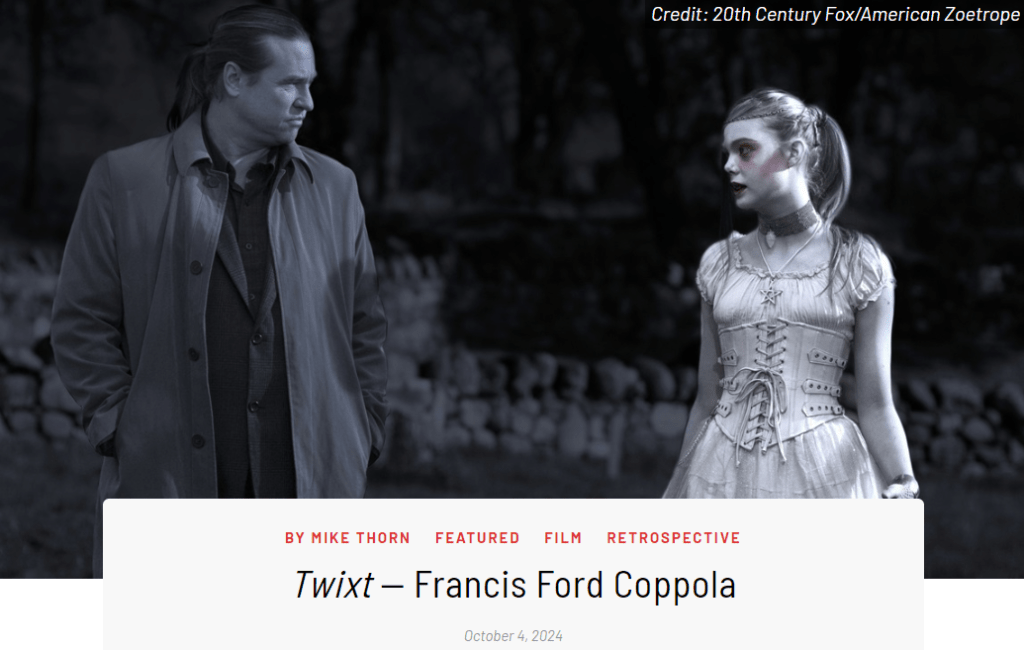
“The film’s lush, otherworldly dreamscapes foreground the theme of time by contrasting contemporary film technology against the aesthetics of Gothic pasts. Coppola fills Baltimore’s nocturnal visions with Expressionist gestures: tilted crosses and jagged shadows summon the ghosts of Murnau, Wiene, and Lang.”


“Director Alexandre Aja’s latest film, Never Let Go, occupies a deliberately liminal space. Its threadbare plot suggests a post-apocalyptic near future, but its central family is stuck in a Gothic past.”


“Sayuri makes overtures to the cultural anxieties underlying many haunted house narratives, with several lines pointedly alluding to what constitutes a ‘happy life.’ An early scene depicts a teacher asking her disinterested class to analyze a poem by posing questions such as ‘Where do we find happiness?’ and ‘What exactly is happiness?’ The film ultimately disavows the notion that domestic ownership equals anything like existential fulfillment or familial harmony. It locates horror in the conformist embrace of cultural repetitions, depicting its haunting as something like a tape stuck in a loop: the same ghostly giggle echoes through the house again and again, haunted TVs replay snippets of glitchy footage, and one character repeatedly watches the simulated reenactment of her beloved’s grisly death.”


“Satan Wants You wisely elides ridiculing the era it depicts, instead level-headedly examining the factors that gave birth to Smith and Pazder’s book and its ensuing cultural hysteria.”


“Sympathy for the Devil works best when viewed purely as a vehicle (no pun intended) for Cage.”


“If The Way of Water is a crucial work of tech Romanticism, then another of its richest central dissonances is that between past and future: it imagines a world that stands a chance against modernity’s most brutal and oppressive machinations, thus situating itself in the past, but it also uses its genre modality to speculate a future that exceeds postmodernity’s politically flattening failures.”


Many people are doing their best to process the current state of the world amidst the coronavirus pandemic, and attempting to do anything creative has become impossible. While an onslaught of projects will percolate in the future related to this time in quarantine, it will be difficult to find one that resonates quite like Sophy Romvari and Mike Thorn’s short film, Some Kind of Connection.

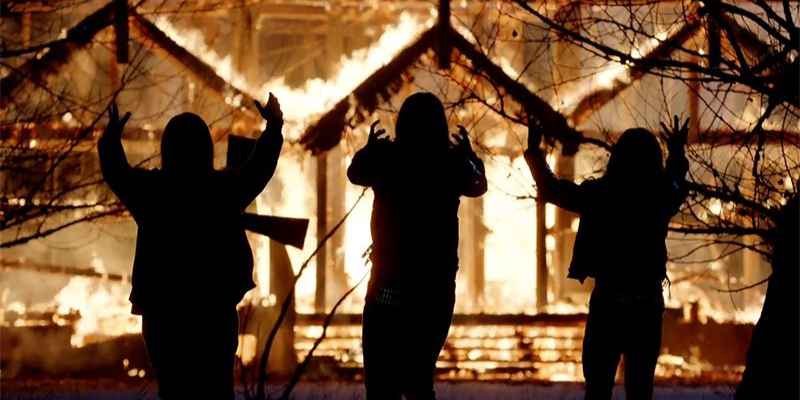
I had a good time discussing Lords of Chaos with Andrew Swafford for Cinematary. Among other things, we delved into the film’s dealings with black metal, representation vs. reality and fascism. Check it out.


The co-hosts of the Sleazoids Podcast (Josh Lewis and Jamie Miller) invited to talk about two films of my choice. The rules: they both had to be genre films (preferably one relatively “known” film and one I considered under-appreciated) and they both had to be pre-2000 releases. I went with The Tingler (1959) and Corridors of Blood (1958).
 Mike Thorn