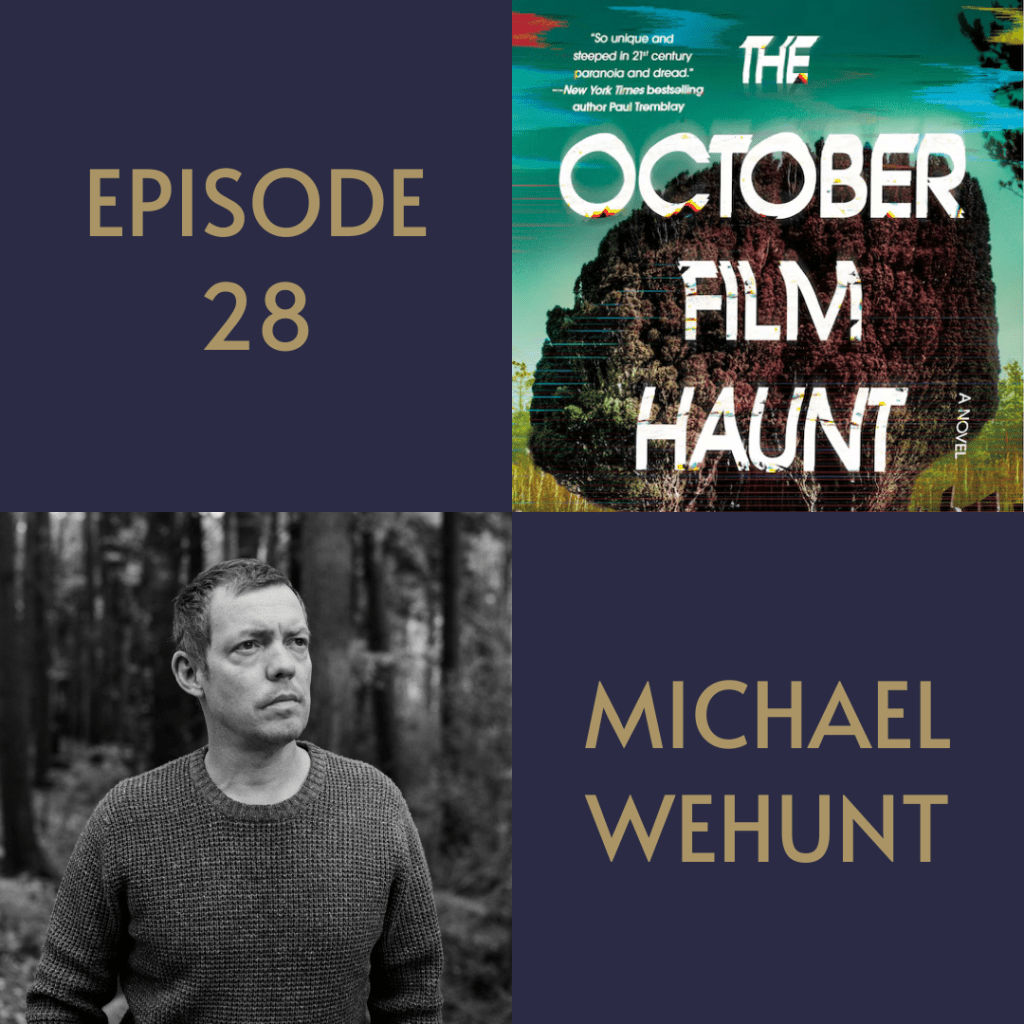
In this interview, we chat with Michael Wehunt about the administrative side of professional writing, the unanticipated weirdness of public selfhood, the “moment before the moment”, and so much more.
Michael Wehunt has been a finalist for the Bram Stoker Award, multiple Shirley Jackson Awards, and the International Association for the Fantastic in the Arts’ Crawford Award. In Spain, his translated works have garnered nominations for the Premio Ignotus and Premio Amaltea, winning the latter. He haunts the woods of Decatur, Georgia, with his partner and their dog. Together, they hold the horrors at bay. Most recently, he is the author of the novels The October Film Haunt and Nightjars.
Books and poems mentioned in this episode:
Ancient Images; The Grin of the Dark; Incarnate — Ramsey Campbell
Generation X: Tales for an Accelerated Culture — Douglas Coupland
Poems 1962-2020 — Louise Glück
Carrie — Stephen King
Beings — Ilana Masad
The God of the Woods; Long Bright River — Liz Moore
“I propose that horror literature, by definition, hinges on this vexed dialectic, between the affective destruction of thought and the creative process of thought (specifically, of cognizing the incognizable: the supernatural, the numinous, the unseen, the illegible). Within this dialectic, the horror writer oscillates between helpless prey to horror and the creative agent of horror.”
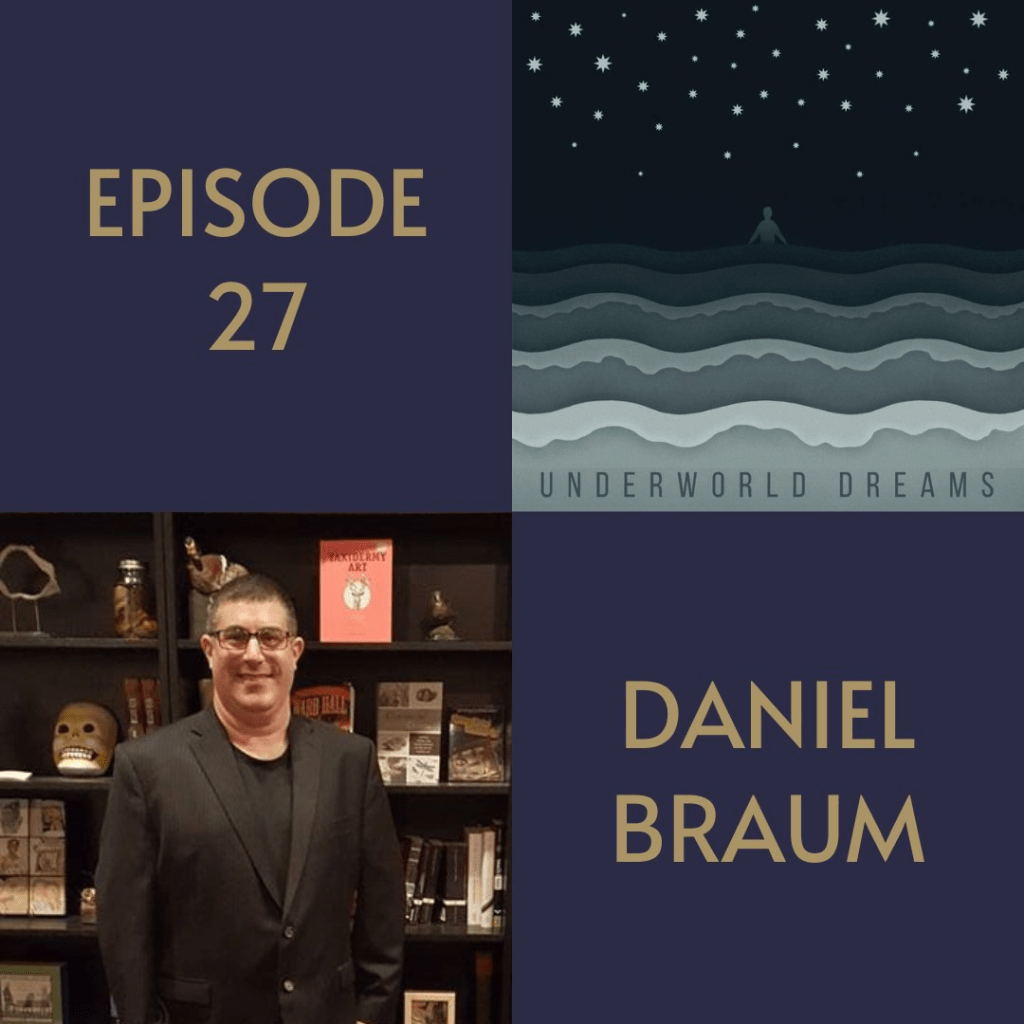
In this interview, we chat with Daniel Braum about exploring the ecology of the supernatural, finding inspiration in liminal spaces, cultivating a sense of awe, and so much more.
Daniel Braum writes short stories that explore the tension between the psychological and the supernatural. He intentionally adopts the term “strange tales” for his “Twilight Zone-like stories in homage to author Robert Aickman and the intentional ambiguities of his work. His latest collection is Phantom Constellations: Strange Tales and Ghost Stories from Cemetery Dance Publications (2025). His stories appear in places ranging from The Best Horror of the Year Volume 12, edited by Ellen Datlow, and Shivers 8, edited by Richard Chizmar.
Books and stories mentioned in this episode:
Cold Hand in Mine — Robert Aickman
The Artist’s Way — Julia Cameron
Ancient Images; The Hungry Moon — Ramsey Campbell
“Plunged in the Years” — Jeffrey Ford
“Children of the Corn” — Stephen King
The Ceremonies — T. E. D. Klein
Beginnings, Middles & Ends — Nancy Kress
Dreams of Dark and Light — Tanith Lee
Rosemary’s Baby; The Stepford Wives — Ira Levin
Story — Robert McKee
Conjunctions 83: The Ghost Issue — Joyce Carol Oates and Bradford Morrow, eds.
The Jaguar Hunter — Lucius Shepard
Shadowland — Peter Straub
Conjunctions 39: The New Wave Fabulists — Peter Straub, ed.
Harvest Home — Thomas Tryon
The Writer’s Journey: Mythic Structure for Writers — Chris Vogler
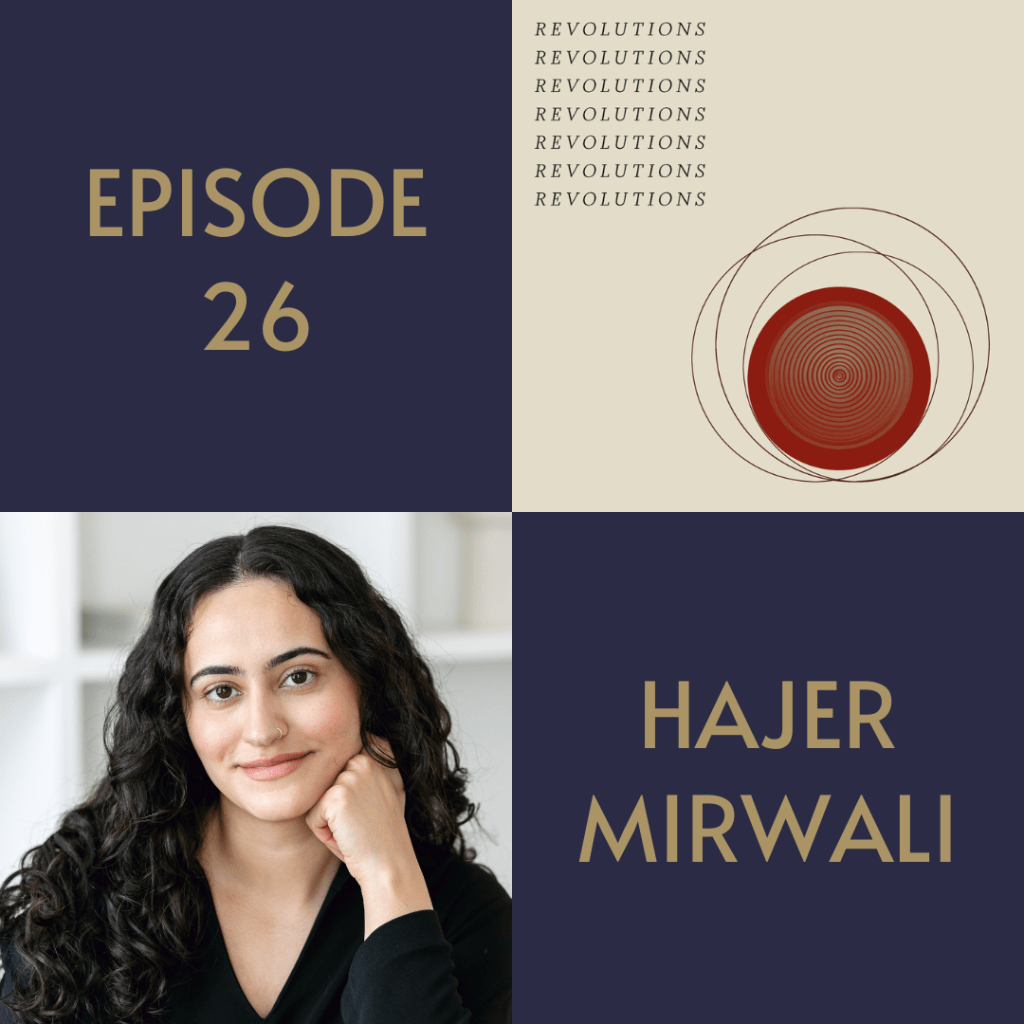
In this interview, we chat with Hajer Mirwali about cross-disciplinary work, embodied writing, poetic mad libs, and so much more.
Hajer Mirwali is a Palestinian and Iraqi writer living in Toronto. Her first book, Revolutions (Talonbooks, 2025), is a collection of poetry on shame, pleasure, and Arab Muslim girlhood. Two poems from the collection also appear in an anthology of Palestinian poetry called Heaven Looks Like Us (Haymarket Books, 2025). Hajer’s work has been published in The Ex-Puritan, Brick Magazine, Room Magazine, and Joyland. She has an MFA in Creative Writing from the University of Guelph, and a BA in Creative Writing from York University.
Northanger Abbey, by Jane Austen (1817) The Moonstone, by Wilkie Collins (1868) The Island of Dr. Moreau, by H. G. Wells (1896) What Maisie Knew, by Henry James (1897; 1908 New York Edition) The House of Souls, by Arthur Machen (1906) Widdershins, by Oliver Onions (1911) Summer, by Edith Wharton (1917) Tales of the Jazz Age, by F. Scott Fitzgerald (1922) The Maltese Falcon, by Dashiell Hammett (1930) Strangers on a Train, by Patricia Highsmith (1950) The Nothing Man, by Jim Thompson (1954) A Severed Head, by Iris Murdoch (1961) Aura, by Carlos Fuentes (1962) Slouching Towards Bethlehem, by Joan Didion (1968) Sula, by Toni Morrison (1973) The Coherence of Gothic Conventions, by Eve Kosofsky Sedgwick (1980) Bad Behavior, by Mary Gaitskill (1988) Ancient Images, by Ramsey Campbell (1989) Blonde, by Joyce Carol Oates (2000) Border Crossing, by Pat Barker (2001) These Truths: A History of the United States, by Jill Lepore (2018) The Best of Both Worlds, by S. P. Miskowski (2020) Hi, It’s Me, by Fawn Parker (2024) Dark Matter, by Kathe Koja (2025) Wreckage / What Happens in Hello Jack, by Peter Straub (2025)
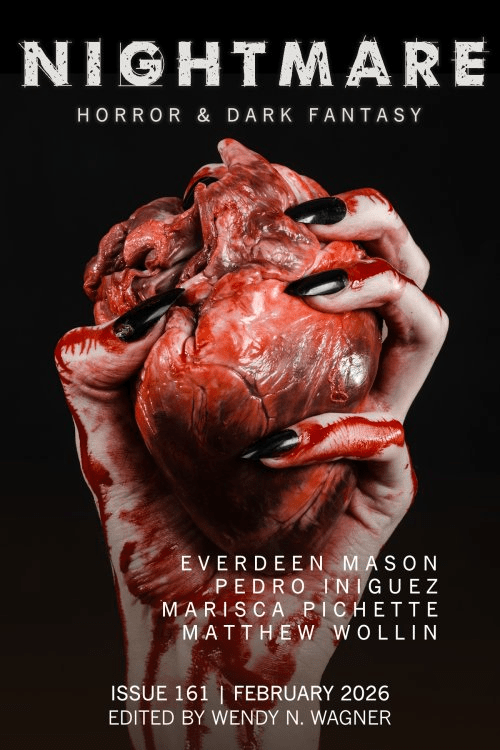
What do you desire from the natural world? For millions of years, we’ve been shaped and reshaped by the environment around us. If technology has the power to mimic lush lands and blue waters, how do we bond if we can’t tell what is real or not—or worse, does it even matter? In this issue, we journey through galaxies where love knows no bounds, nature that heals, wild hearts to be untamed, plants that lust.
Reading is arguably the most crucial practice for any serious writer. In this course, you will “reverse engineer” acclaimed short stories to determine how and why they work. You will use these stories as lenses into key aspects of effective fiction (dialogue, plotting, voice, character, etc.) The course will help you to identify the key features of various distinctive prose styles, and you will participate in guided writing exercises inspired by those styles.
Winter term:
Wednesdays, Feb. 11 to March 25 (6 weeks, no class March 4) 6:30 – 8 p.m. $135 (+ HST)
In this interview, we chat with Kasia Van Schaik about reverse outlining, asking “what if”, sublimating emotion through landscape, and so much more.
Kasia Van Schaik is the author of the Giller Prize-nominated story collection We Have Never Lived on Earth and the forthcoming book of memoir and cultural criticism, Women Among Monuments. With Myra Bloom, she is the co-editor of the essay collection, Shelter in Text: Essays on Dwelling and Refuge. Kasia’s writing has appeared in Electric Literature, the LA Review of Books, Room, The Rumpus, the Best Canadian Poetry, and the CBC. Kasia holds a PhD in literature from McGill University and is assistant professor of English and co-director of Creative Writing at the University of New Brunswick in Fredericton, Wolastoqiyik territory.
Books mentioned in this episode:
Wuthering Heights — Emily Brontë
The Secret Garden — Frances Hodgson Burnett
Autobiography of Red — Anne Carson
Boyhood; Youth; Summertime — J. M. Coetzee
Outline; Transit; Kudos — Rachel Cusk
The Days of Abandonment; the Neapolitan Quartet — Elena Ferrante
Mike Thorn seeks proposals of no more than 500 words for essays (5000-7000 words) on or related to the topics listed below.
He is especially interested in essays addressing multiple Straub-authored novels and stories, and in analyses of under-studied works, such as Straub’s poetry collections; Marriages; Under Venus; If You Could See Me Now; Mr. X; and In the Night Room. He might consider close readings of individual novels or stories in some cases, but he will give preference to proposals referencing multiple texts. Send proposals and queries to mikethorn@live.com.
Proposals should include descriptive titles, preliminary reference lists, and brief, 100-word personal bios.
Chapter Topics
Pre-Gothic Straub: On the Poetry and Early Literary Novels: Proposals should address Marriages and Under Venus; they might also draw on Straub’s poetry collections.
The Early American Gothic Sequence: Proposals should address Julia, If You Could See Me Now, and Ghost Story. They might also consider Under Venus.
Narrative Unreliability and Genre-Slipperiness: On Straub’s “Blue Rose” Novels: Proposals should address Koko, Mystery, and The Throat; they might also consider The Juniper Tree and Other Blue Rose Stories.
Straub Gets Weird: On Straub’s Engagements with H. P. Lovecraft and the Weird Tradition: Proposals should address the novels Mr. X and Floating Dragon. They might also consider A Dark Matter, The Talisman, or other novels or stories deemed Weird or Weird-adjacent.
American Serial Killer Mythologies: Proposals should address The Hellfire Club and A Special Place. They might also consider other novels or short stories depicting serial killers, including the “Blue Rose” novels (Koko, Mystery, and The Throat), The Green Woman, Black House, Mr. X, “A Short Guide to the City”, “Ashputtle”, and “Bunny is Good Bread.”
The Metafictional Straub: Intertextuality and Narrative Self-Reflection: Proposals should address lost boy lost girl and In the Night Room. They might also address the preceding Timothy Underhill “Blue Rose” novels (Koko, Mystery, and The Throat) and other metafictional works, such as The Buffalo Hunter and The Hellfire Club.
Straub’s Short Fiction: Proposals should address at least one story or novella from each of the following collections: Houses Without Doors; Magic Terror; Interior Darkness.
Writers and Writing in Straub’s Fiction: Proposals should address The Hellfire Club and at least one of the Timothy Underhill novels (Koko, Mystery, The Throat, lost boy lost girl, and In the Night Room). They might also consider Ghost Story or other novels and stories representing writers and writing, including Mrs. God, “The Juniper Tree” and “The Geezers.”
Gothic Trauma: Proposals should explore depictions of individual and collective trauma in Peter Straub’s fiction. They might address personal traumas in stories and novels like “The Juniper Tree”, “Bunny is Good Bread”, Julia, If You Could See Me Now, Ghost Story, Under Venus, The Hellfire Club,and A Dark Matter, and/or representations of PTSD and the Vietnam war in Koko, The Throat, and “The Ghost Village.”
Nonfictional Straub: Critical Commentary and Curations: Proposals should consider some of the author’s essays and introductions compiled in Sides, Conjunctions, Poe’s Children, “Beyond the Veil of Vision: Peter Straub and Anthony Discenza”, and American Fantastic Tales.
Straub’s Literary Legacy and Influence: Proposals should place Straub’s work in conversation with his literary successors. Proposals should examine one or more of Straub’s novels or stories in tandem with one or more works by Kelly Link, Caitlín R. Kiernan, Elizabeth Hand, Stephen Graham Jones, Brian Evenson, or another high-profile fiction writer who has publicly cited Straub’s influence.
Editor Biography
Mike Thorn is the author of Shelter for the Damned, Darkest Hours, and Peel Back and See. His scholarship has been published or is forthcoming in American Gothic Studies, The Oxford Handbook of Shirley Jackson, The Weird: A Companion, American Twilight: The Cinema of Tobe Hooper, Thinking Horror: A Journal of Horror Philosophy, and elsewhere. He holds his PhD in English from the University of New Brunswick.







 Mike Thorn