
“Shelter for the Damned is loaded with nightmarish scenes and if the idea of a dark coming-of-age story meeting Kathe Koja’s The Cipher intrigues you, this is definitely the book for you.”
Author | Critic

“Shelter for the Damned is loaded with nightmarish scenes and if the idea of a dark coming-of-age story meeting Kathe Koja’s The Cipher intrigues you, this is definitely the book for you.”

“Mike has a way of paying homage to his influences while creating something incredibly fresh and new, and combining very modern struggles with elements of fear that have plagued humanity for ages.”



“This juxtaposition between some admittedly cheesy films and their serious thematic undercurrents can be jarring, and nowhere is this effect more evident than in Mike Thorn’s ‘Lizard Brain Ouroboros: Human Antiexceptionalism in Tobe Hooper’s Eaten Alive and Crocodile.’ These films are not the director’s best by a longshot (although the former, his 1976 follow-up to Texas Chain Saw, has enjoyed a cult following), but Thorn skillfully dissects how they illustrate ‘the [triune brain] theory…that human cognition’s roots can be traced to the nonhuman animal world’ (106). The boundary separating these worlds dissolves, and viewers may find themselves rooting more for the so-called ‘monsters’ than the oblivious humans exploiting them.”

“Mike Thorn likes to push his readers’ buttons in surprising ways. I’ve never read two stories by him that were really alike and yet there exists a quintessential Mike Thorn story. Shelter for the Damned is a prime example of his artistry.”


“I could probably sit here and write an essay on why I think Mike Thorn is an author to watch, why I think he takes a great deal of time and effort to make his tales accessible and relatable, and why I think his creative imagination is going to take the world by storm at some point.”



“No surprise here, but when Mike Thorn decides to go dark, it goes dark. It was great to see these stories snap and crack with the energy Mike is known for and we got to revisit a couple oldies, but goodies.”


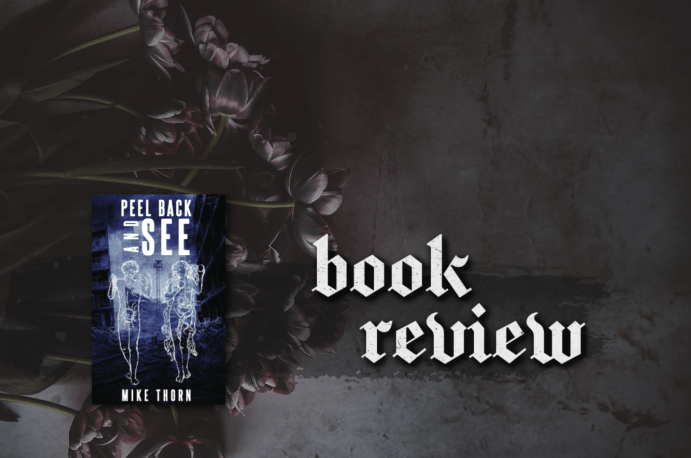
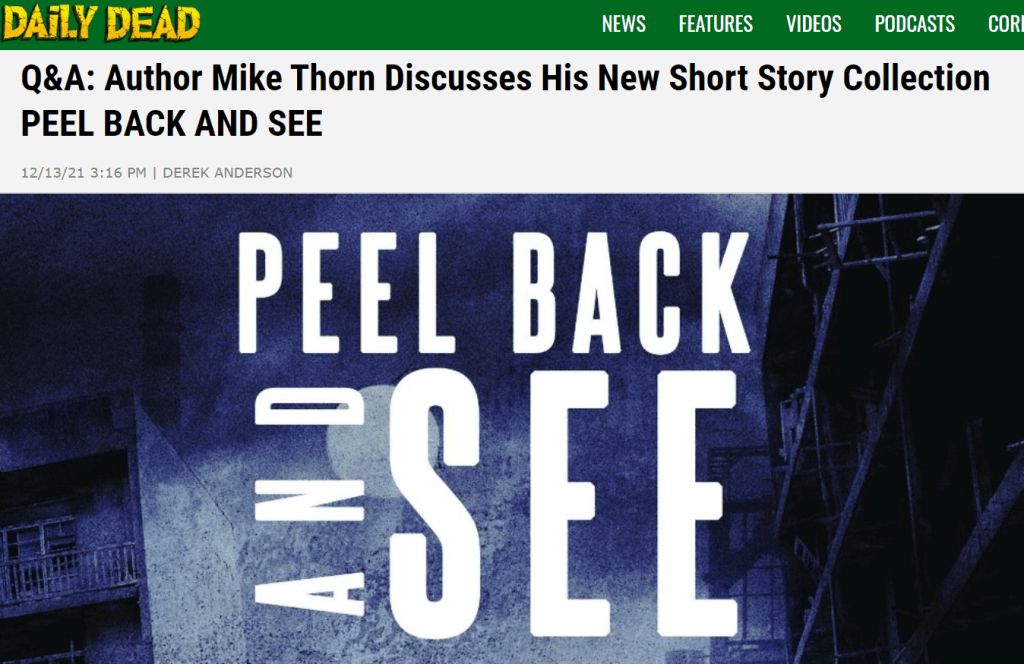
“As a whole, Peel Back and See is probably my bleakest book to date, with only a few diversions into more playful genre territory (e.g. ‘Mr. Mucata’s Final Requests’, ‘The Furnace Room Mutant’, and ‘Virus’). For the most part, these stories are awash in the personal affective experiences of chronic depression, anxiety, psychological ruptures, post-postmodern despair, addiction, loss, grief, nihilism, pessimism, and suicidal ideation.”

 Mike Thorn