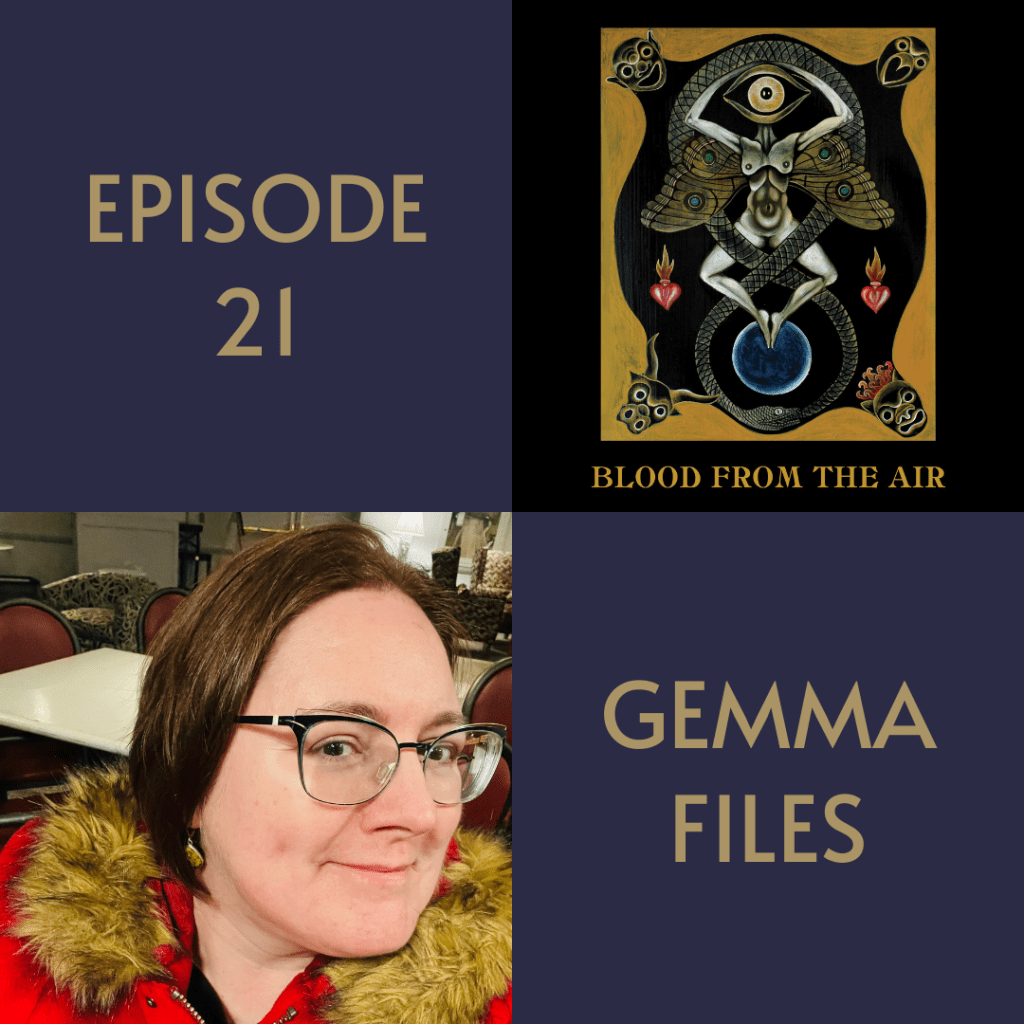
In this interview, we chat with Gemma Files about horny monsters, Lovecraftian Airbnbs, the female gaze, and so much more.
Previously a film critic, journalist and teacher, Gemma Files has been an award-winning horror author since 1999. She’s best-known for her novel Experimental Film (Open Road Media) and her collections of short fiction, including the Bram Stoker Award-winning In That Endlessness, Our End and Blood From the Air (both from Grimscribe). Her next book, Little Horn: Stories, will be out in October from Shortwave. She is the autistic mother of an autistic son. For fun she sings, and doodles pretty monsters.
Books mentioned in this episode:
Empire of the Sun – J. G. Ballard
D’Aulaire’s Book of Greek Myths; Norse Gods and Giants – Edgar Parin d’Aulaire and Ingri Parin d’Aulaire
Black Flame – Gretchen Felker-Martin
The Rotting Room – Viggy Parr Hampton
Barrowbeck; The Loney; Starve Acre – Andrew Michael Hurley
Bright Dead Star; Zoetrope Bizarre – Caitlín R. Kiernan
The Jungle Book; The Second Jungle Book – Rudyard Kipling
In this interview, we chat with Naben Ruthnum about character development, avoiding TV-brained writing, making sense of first-reader notes, and so much more.
Naben Ruthnum is a Toronto-based writer of fiction, cultural criticism, film and TV. His novel A Hero of Our Time was released by Penguin Random House and was optioned for development by The Littlefield Company. His books include the YA novel The Grimmer, the World Fantasy Award-nominated horror novella Helpmeet and two thrillers penned as Nathan Ripley, both of which have been optioned for development and were published internationally. He has written for Canadian television series including Murdoch Mysteries and Cardinal. As a feature screenwriter, he’s collaborated with Kris Bertin for feature and TV projects in development at Oddfellows, BoulderLight Pictures, Automatik, Skybound, and Blink49. Kris and Naben’s script Road Test made the 2024 Black List.
Books mentioned in this episode:
A Clockwork Orange – Anthony Burgess
The Sorceress in Stained Glass & Other Ghost Stories – Richard Dalby, ed.
The Name of the Rose – Umberto Eco
The Black Dahlia; Killer on the Road; L.A. Confidential; My Dark Places – James Ellroy
Black Flame – Gretchen Felker-Martin
The James Bond series – Ian Fleming
The Collector; The Magus – John Fowles
The Green Carnation – Robert Hichens
The Americans; The Tragic Muse; The Turn of the Screw – Henry James
Supernatural Horror in Literature – H. P. Lovecraft
The Beckoning Fair One – Oliver Onions
A Fatal Inversion; Master of the Moor – Ruth Rendell
Flicker – Theodore Roszak
The Tempest – William Shakespeare
Ghost Story; If You Could See Me Now; In the Night Room; Koko; The Throat – Peter Straub
The Secret History – Donna Tartt
A Dark-Adapted Eye; The House of Stairs – Barbara Vine
Peter Straub: New Critical Perspectives (edited by Mike Thorn)
In his introduction to John C. Tibbetts’s The Gothic Worlds of Peter Straub (2016)—the only academic, book-length study of Straub’s fiction currently in print—Gary K. Wolfe argues that “[p]erhaps more than any author of his generation—Stephen King included—Straub extended the literary possibilities of horror fiction.” Despite Peter Straub’s legacy as a leading figure in late twentieth- and early twenty-first-century horror fiction, and his influence on dark fiction writers ranging from Caitlín R. Kiernan to Stephen Graham Jones, there is currently a scarcity of scholarship on his oeuvre. Since his passing in September 2022, Straub’s work has seen increased attention. Penguin Random House is rereleasing most of his books in 2025 and Subterranean Press is scheduled to publish his unfinished final novel, Wreckage, later this year. Stephen King, who co-authored The Talisman (1984) and Black House (2001) with Straub, recently announced that he has completed the final instalment in their collaborative trilogy, and in 2022, Emma Straub published This Time Tomorrow, a celebrated novel about her father.
Mike Thorn is collaborating with the University Press of Mississippi to publish Peter Straub: New Critical Perspectives, which will offer the first multiple-authored academic anthology on Peter Straub. This volume will provide an array of critical perspectives on Straub’s robust body of work, addressing the author’s place in the Gothic and Weird traditions and examining his thematic fixations, including national and individual traumas; abusive mentors and authority figures; supernatural manifestations of material misdeeds; America’s mythologizing of serial killers; the fraught distinctions between “literary” and “commercial” fiction; the vexing instability of assumed “truths” and “realities”; and the infinitely complex nature of narrative as such—its formal malleability, its capacity for phenomenological and ontological rupture, its social functions, and its potentials and dangers. The collection will address Straub’s previously understudied pre-Gothic poetry and novels, Marriages and Under Venus, as well as his popularly celebrated and award-winning novels (including Ghost Story, Floating Dragon, and Koko), his collaborations with Stephen King (The Talisman and Black House) and his short stories and critical essays. The book will be geared towards a broad readership—from undergraduate and graduate university students, to interested general readers, to scholars and researchers seeking original insights into Straub, the American Gothic, and horror fiction writ large.
Proposal Submission Details
Mike Thorn seeks proposals of no more than 500 words for essays (5000-7000 words) on or related to the topics listed below (proposals should include descriptive titles and preliminary reference lists). He is especially interested in essays addressing multiple Straub-authored novels and stories, and in analyses of under-studied works, such as Straub’s poetry collections; Marriages; Under Venus; If You Could See Me Now; Mr. X; and In the Night Room. He might consider close readings of individual novels or stories in some cases, but he will give preference to proposals referencing multiple texts. Please include a brief, 100-word personal bio. Send proposals and queries to mikethorn@live.com.
Chapter Topics
Pre-Gothic Straub: On the Poetry and Early Literary Novels: Proposals should address Marriages and Under Venus; they might also draw on Straub’s poetry collections.
The Early American Gothic Sequence: Proposals should address Julia, If You Could See Me Now, and Ghost Story. They might also consider Under Venus.
Narrative Unreliability and Genre-Slipperiness: On Straub’s “Blue Rose” Novels: Proposals should address Koko, Mystery, and The Throat; they might also consider The Juniper Tree and Other Blue Rose Stories.
Straub Gets Weird: On Straub’s Engagements with H. P. Lovecraft and the Weird Tradition: Proposals should address the novels Mr. X and Floating Dragon. They might also consider A Dark Matter, The Talisman, or other novels or stories deemed Weird or Weird-adjacent.
American Serial Killer Mythologies: Proposals should address The Hellfire Club and A Special Place. They might also consider other novels or short stories depicting serial killers, including the “Blue Rose” novels (Koko, Mystery, and The Throat), The Green Woman, Black House, Mr. X, “A Short Guide to the City”, “Ashputtle”, and “Bunny is Good Bread.”
The Metafictional Straub: Intertextuality and Narrative Self-Reflection: Proposals should address lost boy lost girl and In the Night Room. They might also address the preceding Timothy Underhill “Blue Rose” novels (Koko, Mystery, and The Throat) and other metafictional works, such as The Buffalo Hunter and The Hellfire Club.
Straub’s Short Fiction: Proposals should address at least one story or novella from each of the following collections: Houses Without Doors; Magic Terror; Interior Darkness.
Writers and Writing in Straub’s Fiction: Proposals should address The Hellfire Club and at least one of the Timothy Underhill novels (Koko, Mystery, The Throat, lost boy lost girl, and In the Night Room). They might also consider Ghost Story or other novels and stories representing writers and writing, including Mrs. God, “The Juniper Tree” and “The Geezers.”
Gothic Trauma: Proposals should explore depictions of individual and collective trauma in Peter Straub’s fiction. They might address personal traumas in stories and novels like “The Juniper Tree”, “Bunny is Good Bread”, Julia, If You Could See Me Now, Ghost Story, Under Venus, The Hellfire Club,and A Dark Matter, and/or representations of PTSD and the Vietnam war in Koko, The Throat, and “The Ghost Village.”
Nonfictional Straub: Critical Commentary and Curations: Proposals should consider some of the author’s essays and introductions compiled in Sides, Conjunctions, Poe’s Children, “Beyond the Veil of Vision: Peter Straub and Anthony Discenza”, and American Fantastic Tales.
Straub’s Literary Legacy and Influence: Proposals should place Straub’s work in conversation with his literary successors. Proposals should examine one or more of Straub’s novels or stories in tandem with one or more works by Kelly Link, Caitlín R. Kiernan, Elizabeth Hand, Stephen Graham Jones, Brian Evenson, or another high-profile fiction writer who has publicly cited Straub’s influence.
Preliminary Publication timeline
Deadline for proposals: November 30, 2025 Deadline for papers: January 1, 2027 Editor feedback: March 1, 2027 Deadline for final, revised papers: July 1, 2027 Manuscript submitted to University Press of Mississippi: September 1, 2027 Tentatively scheduled publication date: September 2028
Editor Biography
Mike Thorn, PhD, is the author of Shelter for the Damned, Darkest Hours, and Peel Back and See. His scholarship has been published or is forthcoming in American Gothic Studies, The Oxford Handbook of Shirley Jackson, The Weird: A Companion, American Twilight: The Cinema of Tobe Hooper, Thinking Horror: A Journal of Horror Philosophy, and elsewhere. He co-hosts the writing-themed Craftwork podcast with Miriam Richer.
“Gothic cinema inherits an ongoing obsession with writers and writing from its literary ancestors, but how does it translate such text-based fixations into its own audiovisual grammar? How does it stage ‘objective’ diegeses in concert with the innately subjective representations of writers and the act of writing? This article approaches these questions, not by offering a comprehensive history of Gothic films depicting writers (that would require a long, book-length project), but by analyzing a trio of writer-focused Gothic films notable for their dealings with literary ancestry through negotiations between subjective interiority and diegetic objectivity.”
“Chime traffics in the ‘eerie’ titular concept of Mark Fisher’s The Weird and the Eerie: a kind of placid, almost subliminal detachment that Fisher argues ‘can give us access to the forces which govern reality but which are ordinarily obscured, just as it can give us access to spaces beyond mundane reality altogether.’ The chime, then, is an auditory metonym for the eerie, an experience that exceeds the visceral shock of horror to inhabit the more transcendent power of terror — 18th-century gothic novelist Ann Radcliffe defines these terms as two distinct phenomena: ‘Terror and horror are so far opposite, that the first expands the soul, and awakens the faculties to a high degree of life; the other contracts, freezes, and nearly annihilates them.’ In Chime, the high degree of life is the very thing that contracts, freezes, and annihilates.”
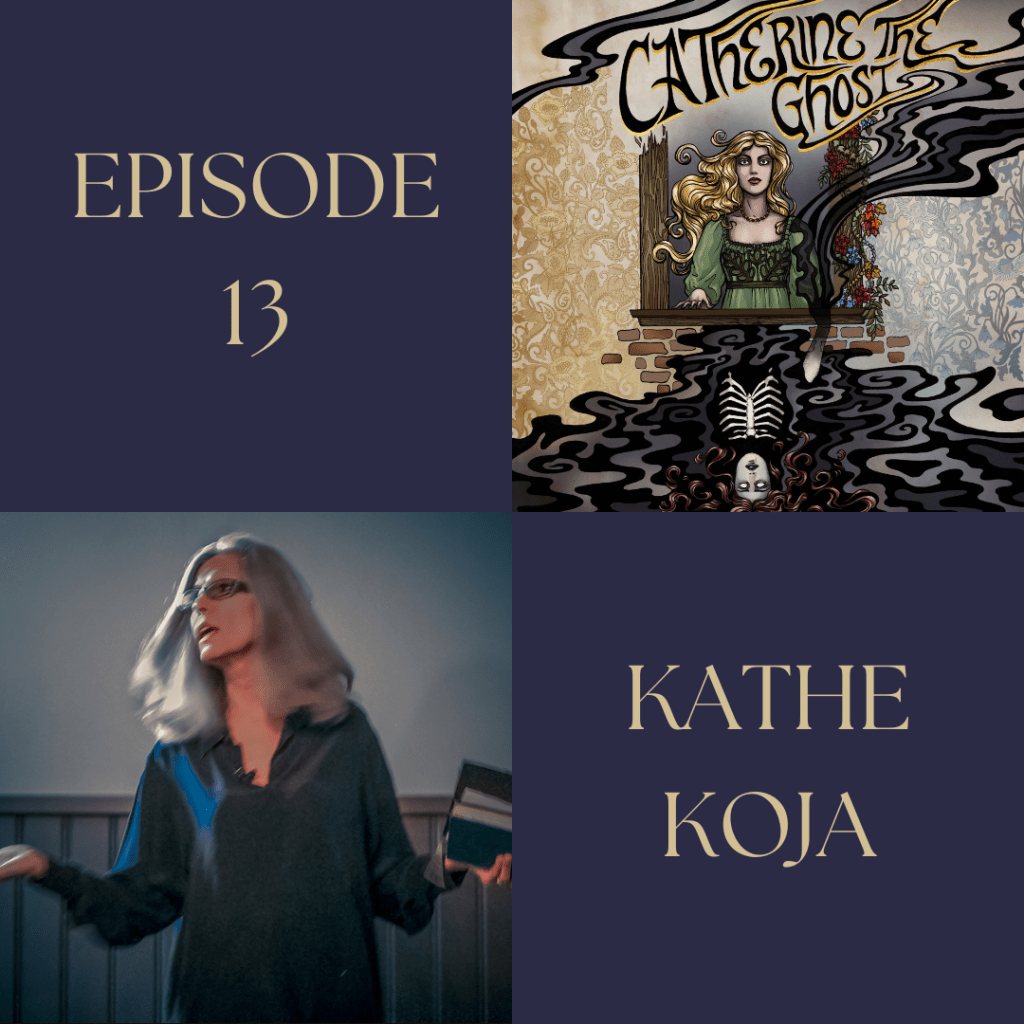
In this interview, we chat with Kathe Koja about balancing simultaneous projects, resisting online distractions, raising the literary dead, and so much more.
Kathe Koja writes novels and short fiction, and creates and produces live and virtual events. Her award-winning books include The Cipher, Skin, Buddha Boy, Under The Poppy and Velocities, and she is currently at work on the Dark Factory immersive fiction project including Dark Factory, Dark Park and Dark Matter. Catherine the Ghost is her newest novel.
Submissions are now open for Monstrum 8.2, a special issue devoted to horror and ecohorror’s engagements with veganism and animal liberation. We seek proposals for essays (5,000-7,000 words) devoted to horror texts, modalities, and philosophies with a focus on veganism or animal rights.
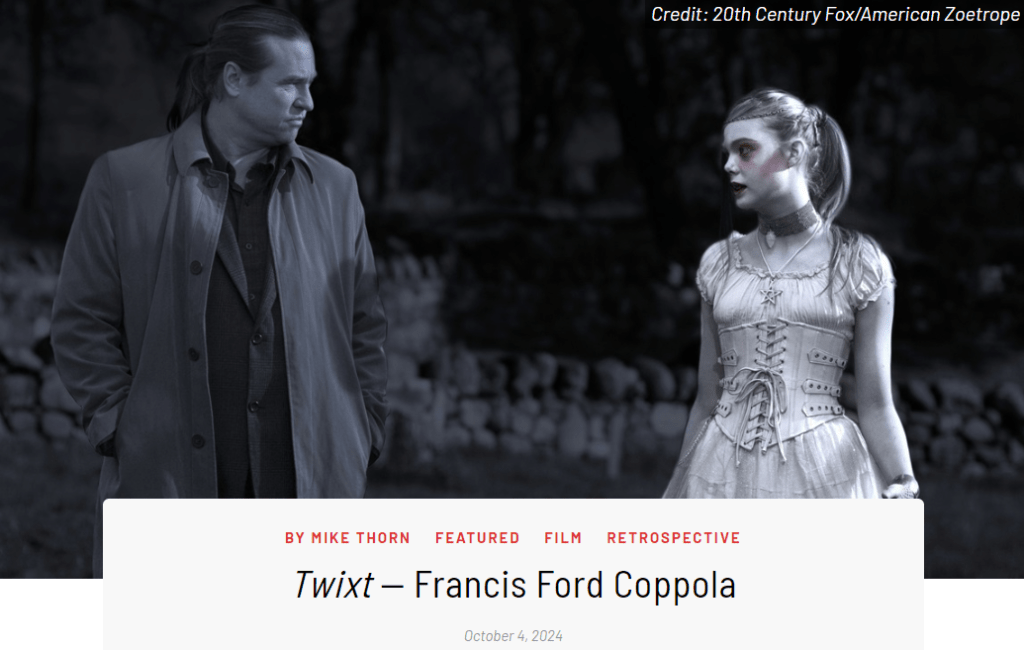
“The film’s lush, otherworldly dreamscapes foreground the theme of time by contrasting contemporary film technology against the aesthetics of Gothic pasts. Coppola fills Baltimore’s nocturnal visions with Expressionist gestures: tilted crosses and jagged shadows summon the ghosts of Murnau, Wiene, and Lang.”