
“Stand by Me finds its thematic core in the friendship between Gordie and Chris, who both perform masculine toughness to protect their mutually innate sensitivity.”
Author | Critic

“Stand by Me finds its thematic core in the friendship between Gordie and Chris, who both perform masculine toughness to protect their mutually innate sensitivity.”

One per director. Chronologically organized.
Merrily We Go to Hell (Dorothy Arzner, 1932)
Duel in the Sun (King Vidor, 1946)
Forever Amber (Otto Preminger, 1947)
Secret Beyond the Door (Fritz Lang, 1947)
Raw Deal (Anthony Mann, 1948)
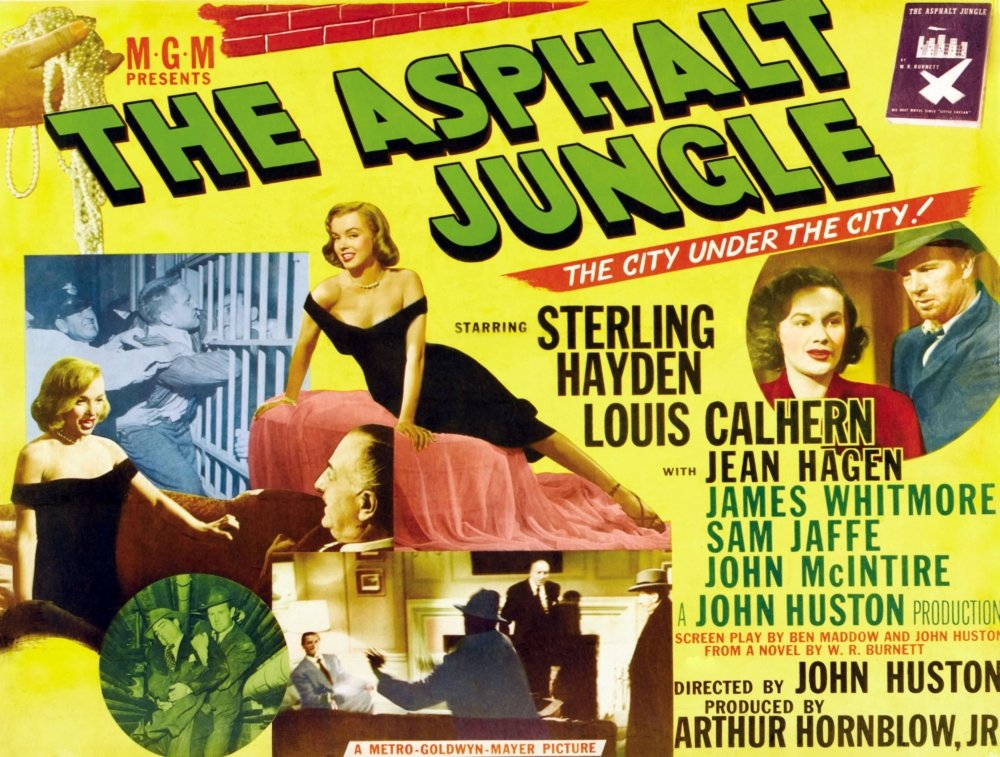
The Asphalt Jungle (John Huston, 1950)
Don’t Bother to Knock (Roy Ward Baker, 1952)
Magnificent Obsession (Douglas Sirk, 1954)
Pushover (Richard Quine, 1954)
Senso (Luchino Visconti, 1954)
Cleopatra (Joseph L. Mankiewicz, 1963)
Valley of the Dolls (Mark Robson, 1967)
Looking for Mr. Goodbar (Richard Brooks, 1977)
Looker (Michael Crichton, 1981)
The Appointment (Lindsey C. Vickers, 1982)
Mike’s Murder (James Bridges, 1984)
Cold Heaven (Nicolas Roeg, 1991)
Single White Female (Barbet Schroeder, 1992)
Color of Night (Richard Rush, 1994)
Torment (Claude Chabrol, 1994)
Double Team (Tsui Hark, 1997)
Unfaithful (Adrian Lyne, 2002)
How Do You Know (James L. Brooks, 2010)
The Eternal Daughter (Joanna Hogg, 2022)
Cloud (Kiyoshi Kurosawa, 2024)

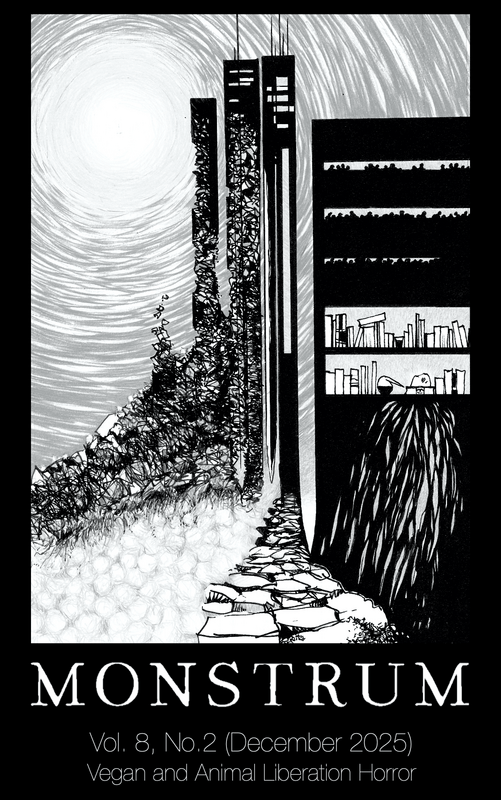
Monstrum vol. 8, issue 2 is now available!
Guest-edited by horror scholar and fiction writer Mike Thorn, this robust issue presents six feature essays, two works of original fiction, a dossier of retrospective reviews, and two essays in our student forum. Feature essays cover both literature and the moving image from a broad range of perspectives. From reorienting human and more-than-human animal perspectives in the essays by Poulomi Choudhury, Dru Jeffries, and Britt MacKenzie-Dale, to epistemological and ontological shifts in the way we think of human and more than-human ecologies in the essays by Zoë Anne Laks, Jenni Makahnouk, and William Taylor, and the Introduction by Mike Thorn, the contributions to this special issue explore the challenge of thinking beyond harmful anthropocentric and hegemonic capitalist world systems.
For the first time, this issue of Monstrum includes original fiction. In “The Playground,” celebrated horror author Kathe Koja (The Cipher, Under the Poppy, Straydog) traces a shift in ecological sensibility to what might be called a necessary violence. And with “Cogno,” Mike Thorn (Darkest Hours, Peel Back and See) brings us into the terrifying world of tech-bro longevity at the expense of … maybe everything.
A selection of retrospective reviews considers literary and cinematic texts that strive to reorient human and nonhuman animal perspectives, including a critical reassessment of the (anti-)anthropocentrism in Nobel laureate Olga Tokarczuk’s novel Drive Your Plow Over the Bones of the Dead (2018), the vegan aesthetic of Rob Zombie’s films via House of 1000 Corpses (2003), and the brutal struggle against becoming-animal in Stuart Gordon’s grim King of the Ants (2003).
The student forum includes two essays by emerging scholars that continue the issue’s investigations of radical otherness. A product of the SSHRC-funded “Horror Ecologies” workshop by CORERISC held in summer 2024 at Dawson College, Emerson Reault’s essay reads Ginger Snaps as a trans allegory, reconsidering the film’s metaphorical “curse” as less one of becoming a woman, than that of an understanding of one’s embodiment. In their essay, Luka Romney looks at radical empathy for the “animal” Other via Julia Kristeva’s concept of herethics in two of Larry Cohen’s most provocative 1970s films, It’s Alive! (1976) and It Lives Again (1978).


In this interview, we chat with Ramsey Campbell about creative instincts, happy accidents, eerie children’s tales, and so much more.
The Oxford Companion to English Literature describes Ramsey Campbell as “Britain’s most respected living horror writer”, and the Washington Post sums up his work as “one of the monumental accomplishments of modern popular fiction”. His awards include the Grand Master Award of the World Horror Convention, the Lifetime Achievement Award of the Horror Writers Association, the Living Legend Award of the International Horror Guild and the World Fantasy Lifetime Achievement Award. In 2015 he was made an Honorary Fellow of Liverpool John Moores University for outstanding services to literature. His latest novels are Fellstones, The Lonely Lands, The Incubations and An Echo of Children. His Brichester Mythos trilogy consists of The Searching Dead, Born to the Dark and The Way of the Worm. His collections include Waking Nightmares, Ghosts and Grisly Things, Told by the Dead, Just Behind You, Holes for Faces, By the Light of My Skull, Fearful Implications, and a two-volume retrospective roundup (Phantasmagorical Stories) as well as The Village Killings and Other Novellas. His non-fiction is collected as Ramsey Campbell, Probably and Ramsey Campbell, Certainly, while Ramsey’s Rambles collects his video reviews, and Six Stooges and Counting is a book-length study of the Three Stooges. Limericks of the Alarming and Phantasmal is a history of horror fiction in the form of fifty limericks.
Books and stories mentioned in this episode:


Hosts Josh and Jamie and special returning guest Mike Thorn kick off SPOOKTOBER by discussing two different eras of largely faithful Stephen King adaptations: Mary Lambert’s playful, colorful and yet still effectively upsetting and morbid realization of PET SEMATARY (1989) and Lawrence Kasdan’s attempt at keeping a straight (expensive Hollywood production) face while King bizarrely remixes many of his career-long obsessions in the painkiller induced fever dream of DREAMCATCHER (2003).


Taweewat Wantha’s Attack 13 is unabashedly commercial entertainment — a horror movie made with the kind of cleanness, galloping pace, and pulsing score typical of much contemporary action cinema. However, within its mainstream parameters, it finds openings for some genuinely nasty imagery and social observation, and it creatively crossbreeds high school melodrama and supernatural horror conventions.


“Missing Child Videotape’s most significant virtues are in the intricacies of its folklore-steeped plot, which patiently unfolds with carefully administered moments of eerie revelation, especially surrounding the site of its central mystery.”


“Gothic cinema inherits an ongoing obsession with writers and writing from its literary ancestors, but how does it translate such text-based fixations into its own audiovisual grammar? How does it stage ‘objective’ diegeses in concert with the innately subjective representations of writers and the act of writing? This article approaches these questions, not by offering a comprehensive history of Gothic films depicting writers (that would require a long, book-length project), but by analyzing a trio of writer-focused Gothic films notable for their dealings with literary ancestry through negotiations between subjective interiority and diegetic objectivity.”


Pre-2024 releases only.
TOP 10 VIEWINGS (one per director)
Die Nibelungen, Part II: Kriemhild’s Revenge (Fritz Lang, 1924)
Cleopatra (Cecil B. DeMille, 1934)
Three Comrades (Frank Borzage, 1938)
Mogambo (John Ford, 1953)
Johnny Guitar (Nicholas Ray, 1954)
The Girl in the Red Velvet Swing (Richard Fleischer, 1955)
Peyton Place (Mark Robson, 1957)
The Big Country (William Wyler, 1958)
The Hound of the Baskervilles (Terence Fisher, 1959)
Imitation of Life (Douglas Sirk, 1959)
ADDITIONAL STANDOUT VIEWINGS
City Girl (F. W. Murnau, 1930)
Dodsworth (William Wyler, 1936)
The Philadelphia Story (George Cukor, 1940)
The House of the Seven Gables (Joe May, 1940)
Carnival of Sinners (Maurice Tourneur, 1943)
The Spiral Staircase (Robert Siodmak, 1946)
The Passionate Friends (David Lean, 1949)
Wagon Master (John Ford, 1950)
The Tall Target (Anthony Mann, 1951)
Rancho Notorious (Fritz Lang, 1952)
Pickup on South Street (Samuel Fuller, 1953)
The Long Gray Line (John Ford, 1955)
The Quatermass XPeriment (Val Guest, 1955)
Summertime (David Lean, 1955)
Quatermass 2 (Val Guest, 1957)
The Last Hurrah (John Ford, 1958)
The Reluctant Debutante (Vincente Minnelli, 1958)
A Summer Place (Delmer Daves, 1959)
Tender is the Night (Henry King, 1962)
Jason and the Argonauts (Don Chaffey, 1963)
Danza Macabra (Antonio Margheriti, 1964)
War-Gods of the Deep (Jacques Tourneur, 1965)
Island of Terror (Terence Fisher, 1966)
Quatermass and the Pit (Roy Ward Baker, 1967)
Dracula Has Risen from the Grave (Freddie Francis, 1968)
The Unfaithful Wife (Claude Chabrol, 1969)
The Age of the Medici (Roberto Rossellini, 1972)
The Stone Tape (Peter Sasdy, 1972)
Messiah of Evil (Willard Huyck & Gloria Katz, 1974)
The Parallax View (Alan J. Pakula, 1974)
Burnt Offerings (Dan Curtis, 1976)
The Nixon Interviews with David Frost (Jørn Winther, 1977)
Losing Ground (Kathleen Collins, 1982)
The 4th Man (Paul Verhoeven, 1983)
Angel Dust (Gakuryū Ishii, 1994)
Devil in a Blue Dress (Carl Franklin, 1995)
Perfect Blue (Satoshi Kon, 1997)
Serpent’s Path (Kiyoshi Kurosawa, 1998)
Ju-On: The Curse 2 (Takashi Shimizu, 2000)
Nightcap (Claude Chabrol, 2000)
Moulin Rouge! (Baz Luhrmann, 2001)
Shallow Hal (Bobby Farrelly & Peter Farrelly, 2001)
Ju-On: The Grudge 2 (Takashi Shimizu, 2003)
Swimming Pool (François Ozon, 2003)
The Bridesmaid (Claude Chabrol, 2004)
Speak (Jessica Sharzer, 2004)
The Staircase (Jean-Xavier de Lestrade, 2004/2018)
Reincarnation (Takashi Shimizu, 2005)
A Girl Cut in Two (Claude Chabrol, 2007)
Australia (Baz Luhrmann, 2008)
Missing (Tsui Hark, 2008)
Bluebeard (Catherine Breillat, 2009)
Occult (Koji Shiraishi, 2009)
Watchmen [director’s cut] (Zack Snyder, 2009)
Untold History of the United States (Oliver Stone, 2012)
A Cure for Wellness (Gore Verbinski, 2016)
The Putin Interviews (Oliver Stone, 2017)
Sharp Objects (Jean-Marc Vallée, 2018)
The Staircase (Jean-Xavier de Lestrade, 2018)
I Love You, Now Die: The Commonwealth v. Michelle Carter (Erin Lee Carr, 2019)
Hemingway (Ken Burns & Lynn Novick, 2021)
The Deep End (Jon Kasbe, 2022)
Eureka (Lisandro Alonso, 2023)
Immersion (Takashi Shimizu, 2023)
Last Summer (Catherine Breillat, 2023)
Tell Them You Love Me (Nick August-Perna, 2023)
The Zone of Interest (Jonathan Glazer, 2023)


Pre-2024 releases only.
TOP 10 (one per author)
Daisy Miller, by Henry James (1879)
A Room with a View, by E. M. Forster (1908)
Pan’s Garden: A Volume of Nature Stories, by Algernon Blackwood (1912)
The Custom of the Country, by Edith Wharton (1913)
Their Eyes Were Watching God, by Zora Neale Hurston (1937)
Cassandra at the Wedding, by Dorothy Baker (1962)
Another World, by Pat Barker (1998)
Heartbreaker, by Maryse Meijer (2016)
Babysitter, by Joyce Carol Oates (2022)
The Guest, by Emma Cline (2023)
ADDITIONAL STANDOUT READS
We Are Here to Hurt Each Other, by Paula D. Ashe (2022)
This Mortal Coil, by Cynthia Asquith (1947)
The Space of Literature, by Maurice Blanchot (1955)
The Writing of the Disaster, by Maurice Blanchot (1980)
Dandelion Wine, by Ray Bradbury (1957)
Wieland; or, The Transformation: An American Tale, by Charles Brockden Brown (1798)
Edgar Huntly; or, Memoirs of a Sleepwalker, by Charles Brockden Brown (1799)
The Sublime and the Beautiful, by Edmund Burke (1757)
The Daughters of Block Island, by Christa Carmen (2023)
Gothic Metaphysics: From Alchemy to the Anthropocene, by Jodey Castricano (2021)
The King in Yellow, by Robert W. Chambers (1895)
Don’t Look Now, by Daphne du Maurier (1971)
Shirley Jackson: A Rather Haunted Life, by Ruth Franklin (2016)
Sea, Swallow Me and Other Stories, by Craig Laurance Gidney (2008)
Twice-Told Tales, by Nathaniel Hawthorne (1837)
The Marble Faun, by Nathaniel Hawthorne (1860)
The Talented Mr. Ripley, by Patricia Highsmith (1955)
The Woman in Black, by Susan Hill (1983)
The Witchcraft of Salem Village, by Shirley Jackson (1956)
Let Me Tell You, by Shirley Jackson [edited by Laurence Hyman & Sarah Hyman DeWitt] (2015)
Burn Man: Selected Stories, by Mark Anthony Jarman (2023)
Man and His Symbols, edited by C. G. Jung & M.-L von Franz (1964)
Uzumaki, by Junji Ito (2013)
The Red Tree, by Caitlín R. Kiernan (2009)
The Truth About Stories: A Native Narrative, by Thomas King (2003)
Something Like an Autobiography, by Akira Kurosawa (1981)
What Are You, by Lindsay Lerman (2022)
Existence and Existents, by Emmanuel Levinas (1947)
Peyton Place, by Grace Metalious (1956)
Who Will Run the Frog Hospital?, by Lorrie Moore (1994)
Playing in the Dark: Whiteness and the Literary Imagination, by Toni Morrison (1992)
Devil in a Blue Dress, by Walter Mosley (1990)
Black Water, by Joyce Carol Oates (1992)
New England’s Gothic Literature, by Faye Ringel (1995)
The Gothic Literature and History of New England, by Faye Ringel (2022)
The Devil’s Candy: The Anatomy of a Hollywood Fiasco, by Julie Salamon (1991)
The Last Man, by Mary Shelley (1826)
The Craft of Writing, by William Sloane (1979)
Lost Boy Lost Girl, by Peter Straub (2003)
The Door, by Magda Szabó (1987)
The Fantastic: A Structural Approach to a Literary Genre, by Tzvetan Todorov (1970)
A Fatal Inversion, by Barbara Vine (1987)
The Color Purple, by Alice Walker (1982)
Star-Begotten, by H. G. Wells (1937)
Ghosts, by Edith Wharton (1937)
The Bonfire of the Vanities, by Tom Wolfe (1987)
Strange Seed, by T. M. Wright (1978)
 Mike Thorn