Reading is arguably the most crucial practice for any serious writer. In this course, you will “reverse engineer” acclaimed short stories to determine how and why they work. You will use these stories as lenses into key aspects of effective fiction (dialogue, plotting, voice, character, etc.) The course will help you to identify the key features of various distinctive prose styles, and you will participate in guided writing exercises inspired by those styles.
Winter term:
Wednesdays, Feb. 11 to March 25 (6 weeks, no class March 4) 6:30 – 8 p.m. $135 (+ HST)
In this interview, we chat with Kasia Van Schaik about reverse outlining, asking “what if”, sublimating emotion through landscape, and so much more.
Kasia Van Schaik is the author of the Giller Prize-nominated story collection We Have Never Lived on Earth and the forthcoming book of memoir and cultural criticism, Women Among Monuments. With Myra Bloom, she is the co-editor of the essay collection, Shelter in Text: Essays on Dwelling and Refuge. Kasia’s writing has appeared in Electric Literature, the LA Review of Books, Room, The Rumpus, the Best Canadian Poetry, and the CBC. Kasia holds a PhD in literature from McGill University and is assistant professor of English and co-director of Creative Writing at the University of New Brunswick in Fredericton, Wolastoqiyik territory.
Books mentioned in this episode:
Wuthering Heights — Emily Brontë
The Secret Garden — Frances Hodgson Burnett
Autobiography of Red — Anne Carson
Boyhood; Youth; Summertime — J. M. Coetzee
Outline; Transit; Kudos — Rachel Cusk
The Days of Abandonment; the Neapolitan Quartet — Elena Ferrante
In this interview, we chat with Jean Marc Ah-Sen about comic books, literary scenes, flipping the script on what a book can be, and so much more.
Jean Marc Ah-Sen is the author of Grand Menteur, In the Beggarly Style of Imitation, and Kilworthy Tanner. His writing has appeared in McSweeney’s Quarterly Concern, Literary Hub, Catapult, The Comics Journal, Maclean’s, The Walrus, and elsewhere.
Books mentioned in this episode:
The Fall – Albert Camus
I Dreamed I Was a Very Clean Tramp – Richard Hell
The Talented Mr. Ripley – Patricia Highsmith
Intimacy – Hanif Kureishi
Biography of X – Catherine Lacey
Ada or Ardor: A Family Chronicle – Vladimir Nabokov
Anti-Woo: The Lifeman’s Improved Primer for Non-Lovers; The Theory and Practice of Gamesmanship: Or the Art of Winning Games Without Actually Cheating – Stephen Potter
Lobotomy: Surviving the Ramones – Dee Dee Ramone
Endling – Maria Reva
The Dying Animal – Philip Roth
Striptease – Georges Simenon
The Handyman Method – Andrew Sullivan
Anna Karenina – Leo Tolstoy
The Island of Doctor Moreau; The Time Machine – H. G. Wells
Where: Charlotte Street Arts Centre (732 Charlotte St, Fredericton, NB E3B 1M5, Canada)
When: Jan 29, 2026 to Mar 5, 2026, Thursdays at 7:00 p.m. – 9:00 p.m. AST
This course will engage with horror literature’s legacies and unique capacities for catharsis, allegory, and personal expression. We will discuss what scares us and investigate the psychology of fear within the context of fiction, digging into the nuts-and-bolts processes of generating fear in the reader. We will explore the wide range of horror’s sub-genres and aesthetic possibilities, looking at tropes, traditions, and metaphors as opportunities for creative openings rather than restrictions. We will discuss the importance of atmosphere, point-of-view, and convincing characterization. Drawing on insights and fiction by some of horror literature’s most important and exciting figures, we will dive into the genre with a focus on craft and technique.
In this interview, we chat with Michael LaPointe about navigating the pipeline between impulse and expression, breaking the genteel picture of literature, finding liberation in failure, and so much more.
Michael LaPointe is the author of The Creep, a novel published by Random House Canada. He has written for The New Yorker and The Atlantic, and he was a columnist with The Paris Review. His work has been anthologized in Best Canadian Stories and Best Canadian Essays, and he lives in Toronto.
Books mentioned in this episode:
Affliction; Continental Drift; Rule of the Bone; The Sweet Hereafter – Russell Banks
Naked Lunch – William S. Burroughs
The Adventures of Pinocchio – Carlo Collodi
Bleak House – Charles Dickens
Play it as it Lays – Joan Didion
The Lover – Marguerite Duras
Middlemarch – George Eliot
American Psycho; Less Than Zero; The Shards – Bret Easton Ellis
Madame Bovary – Gustave Flaubert
Bad Behavior; Two Girls, Fat and Thin – Mary Gaitskill
In a Lonely Place – Dorothy B. Hughes
Snow Country – Yasunari Kawabata
Playing in the Dark: Whiteness and the Literary Imagination; Sula – Toni Morrison
The Sorrow of War – Bảo Ninh
Inherent Vice – Thomas Pynchon
All Quiet on the Western Front – Erich Maria Remarque
Voyage in the Dark – Jean Rhys
Catcher in the Rye – J. D. Salinger
Last Exit to Brooklyn – Hubert Selby Jr.
Alice James: A Biography – Jean Strouse
The Invisible Woman: The Story Of Nelly Ternan And Charles Dickens – Claire Tomalin
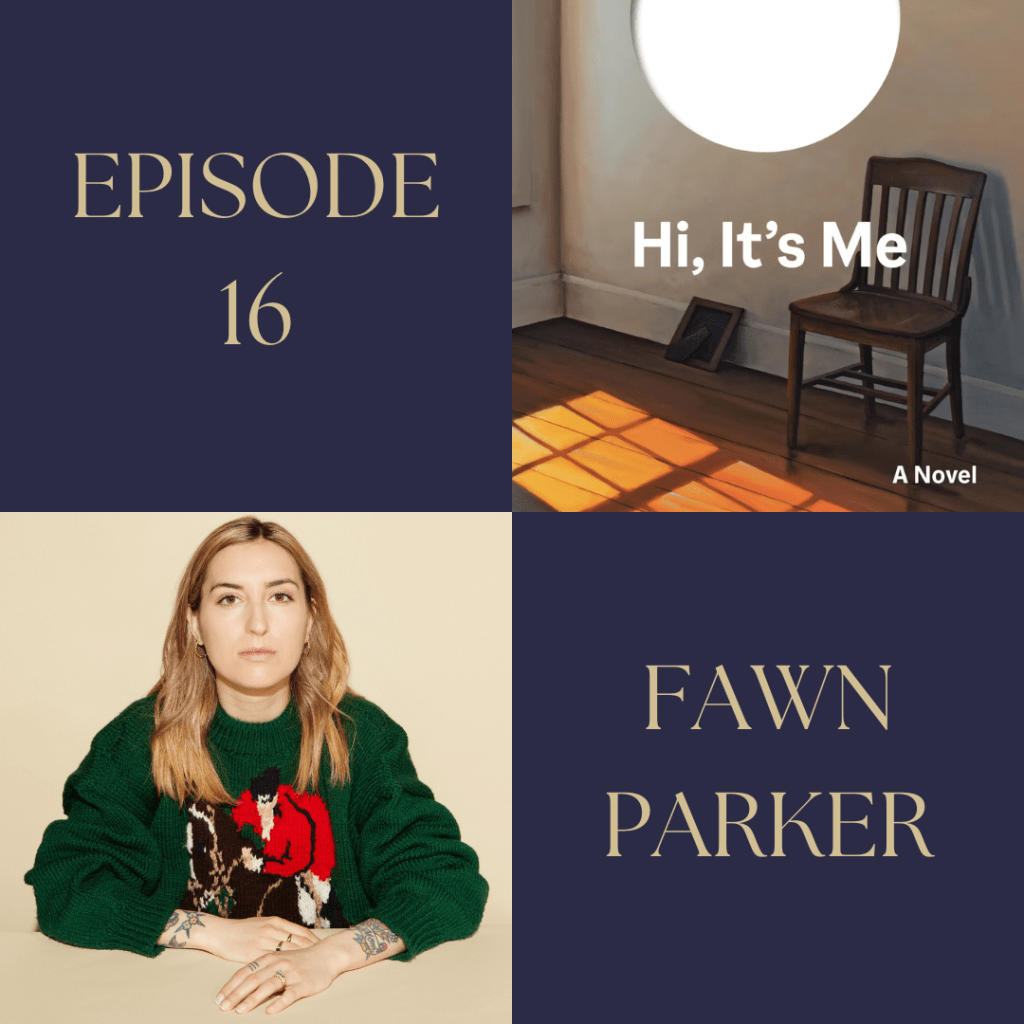
In this interview, we chat with Fawn Parker about showing the reader around the room, finding the right tense, protecting your writing time, and so much more.
Fawn Parker is the author of five books including novels What We Both Know (M&S), nominated for the Giller Prize and Hi, It’s Me (M&S), nominated for the Writer’s Trust Atwood Gibson Prize, and the poetry collection Soft Inheritance, which was awarded the JM Abraham Atlantic Book Award and the Fiddlehead Poetry Book Prize. Her work has been published in The Walrus, Hazlitt, Literary Review of Canada, and elsewhere. Fawn is a PhD candidate at the University of New Brunswick and the Poet Laureate of Fredericton.
Books and stories mentioned in this episode:
The Edible Woman – Margaret Atwood
The Mountain and the Valley – Ernest Buckler
Libra – Don DeLillo
The Guest – Emma Cline
Attack of the Copula Spiders and Other Essays on Writing – Douglas Glover
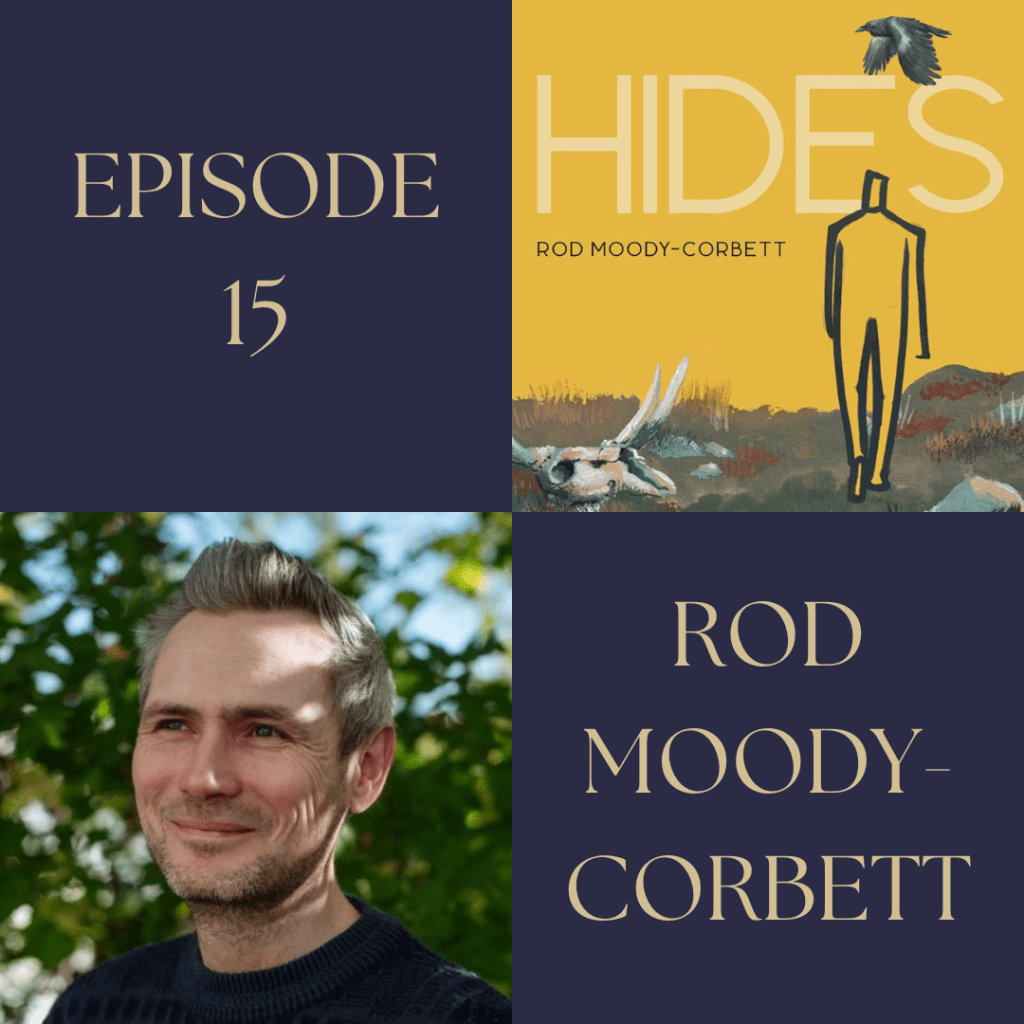
In this interview, we chat with Rod Moody-Corbett about tonal dissonance, sponging up influences, writing from memory, and so much more.
Rod Moody-Corbett is an award-winning writer from Newfoundland. His writing has appeared in Socrates on the Beach, The Drift, The Paris Review Daily, and Fiddlehead, among other publications. He is the recipient of the 2022 Howard O’Hagan Award for Short Story, a Newfoundland and Labrador Arts and Letters Award for Short Fiction, the University of Calgary’s Kaleidoscope Prize, and the CBC Canada Writes Short Story Prize (People’s Choice Award). He serves as a contributing editor for Canadian Notes and Queries.
Books mentioned in this episode:
Experience – Martin Amis
Elect Mr. Robinson for a Better World; The Hundred Brothers; The Verificationist – Donald Antrim
Last Evenings on Earth – Roberto Bolaño
Save the Cat! Writes a Novel – Jessica Brody
My Education – Susan Choi
Underworld – Don DeLillo
Notes from Underground – Fyodor Dostoevsky
The Last Samurai – Helen DeWitt
Erasure – Percival Everett
Bad Behavior; Because They Wanted To; Don’t Cry – Mary Gaitskill
A Hand Reached Down to Guide Me; Jernigan – David Gates
Airships – Barry Hannah
The Road Through the Wall – Shirley Jackson
Get Shorty; Rum Punch – Elmore Leonard
Last Resort – Andrew Lipstein
The Sentence is a Lonely Place – Garielle Lutz
Moby Dick – Herman Melville
The Ice Storm – Rick Moody
Lectures on Literature – Vladimir Nabokov
A House for Mr. Biswas – V. S. Naipaul
Casino: Love and Honor in Las Vegas; Wiseguy: Life in a Mafia Family – Nicholas Pileggi
Monkey Beach – Eden Robinson
The Life of the Mind – Christine Smallwood
The Life and Opinions of Tristram Shandy, Gentleman – Laurence Sterne
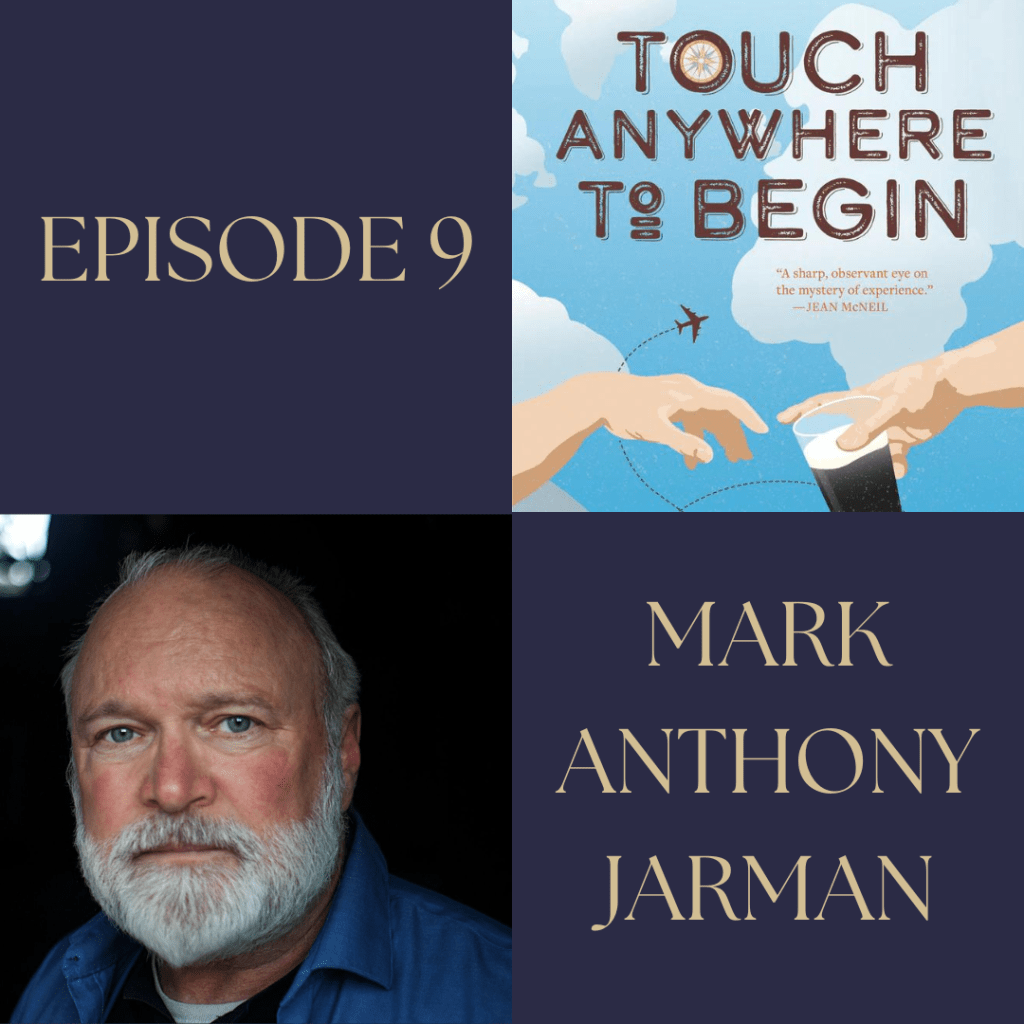
In this interview, we chat with Mark Anthony Jarman about hockey fiction, deadwood words, finding stories in newspaper clippings, and so much more.
Mark Anthony Jarman is the author of Touch Anywhere to Begin, Czech Techno, Knife Party at the Hotel Europa, My White Planet, 19 Knives, New Orleans Is Sinking, Dancing Nightly in the Tavern, and the travel book Ireland’s Eye. Burn Man, published in 2023 by Biblioasis, was an Editors Choice with the New York Times. He was an acquisitions editor for Oberon Press, and introduced many new writers through the Coming Attractions series. He is also the editor of Best Canadian Stories 2023. His novel Salvage King Ya! is on Amazon.ca’s list of 50 Essential Canadian Books and is the number one book on Amazon’s list of best hockey fiction. Widely published in Canada, the US, Europe, and Asia, Jarman is a graduate of the Iowa Writers’ Workshop, a Yaddo fellow, has taught at the University of Victoria, the Banff Centre for the Arts, and the University of New Brunswick. He is also co-editor of the literary journal CAMEL.
Book and poems mentioned in this episode:
Flowers of Evil – Charles Baudelaire
Study for Obedience – Sarah Bernstein
Cathedral – Raymond Carver
The Stories of John Cheever – John Cheever
Heart of Darkness – Joseph Conrad
The U.S.A. Trilogy – Jon Dos Passos
Literary Theory: An Introduction – Terry Eagleton
“The Love Song of J. Alfred Prufrock” – T. S. Eliot
The Great Gatsby – F. Scott Fitzgerald
Attack of the Copula Spiders: Essays on Writing – Douglas Glover
The Sun Also Rises – Ernest Hemingway
Dubliners; Ulysses – James Joyce
The Incognito Lounge and Other Poems; Jesus’ Son; Seek: Reports from the Edges of America & Beyond – Denis Johnson
On the Road – Jack Kerouac
Panama – Thomas McGuane
Dance of the Happy Shades – Alice Munro
Ada, or Ardor: A Family Chronicle; Lolita; Pale Fire – Vladimir Nabokov







 Mike Thorn