100 Favorite Horror Books: October 2026 Edition

Hawksmoor, by Peter Ackroyd (1989)
Dark Entries, by Robert Aickman (1964)
We Are Here to Hurt Each Other, by Paula D. Ashe (2022)
This Mortal Coil, by Cynthia Asquith (1947)
The Damnation Game, by Clive Barker (1985)
Tender is the Flesh, by Agustina Bazterrica (2017; 2020 translation by Sarah Moses)
The Listener and Other Stories, by Algernon Blackwood (1907)
The Scarf, by Robert Bloch (1947/1966)
Something Wicked This Way Comes, by Ray Bradbury (1962)
Wieland; or, The Transformation: An American Tale, by Charles Brockden Brown (1798)
Ancient Images, by Ramsey Campbell (1989)
The King in Yellow, by Robert W. Chambers (1895)
The Ghost Stories of Wilkie Collins, by Wilkie Collins (2024, edited by Xavier Aldana Reyes)
The Juniper Tree, by Barbara Comyns (1985)
The Breaking Point, by Daphne Du Maurier (1959)
Don’t Look Now, by Daphne Du Maurier (1971)
The Between, by Tananarive Due (1995)
The Pines, by Robert Dunbar (1989)
American Psycho, by Bret Easton Ellis (1991)
I Have No Mouth & I Must Scream, by Harlan Ellison (1967)
The Collector, by John Fowles (1963)
Aura, by Carlos Fuentes (1962; 1986 translation by Lysander Kemp)
Something Stirs, by Charles L. Grant (1991)
Red Dragon, by Thomas Harris (1981)
Twice-Told Tales, by Nathaniel Hawthorne (1837)
The House of the Seven Gables, by Nathaniel Hawthorne (1851)
Children of the Black Sabbath, by Anne Hébert (1975; 1977 translation by Carol Dunlop-Hébert)
The Woman in Black, by Susan Hill (1983)
The House on the Borderland, by William Hope Hodgson (1908)
The Private Memoirs and Confessions of a Justified Sinner, by James Hogg (1824)
The Damned, by Joris-Karl Huysmans (1891)
Uzumaki, by Junji Ito (2000; 2013 translation by Yuji Oniki)
Hangsaman, by Shirley Jackson (1951)
The Sundial, by Shirley Jackson (1958)
The Haunting of Hill House, by Shirley Jackson (1959)
We Have Always Lived in the Castle, by Shirley Jackson (1962)
Ghost Stories of Henry James, by Henry James (2008, edited by Martin Schofield)
Ghost Stories of an Antiquary, by M. R. James (1904)
The Red Tree, by Caitlín R. Kiernan (2009)
Carrie, by Stephen King (1974)
Salem’s Lot, by Stephen King (1975)
The Shining, by Stephen King (1977)
Cujo, by Stephen King (1981)
Pet Sematary, by Stephen King (1983)
It, by Stephen King (1986)
And Her Smile Will Untether the Universe, by Gwendolyn Kiste (2017)
The Ceremonies, by T. E. D. Klein (1984)
The Cipher, by Kathe Koja (1991)
Bad Brains, by Kathe Koja (1992)
Skin, by Kathe Koja (1993)
Strange Angels, by Kathe Koja (1994)
Conjure Wife, by Fritz Leiber (1943)
The Fifth Child, by Doris Lessing (1988)
Rosemary’s Baby, by Ira Levin (1967)
The Stepford Wives, by Ira Levin (1972)
The Monk: A Romance, by Matthew Gregory Lewis (1796)
Songs of a Dead Dreamer and Grimscribe, by Thomas Ligotti (2015)
The Hounds of Tindalos, by Frank Belknap Long (1946)
Tales of H. P. Lovecraft, by H. P. Lovecraft (2007, edited by Joyce Carol Oates)
The House of Souls, by Arthur Machen (1906)
Burnt Offerings, by Robert Marasco (1973)
I Am Legend, by Richard Matheson (1954)
Shock!, by Richard Matheson (1961)
Melmoth the Wanderer, by Charles Robert Maturin (1820)
Child of God, by Cormac McCarthy (1973)
Toplin, by Michael McDowell, (1985)
Heartbreaker, by Maryse Meijer (2016)
The Seventh Mansion, by Maryse Meijer (2020)
Strange is the Night, by S. P. Miskowski (2017)
Beloved, by Toni Morrison (1987)
Zombie, by Joyce Carol Oates (1995)
The Accursed, by Joyce Carol Oates (2013)
Jack of Spades, by Joyce Carol Oates (2015)
Widdershins, by Oliver Onions (1911)
Selected Writings of Edgar Allan Poe, by Edgar Allan Poe (1956, edited by Edward H. Davidson)
The Mysteries of Udolpho, by Ann Radcliffe (1794)
Interview with the Vampire, by Anne Rice (1976)
Traplines, by Eden Robinson (1996)
Helpmeet, by Naben Ruthnum (2022)
The Subjugated Beast, by R. R. Ryan (1938)
Fever Dream, by Samanta Schweblin (2014; 2017 translation by Megan McDowell)
The Demon, by Hubert Selby Jr. (1976)
New Stories from the Twilight Zone, by Rod Serling (1965)
Frankenstein; or, the Modern Prometheus, by Mary Shelley (1818)
The House Next Door, by Anne Rivers Siddons (1978)
The Dark Eidolon and Other Fantasies, by Clark Ashton Smith (2014, edited by S. T. Joshi)
Strange Case of Dr. Jekyll and Mr. Hyde, by Robert Louis Stevenson (1886)
Dracula, by Bram Stoker (1897)
Julia, by Peter Straub (1975)
Ghost Story, by Peter Straub (1979)
Floating Dragon, by Peter Straub (1982)
Koko, by Peter Straub (1988)
Houses without Doors, by Peter Straub (1990)
Fog Heart, by Thomas Tessier (1997)
The Other, by Thomas Tryon (1971)
Ghosts, by Edith Wharton (1937)
The Picture of Dorian Gray, by Oscar Wilde (1890)
The Island of Doctor Moreau, by H. G. Wells (1896)
The Invisible Man, by H. G. Wells (1897)
The Sailor Who Fell from Grace with the Sea, by Yukio Mishima (1963)

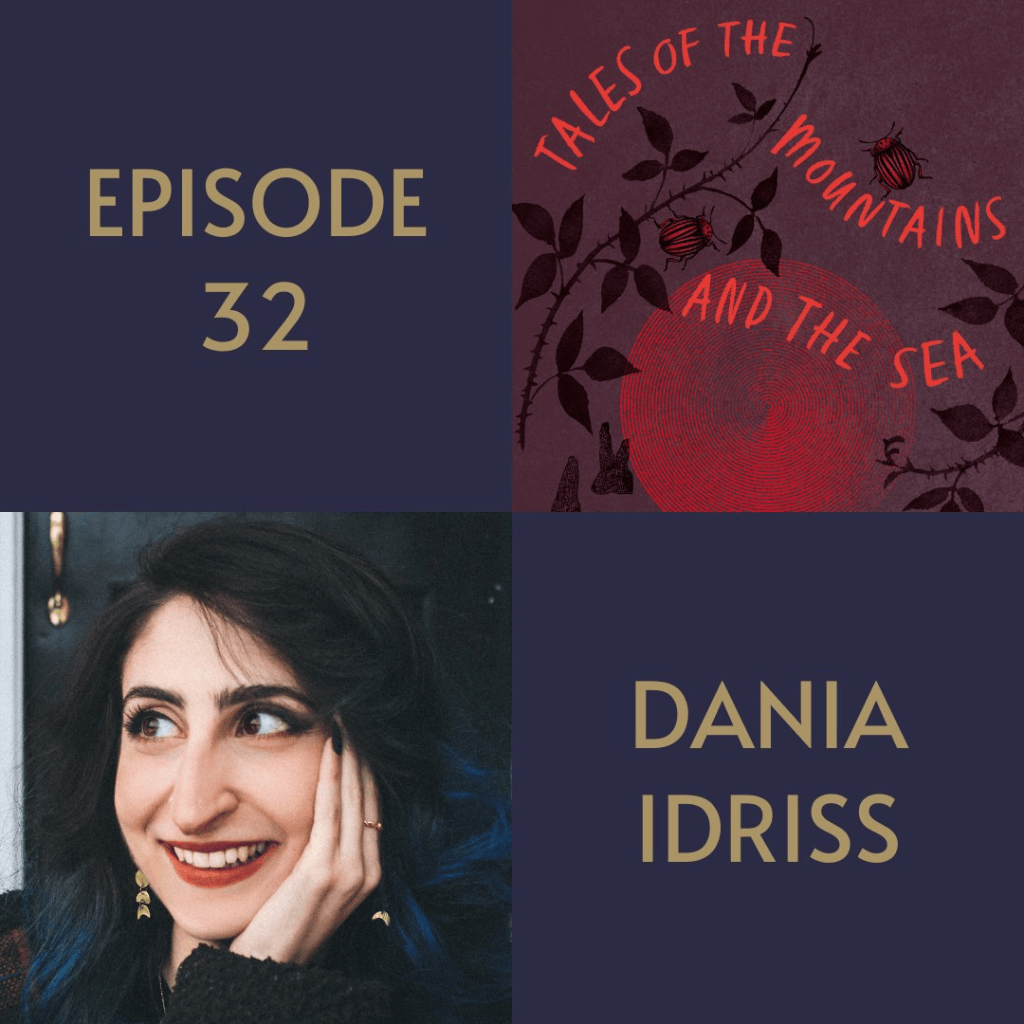
Craftwork Episode 32: Gothic Spaces, Familial Secrets, & Diasporic Perspectives w/ Dania Idriss

Listen to Craftwork Episode 32: Gothic Spaces, Familial Secrets, & Diasporic Perspectives w/ Dania Idriss

In this interview, we chat with Dania Idriss about representing human cruelty, finding creative nourishment in academic conferences, spending time in “writing jail”, and so much more.  

Dania Idriss (she/her) is a Lebanese-Canadian author and a doctoral candidate in the Department of English at the University of Calgary. She (currently) gratefully lives and works on the traditional territory of Treaty 7, with her writing focusing on global literatures, particularly Arabic speculative fiction. Her first book, a collection of horror stories titled Tales of the Mountains and the Sea, was released by Freehand Books in May 2026. Dania teaches speculative fiction and global literatures at the Alberta University of the Arts and the University of Calgary. She enjoys all things spooky, warm sweaters, and spending time with her bunny, Arlo.  

Books and stories mentioned in this episode: 

  • Human Sacrifices — María Fernanda Ampuero  
  • American War; One Day, Everyone Will Have Always Been Against This — Omar El Akkad 
  • The Woman in White — Wilkie Collins 
  • David Copperfield; Great Expectations; The Old Curiosity Shop — Charles Dickens 
  • The Haunting of Hill House; The Sundial; We Have Always Lived in the Castle — Shirley Jackson 
  • The Monk — Matthew Gregory Lewis 
  • Forgotten Journey; Thus Were Their Faces — Silvina Ocampo 
  • “Brokeback Mountain” — Annie Proulx 
  • Harry Potter series — J. K. Rowling 
  • Frankenstein — Mary Shelley 
  • Dracula — Bram Stoker 
  • “Hair” — Mike Thorn 
  • The Castle of Otranto — Horace Walpole 
  • Lolly Willowes — Sylvia Townsend Warner 

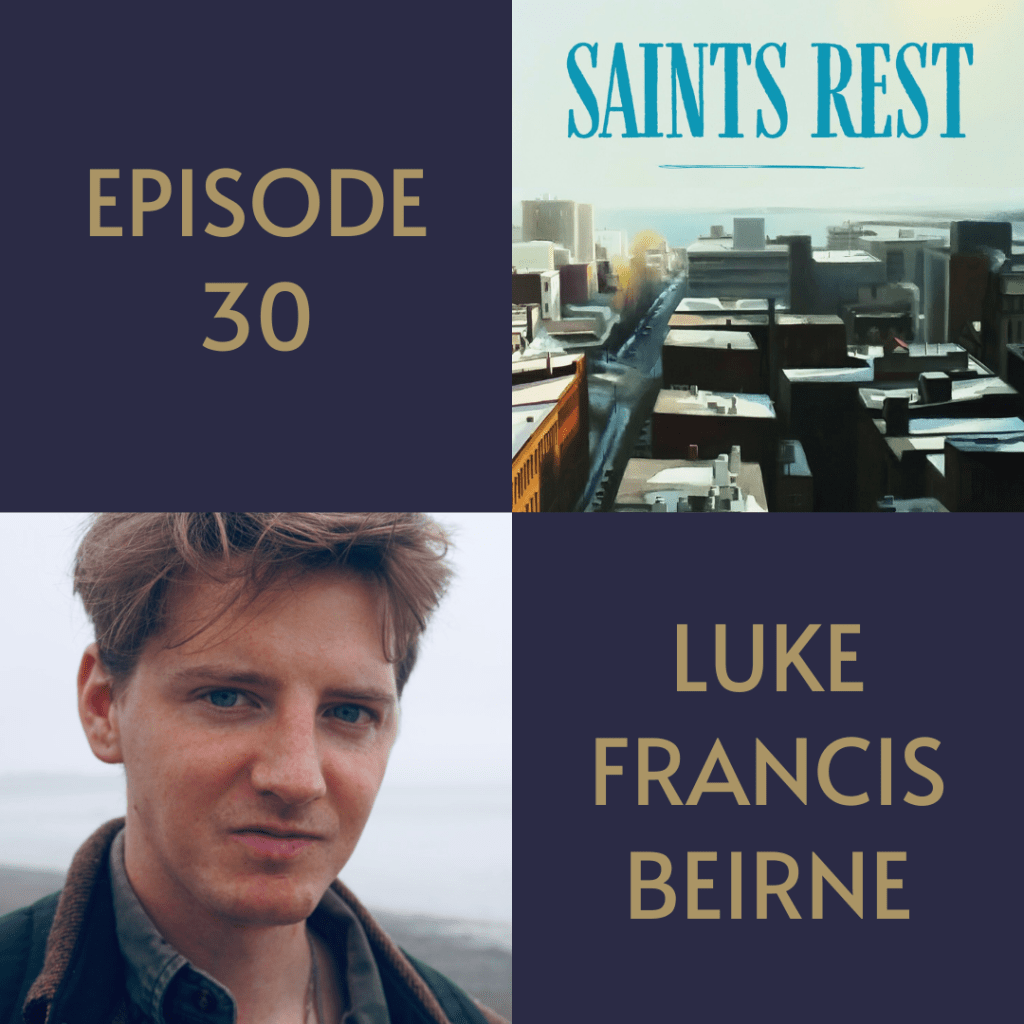
Craftwork Episode 30: Ghostwriting, Cold War Propaganda, & Coming Back from a Five-Week Coma w/ Luke Francis Beirne

Listen to Craftwork Episode 30: Ghostwriting, Cold War Propaganda, & Coming Back from a Five-Week Coma w/ Luke Francis Beirne.

In this interview, we chat with Luke Francis Beirne about literature versus entertainment, Atlantic Canadian textures, a literary marriage proposal, and so much more.    

Luke Francis Beirne was born in Ireland in 1995 and now lives on Wolastoqey land in Saint John, New Brunswick. Beirne has published three novels with Baraka Books: Foxhunt, Blacklion, and Saints Rest. His stories, essays, and reviews have appeared in outlets such as Counterpunch, NB Media Co-op, Hamilton Arts & Letters, Honest Ulsterman, and CrimeReads. 

Books mentioned in this episode: 

  • Monsters in the Archives: My Year of Fear with Stephen King — Caroline Bicks 
  • The Last Thing He Wanted — Joan Didion 
  • The Quiet American — Graham Greene 
  • The Maltese Falcon — Dashiell Hammett 
  • The Outsiders — S. E. Hinton 
  • The Bamboo Blonde; In a Lonely Place — Dorothy B. Hughes 
  • Hatchet — Gary Paulsen 
  • How Fiction Works — James Wood

Craftwork Episode 25: Braided Essays, Collective Solitude, & the Objective Correlative w/ Kasia Van Schaik

Listen to Craftwork Episode 25: Braided Essays, Collective Solitude, & the Objective Correlative w/ Kasia Van Schaik.

In this interview, we chat with Kasia Van Schaik about reverse outlining, asking “what if”, sublimating emotion through landscape, and so much more.  

Kasia Van Schaik is the author of the Giller Prize-nominated story collection We Have Never Lived on Earth and the forthcoming book of memoir and cultural criticism, Women Among Monuments. With Myra Bloom, she is the co-editor of the essay collection, Shelter in Text: Essays on Dwelling and Refuge. Kasia’s writing has appeared in Electric Literature, the LA Review of Books, Room, The Rumpus, the Best Canadian Poetry, and the CBC. Kasia holds a PhD in literature from McGill University and is assistant professor of English and co-director of Creative Writing at the University of New Brunswick in Fredericton, Wolastoqiyik territory. 

Books mentioned in this episode:  

  • Wuthering Heights — Emily Brontë 
  • The Secret Garden — Frances Hodgson Burnett  
  • Autobiography of Red — Anne Carson 
  • Boyhood; Youth; Summertime — J. M. Coetzee 
  • Outline; Transit; Kudos — Rachel Cusk 
  • The Days of Abandonment; the Neapolitan Quartet — Elena Ferrante 
  • “The Robber Bridegroom” — Brothers Grimm 
  • Sweet Days of Discipline — Fleur Jaeggy 
  • Lucy — Jamaica Kincaid 
  • Her Body and Other Parties — Carmen Maria Machado 
  • Housekeeping — Marilynne Robinson 
  • Rings of Saturn — W. G. Sebald 
  • Flights — Olga Tokarczuk 

Register to attend Writing Horror Fiction with Mike Thorn (Winter 2026)

Register here.

Where: Charlotte Street Arts Centre (732 Charlotte St, Fredericton, NB E3B 1M5, Canada)

When: Jan 29, 2026 to Mar 5, 2026, Thursdays at 7:00 p.m. – 9:00 p.m. AST

This course will engage with horror literature’s legacies and unique capacities for catharsis, allegory, and personal expression. We will discuss what scares us and investigate the psychology  of fear within the context of fiction, digging into the nuts-and-bolts processes of generating fear  in the reader. We will explore the wide range of horror’s sub-genres and aesthetic possibilities,  looking at tropes, traditions, and metaphors as opportunities for creative openings rather than  restrictions. We will discuss the importance of atmosphere, point-of-view, and convincing  characterization. Drawing on insights and fiction by some of horror literature’s most important  and exciting figures, we will dive into the genre with a focus on craft and technique. 

The Catch-Up Reading Series featuring Chuck Bowie, Alison Taylor, and Mike Thorn (January 26, 3 pm, Westminster Books)

Fredericton’s monthly reading series, ‘The Catch-Up,’ curated and hosted by acclaimed writer Fawn Parker, returns with readings by local authors Alison Taylor, Chuck Bowie & Mike Thorn!

The reading will take place here at the bookshop on Sunday, January 26th, 2025, @ 3pm.

Alison Taylor (they/them) is a writer, editor, and filmmaker based in Fredericton. Taylor’s short stories have appeared in various journals, and their debut novel Aftershock, published by HarperCollins Canada, received the Atlantic Book Awards John and Margaret Savage First Book Award (Fiction), and was shortlisted for the Rakuten Kobo Emerging Writer Prize. They received the 2024 Douglas Adams Richards Prize for Fiction for their work-in-progress, Confessions of a Binge Drinker (working title). They have edited a hundred-plus hours of television and many award-winning short films and music videos, and their own experimental films have screened at festivals internationally. They currently work in the editorial department at Goose Lane Editions and as a freelance editor of both books and film and video, and are working to complete a draft while two cats yell at them and a 70-pound boxer whines in their face.

Mike Thorn is a SSHRC-funded doctoral candidate in the Department of English (Creative Writing) at the University of New Brunswick. He is the author of Shelter for the Damned, Darkest Hours, and Peel Back and See. His writing has appeared in anthologies, magazines, and podcasts, including NoSleep, Vastarien, In Review Online, and American Twilight: The Cinema of Tobe Hooper. He co-hosts Craftwork, a writing-themed podcast, with Miriam Richer. Website: mikethornwrites.com.

Chuck Bowie is both a writer and an author, with thirteen books/novels published and one just underway. While he enjoys writing mysteries: Suspense-Thrillers and Cozy Mysteries, he also writes short stories. All of his books are well-reviewed, and he has sat on the boards of the Writers’ Federation of NB, The Writers’ Union of Canada, is a Fellow of the Kingsbrae International Residency for the Arts, as well as being acknowledged as a member of the Miramichi Literary Trail. His thriller series chronicles the adventures of Donovan, an international thief for hire, while his cozy series (written as Alexa Bowie) follows the adventures of the owner of an arts centre as Emma solves the crimes that swirl around her centre: The Old Manse. http://www.chuckbowie.ca

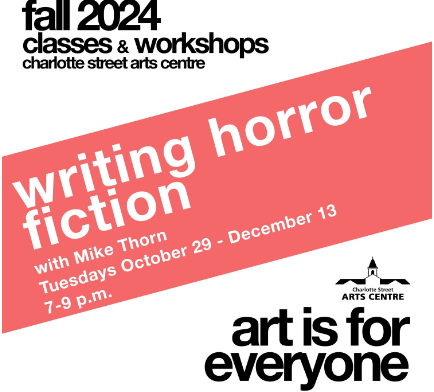
Writing Horror Fiction with Mike Thorn (upcoming workshop course with the Charlotte Street Arts Centre)

This course will engage with horror literature’s legacies and unique capacities for catharsis, allegory, and personal expression. We will discuss what scares us and investigate the psychology  of fear within the context of fiction, digging into the nuts-and-bolts processes of generating fear  in the reader. We will explore the wide range of horror’s subgenres and aesthetic possibilities,  looking at tropes, traditions, and metaphors as opportunities for creative openings rather than  restrictions. We will discuss the importance of atmosphere, point-of-view, and convincing  characterization. Drawing on insights and fiction by some of horror literature’s most important  and exciting figures, we will dive into the genre with a focus on craft and technique. 

Date: Tuesdays, Oct. 29 – Dec. 3
Time: 7-9 p.m.
Location: Community Room (Charlotte Street Arts Centre)
Length: Six week
Cost: $15
Max. class size: 12

Registration now open.

Create a website or blog at WordPress.com

Up ↑