Gwendolyn Kiste bookends her short story collection And Her Smile Will Untether the Universe with two pieces written in the second-person. At first glance, the device might appear to work toward a tone of urgency, or a forced closeness between reader and text (and it does both of these things), but the technique works on several other registers, too. Both of these stories, “Something Borrowed, Something Blue” and “The Lazarus Bride,” undergo a complicated study of otherness and self-dissociation (two themes that re-emerge repeatedly throughout the book), all while foregrounding meticulously honed plot momentum and structure. This single example is one among countless demonstrations of Kiste’s heightened literary consciousness; this is an extremely rare breed of fiction debut, whose assuredness, complexity, and above all whose singular perspective suggest a lifetime of practice. Think Flannery O’Connor’s Wise Blood (1952), Thomas Ligotti’s Songs of a Dead Dreamer (1986), Kathe Koja’s The Cipher (1991), or Clive Barker’s Books of Blood (1985).
Thorn’s Thoughts: Robert Dunbar’s The Streets

The Streets is the third novel in Robert Dunbar’s ambitious Pines Trilogy, a sequence of books connected by sustained interest in the Jersey Devil—a folkloric creature said to inhabit the New Jersey Pine Barrens. The first novel, The Pines (1989) mines old-school Gothic dread from its setting in the New Jersey Pine Barrens, while its sequel The Shore (2007) makes similarly eerie use of its coastal town, Edgeharbor. Although key characters from both novels return in The Streets, it’s not absolutely necessary to read The Pines and The Shore in order to enjoy the trilogy’s closer. Having said that, this novel’s impact is amplified when put into conversation with its predecessors; and for readers who have read all three entries, The Streets satisfyingly deepens its precursors’ previously established relationships.
Hostel: Part II and the Monster of Neoliberal Late-Capitalism

The torture scenes in writer-director Eli Roth’s Hostel openly evoked the 2003 Abu Ghraib photographs, which depicted United States military and Central Intelligence Agency personnel subjecting Iraqi prisoners to acts of profound cruelty and abuse. The film also addressed post-9/11 U.S.A.’s widespread xenophobia and confusion in the midst of an incompetent administration while satirizing upper-class masculinist group dynamics. Shortly after Hostel enjoyed overwhelming mainstream success, David Edelstein published “Now Playing at Your Local Multiplex: Torture Porn” for New York magazine, an article that leveled unilateral arguments against the wave of brutal films flooding the American mainstream — including Hostel, but also films such as Wolf Creek, The Devil’s Rejects, and the Saw franchise.
This incendiary context set the stage for Roth’s Hostel: Part II, which acts both as an inversion and political expansion of its predecessor. Where Hostel offers a glib satire of homosocial desire among hyper-masculine males, the sequel focuses on a trio of young women. If Hostel reacts to the Abu Ghraib photographs by leveling a critique against unchecked western military imperialism, Part II condemns rampant late-capitalist neoliberalism at large. In 2007, the sequel’s political resonance was lost amidst blanket arguments against “torture porn” (a term that Edelstein’s article leaves unfortunately broad and open-ended); in 2017, its nastily incisive observations remain too relevant to be brushed aside.
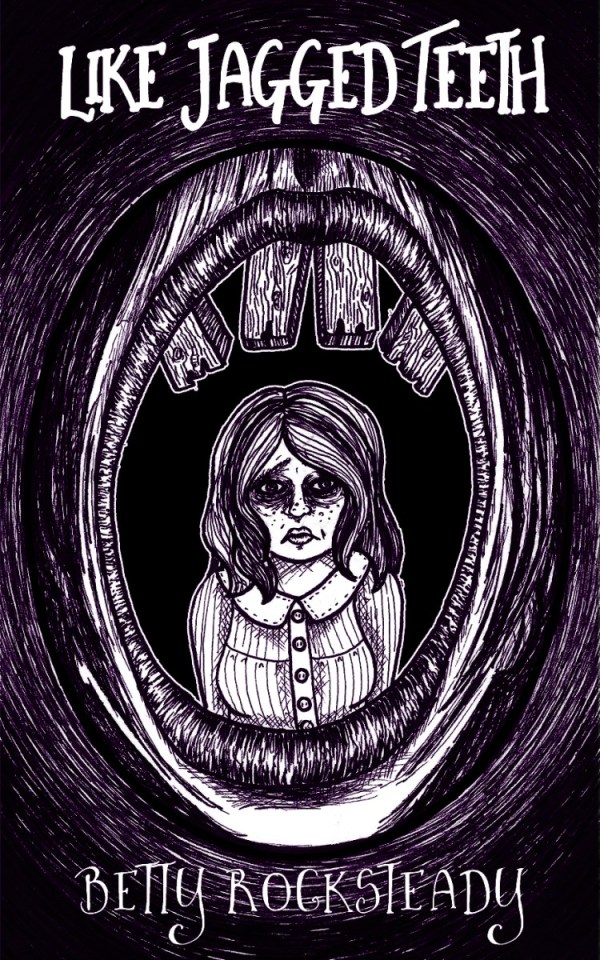
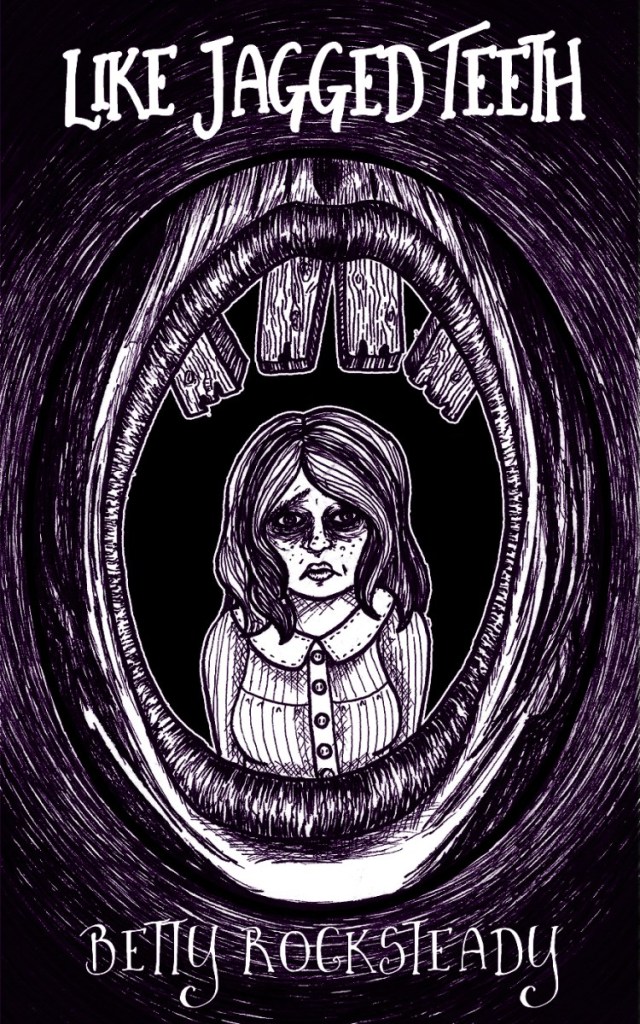
Review: ‘Like Jagged Teeth’ – Betty Rocksteady’s Supernatural Bad Dream Novella

Many of the greatest supernatural horror stories revolve around mourning and loss. Often, the ghost plays not only the object of fear, but also acts as the remnants of unresolved pain or relationships cut painfully short. Betty Rocksteady’s new novella, Like Jagged Teeth, taps into this commonality, using the pain of grief as a driving force for both character psychology and narrative movement. It couches its ideas within the logic of nightmares while also attributing its plot with qualities not often associated with strictly supernatural horror. Specifically, it deals heavily and unapologetically with disgust and grotesquerie.
The plot begins with protagonist Jacalyn leaving an awkward party, feeling a little sad and hollow. When a group of men start following her down the dark street and harassing her, Jacalyn’s recently deceased grandfather (“Poppa”) suddenly drives up and interferes. He invites his granddaughter into his vehicle, and although she is surprised, her…
View original post 745 more words
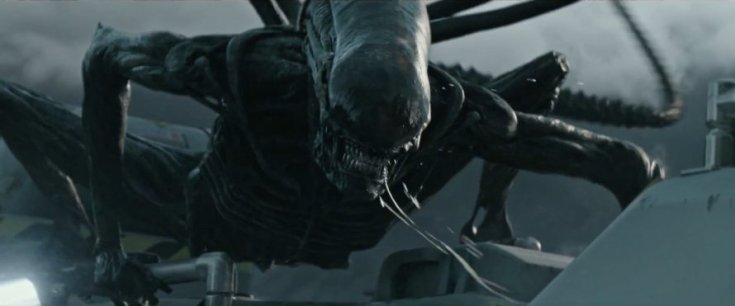
Devious Dialogues: A.M. Novak and Mike Thorn on the ‘Alien’ Franchise

With the release of Alien: Covenant this month, the horror cineaste community has been buzzing about Ridley Scott’s latest work and the entire Alien franchise. Scott’s original film was widely acclaimed in 1979, and it’s now considered one of the top horror films of all time. Alien spawned three direct sequels, a crossover film that we dare not speak into existence, a prequel and now a new 2017 entry. In anticipation of Alien: Covenant’s release, Vague Visages contributors A.M. Novak and Mike Thorn take a look at the legendary sci-fi series.
Anya: Before we even get into each individual film, I have to ask — which film is your favorite?
Mike: I’ve looked ahead at your other questions, and I expect that some of my opinions on this franchise will be deemed scandalous at best. I love all four of the original films, and also hold Paul W.S. Anderson’s AVP:…
View original post 2,722 more words
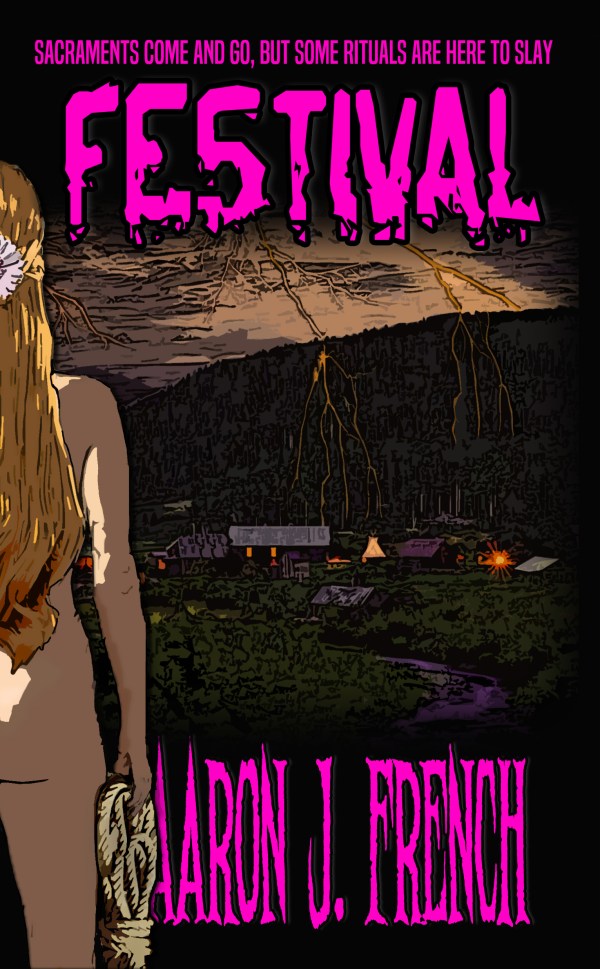
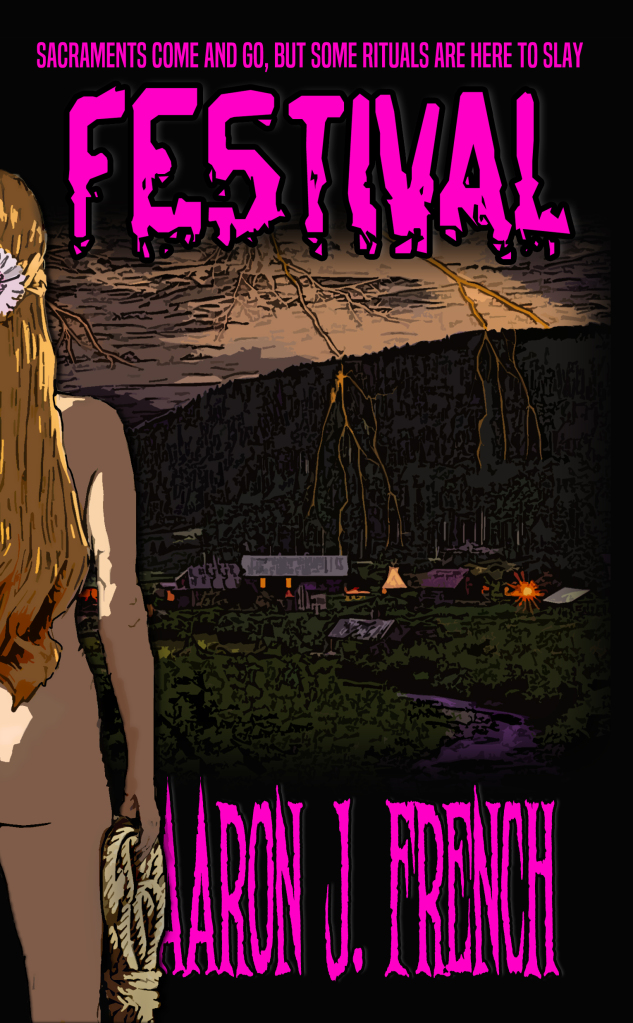
Book Review: Gender and Genre in Aaron J. French’s ‘Festival’

Stephen King’s Danse Macabre (1981) offers a number of approaches for interpreting horror cinema and literature. Throughout his study, King touches repeatedly on the notion of “catharsis,” but also on the genre’s ability to tap into sociocultural “pressure points,” accessing what he describes as “artesian wells” of collective anxiety. At one point, he rather glibly suggests that a profound conservatism historically underlies the genre at large, stating that “the horror story, beneath its fangs and fright wig, is really as conservative as an Illinois Republican in a three-piece pinstriped suit; that its main purpose is to reaffirm the virtues of the norm by showing us what awful things happen to people who venture into taboo lands. Within the framework of most horror tales we find a moral code so strong it would make a Puritan smile. The horror story most generally not only stands foursquare for the Ten Commandments…
View original post 695 more words
Vague Visages Short Stories: Speaking of Ghosts by Mike Thorn

Jem wasn’t sure how long he’d been gazing into his scotch glass, but he came back to reality at the sound of Raymond’s cough.
According to Jem’s educated guess, Raymond was at least twice his age, but tonight the man looked even older. The aged fellow’s vast torso heaved under a shirt and dinner jacket, his bloated face gleaming red over a bowtie. Occasionally, Raymond ran an arthritis-knotted hand through the sparse gray strands floating on his skull; his reach extended just as often toward the dwindling bottle of whiskey, which he’d kept within close proximity for the majority of the evening.
Jem’s living room was a space of uncertainty: diamond orbs without visible purpose collected dust on the coffee table, a rare Edvard Munch awkwardly shared wall space with discount wall art. Raymond glanced listlessly at one particularly horrid sea turtle print, coughed his bookish cough and swilled scotch…
View original post 2,802 more words
Pain and Three Kinds of Death in Dustin LaValley’s ‘A Soundless Dawn’

So what is Dustin LaValley’s A Soundless Dawn all about? Well, for one thing, it’s about pain. Yes, there’s plenty of pain in this book… a lot of it is emotional pain, the kind that comes with bad memories, those past moments that afflict your mind with noisy insistence at ungodly hours. There are bad party vibes and eerie urban visitations and suicides and giant, lurching creatures made of rainwater. There are other kinds of pain in A Soundless Dawn, too — plenty of physical, psychological and metaphysical pain, and more often than not it’s attached to the book’s clearest thematic underpinning: Death.
“Death isn’t simple,” LaValley’s narrators and transient characters repeatedly inform readers. And one suspects that LaValley knowingly conveys this sentiment through his formal decisions; by all means, this is an unusually constructed book. The statement that “death isn’t simple” comes first from “the dirty man” who…
View original post 614 more words
Devious Dialogues: Mike Thorn and A.M. Novak on ‘The Exorcist’ Franchise

For their third horror crosstalk, Mike Thorn and A.M. (Anya) Novak discuss William Friedkin’s 1973 classic The Exorcist and its controversial sequels/prequels. Over 40 years after the initial release, the original film still enjoys widespread acclaim and constant reference, while the other installments remain divisive. Novak and Thorn compare thoughts and opinions, while also considering The Exorcist’s deeper meanings and implications.
Mike: I was only 12 or 13 when I first saw The Exorcist on TV, which almost definitely helps explain why I found it so terrifying. But I often wonder how much my upbringing might also factor into my strong response to this film; as someone who was raised in a Catholic household, am I more sensitive to the subject matter? While I identify as an agnostic at this point in my life, I feel like having that religious presence in my childhood probably affects my reaction in a big way. I think this comes through…
View original post 2,449 more words
‘No desire if it’s not forbidden’: Dread, eroticism, and text messaging in Personal Shopper

The message comes from an unknown number: “I know you.” As Maureen (Kristen Stewart) — a medium who is grieving over the recent death of her brother, Lewis — goes through Paris transit security, the messenger continues: “And you know me…You’re off to London.” When Maureen responds with her own text, demanding that the messenger reveal her or his identity, the answer is teasingly ambiguous: “Have a guess.”