
“[D]ark horror at its most intriguing as readers can simply read for the thrill of the darkness or interpret events in a much deeper way.”
Read the full review.
Author | Critic

“[D]ark horror at its most intriguing as readers can simply read for the thrill of the darkness or interpret events in a much deeper way.”
Read the full review.


More information soon…


Shelter for the Damned is among the most anticipated new releases of 2021, according to Books in the Freezer.

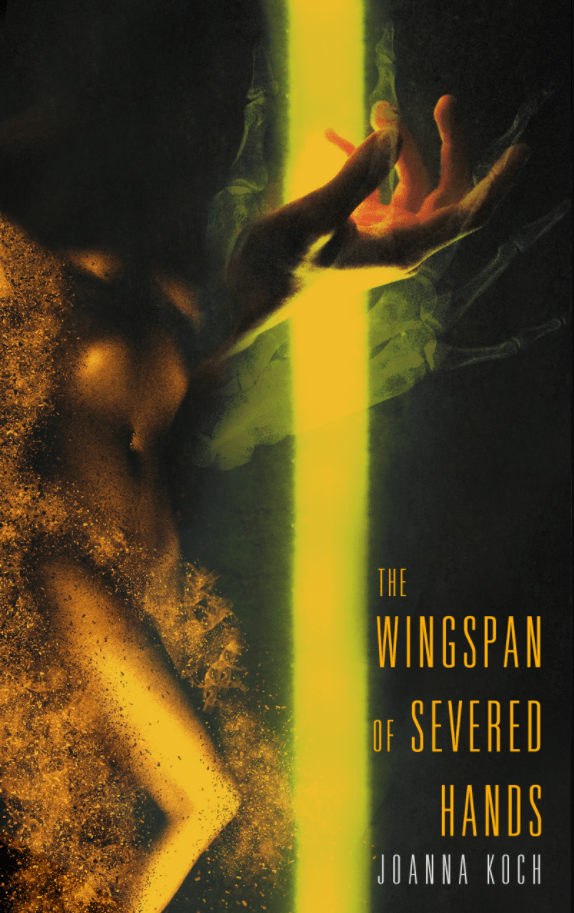
I tend to value style most highly in works of fiction. Of course, I enjoy the pleasure of sinking into a well-constructed plot as much as anyone, but for me, voice and perspective are most important of all. It is no surprise, then, that I am quite taken with Joanna Koch’s novella The Wingspan of Severed Hands, whose deliberately obstructive narrative strategies are delivered through such stunning, distinctive prose.
The story tracks Adira, a young woman who fights against misogynistic familial and social structures that aim to lay violent claim to her body. Simultaneously, it depicts Bennet, the weapons director of a secret research facility who constructs a sentient, neuro-cognitive device that develops her own disorienting self-awareness. As the novel progresses, these three characters (Adira, Bennet, and the weapon) discover a common, quasi-cosmic enemy.
This is a slippery book, whose hallucinatory sequences leak between different character POVs with stunning abandon. Koch, who has an MA in Contemplative Psychotherapy, applies Cronenberg-esque body horror to transferences of consciousness and selfhood. Much like Cronenberg, Koch intertwines institutional corruption and scientific inquiry with vivid, hyper-visceral depictions of bodily destruction and transformation. Although the novel’s climax swerves into trippy, consciousness-hopping dreamscapes, Koch seems more interested in the intimate interiority of trauma than they are in “cosmic horror” conventions.
The result is an impressive achievement, massive in scope and narrative ambition, but insular in thematic focus. Koch applies elements of experimental speculative fiction to both body and cosmic horror, placing their primary emphasis on the formidable (but ultimately beatable) power of trauma. Although the book goes to nasty places, it does not submit completely to its darkness, and I respect it for that.
Koch is a stunningly original talent, and I enthusiastically recommend this novella.

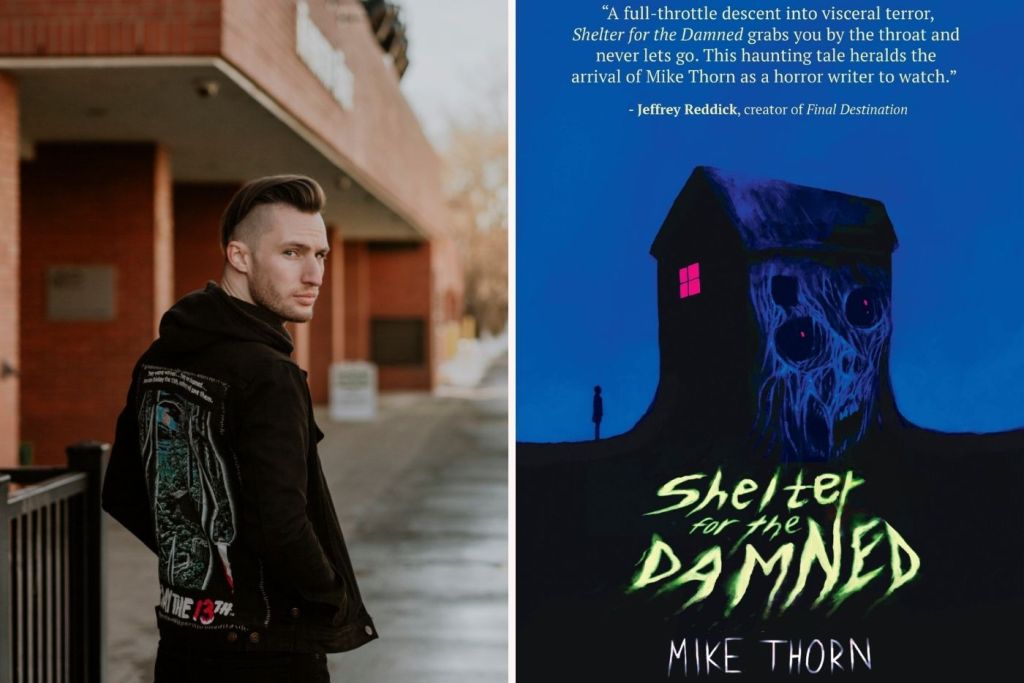
For many fans of fiction writing, the horror genre is exciting, tense and leaves uncomfortable impressions regarding characters set in everyday life. For Calgary-based author Mike Thorn, the uncomfortable nature of the horror genre is what inspired him and his debut novel Shelter for the Damned.


“A gifted horror writer weds the realities of real world terror to the realities of supernatural terror….which is what Mike Thorn does exceptionally well.”


“To sum up my thoughts on this book in one word, I’m IMPRESSED. […] Though the premise and setting aren’t particularly abnormal, the author digs deep into the psyche of the main character and warps everything into a maddening descent from ordinary suburban life to a truly horrifying nightmare.”
Read the full review.

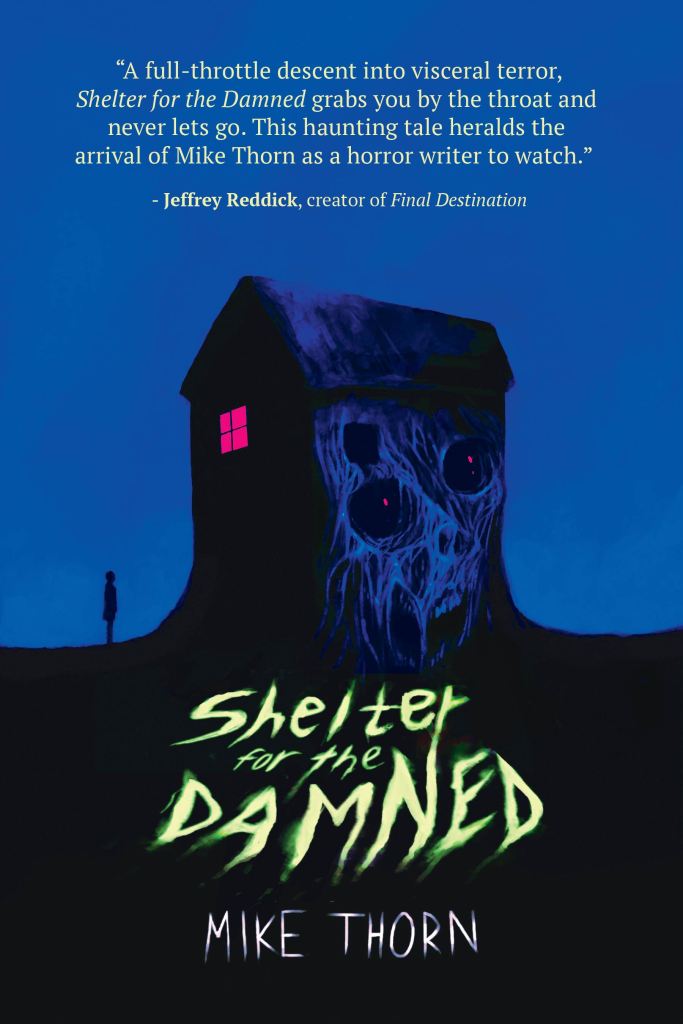
“What Thorn explores to great effect […] is what you don’t see when walking those streets at night. Malice lurking behind practiced smiles. Violence hidden behind manicured lawns.”


