
‘Common as Light and Love Are Red Valleys of Blood’: Some Thoughts from a Mark Kozelek Fan

Unknown's avatarVague Visages (Vawg-Vee-Sawj)

sun-kil-moon-common-as-light-and-love-are-red-valleys-of-blood

Excluding Jesu/Sun Kil Moon (2016), Common as Light and Love Are Red Valleys of Blood is Sun Kil Moon’s eighth studio album. When it comes to singer-songwriter Mark Kozelek’s extraordinarily prolific output, much of the recent critical discourse has been unfortunately truncated. Many reviews discuss this musician’s career as if it began in 2014 with the popularly lauded Sun Kil Moon record Benji. As a long-time fan and grossly inexperienced music critic, I intend in my own way to discuss this sprawling, ambitious and ferocious new record within the context of his whole oeuvre. Indeed, when reviewing a recent Kozelek record, it’s difficult to avoid my impulse for personal and anecdotal disclosure. When I was in my late teens, a friend gave me a copy of Down Colorful Hill, the 1992 debut record by Kozelek’s first band, Red House Painters. I was immediately taken by the album’s distinct…

View original post 1,016 more words

Looking Back and Forward: Mike Thorn and A.M. Novak on the ‘Halloween’ Franchise

Unknown's avatarVague Visages (Vawg-Vee-Sawj)

halloween-the-curse-of-michael-myers-one

In 2017, the Halloween franchise remains relevant for a number of reasons. This October, Rob Zombie’s divisive remake turns 10 years old, and David Gordon Green was recently announced as the director of a reboot to be produced by Jason Blum and the original mastermind himself, John Carpenter. With this news in mind, horror enthusiasts Mike Thorn and A.M. (Anya) Novak decided to have a talk about the previous entries in the series.

Mike: Anya, I’m really intrigued by your appreciation of Halloween: The Curse of Michael Myers (1995). That’s a film that I didn’t connect with on a first viewing, but found strangely fascinating on a second watch. Could you say a little more about this commonly dismissed sequel?

Anya: I get a lot of flack for enjoying this film, but I don’t care. For me, it’s a fun departure from the usual Myers narrative. I found the Cult…

View original post 2,019 more words

‘Diary of the Dead’ and George A. Romero’s Formal Self-Awareness

diary-of-the-dead

Enter 2007’s Diary of the Dead, a film as deeply political as its predecessors, but characterized by a uniquely pronounced formal self-awareness. After Land saw major studio development under the banner of Universal Pictures, Diary finds Romero reevaluating the kind of micro-budget conditions that produced Night of the Living Dead. It calls attention to the sensibilities that have overwhelmingly haunted mainstream horror since the release of two genre-shaking titles in the late 1990s: Wes Craven’s Scream and Daniel Myrick and Eduardo Sánchez’s The Blair Witch Project. Romero taps into the postmodern auto-critique of the former, and the subjective “found footage” aesthetic of the latter.

Read my full Film Stage debut, “Diary of the Dead and George A. Romero’s Formal Self-Awareness” here.

The Many Peculiar Virtues of Wes Craven’s ‘My Soul to Take’

Unknown's avatarVague Visages (Vawg-Vee-Sawj)

My Soul to Take movie image

Wes Craven’s decades-long career is often correlated with a trifecta of tent-pole achievements. First came The Last House on the Left (1972), a customarily described “exploitation” film inspired by Ingmar Bergman’s The Virgin Spring (1960). Next, Craven revolutionized the horror genre with his surrealist slasher A Nightmare on Elm Street (1984), a tonally adventurous work that evokes the likes of Luis Buñuel and Jean Cocteau. Finally, the director upended conventions with the postmodern Scream (1996), whose credit is owed in no small part to Kevin Williamson’s extraordinarily reflexive and meta-cinematic script. Some might also attribute The Hills Have Eyes (1977) with the status of “classic” genre fare, although it owes a large part of its style and sensibility to Tobe Hooper’s masterful The Texas Chain Saw Massacre (1974).

This characterizing of Craven’s career is problematic, not because it’s “untrue,” but because it’s woefully incomplete. Out of the three films listed above…

View original post 1,342 more words

Moments of Revelation in Martin Scorsese’s ‘Silence’ and ‘Shutter Island’

More thoughts on Martin Scorsese for Vague Visages.

Unknown's avatarVague Visages (Vawg-Vee-Sawj)

Silence-Andrew-Garfield

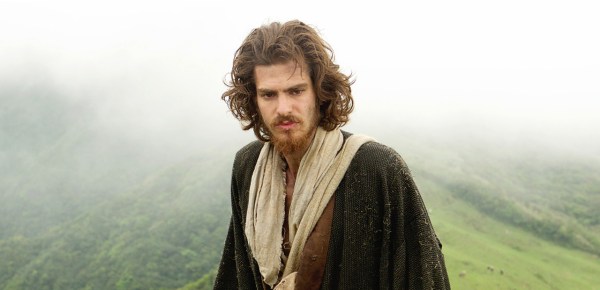
Assessed on its own terms, Martin Scorsese’s Silence is a daunting piece. Released after about 25 years of staggered development, it might reasonably be considered the most “definitive” title in its director’s oeuvre. That is, seeing as it incorporates so many of the auteur’s career-long questions regarding Christianity, violence and self, the film plays like a cumulative statement. Indeed, it’s worth contextualizing its lofty philosophical and formal concepts alongside previous Scorsese films. There are a number of ways to approach this strategy. In “Holy Men, Holy Losers: Scorsese, Silence and the Mystery of Faith,” Bilge Ebiri has already written insightfully on the movie’s connections to its auteur’s most openly faith-based works, The Last Temptation of Christ (1988) and Kundun (1997); additionally, Scorsese himself has alluded in interviews to its connections with Bringing Out the Dead (1999). These points of reference are key, and it is also worth reflecting on Silence both…

View original post 1,211 more words

Genre Trauma in M. Night Shyamalan’s Split

Split explores possibilities inherent to the narrative design of ‘psychological horror,’ studying the ways in which that genre’s patterns offer insights into human behavior. In doing so, the film also undoes assumptions about ‘normal’ versus ‘abnormal’ psychology, devoting much of its runtime to an assessment of what makes one ‘different,’ and how society’s practices of marginalization cause immense damage.”

Read the full review in MUBI Notebook.

What I Learned from Martin Scorsese’s ‘Life Lessons’

My third in a trio of Martin Scorsese pieces for VAGUE VISAGES.

Unknown's avatarVague Visages (Vawg-Vee-Sawj)

life-lessons-martin-scorsese-one

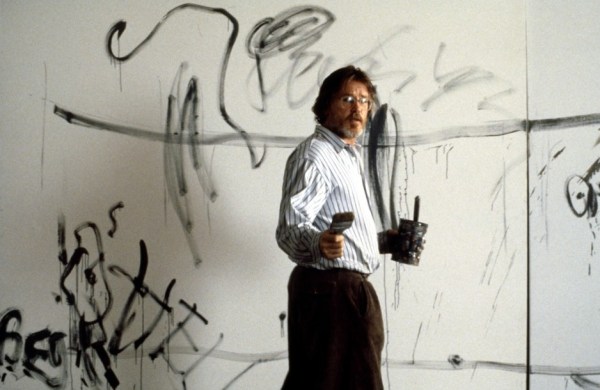
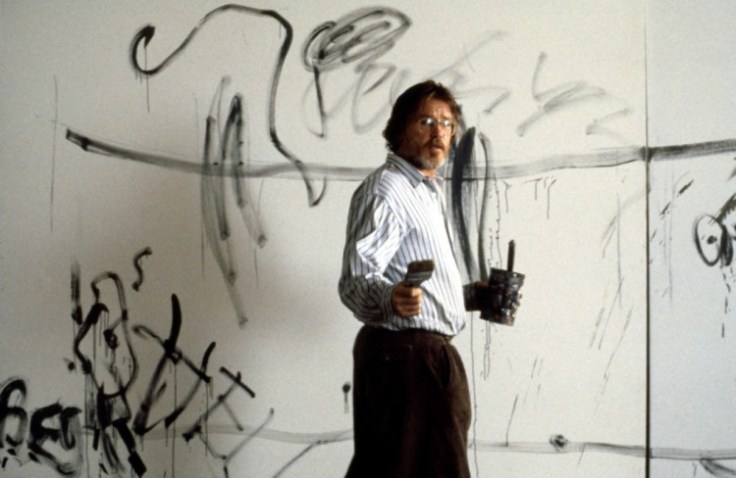
Two years before Martin Scorsese cast Nick Nolte as the protagonist of his ambitious Cape Fear remake, he chose the actor for the leading role in Life Lessons (the director’s 40-minute contribution to the 1989 anthology film New York Stories). The first in a trio of featurettes rounded out by Francis Ford Coppola’s Life without Zoe and Woody Allen’s Oedipus Wrecks, Life Lessons finds within Nolte the capacity for reinterpreting a stock character. Scorsese would later challenge the actor to apply a similar process of reinvention in Cape Fear (1991), which the director reportedly wrote off initially in a conversation with his friend Steven Spielberg. At first, Scorsese claimed that he couldn’t expand on the Manichean morality of the 1962 original. Upon Spielberg’s argument that Scorsese could easily shape the project to satisfy his own vision, however, the director reinterpreted Cape Fear’s straightforward ethics, and called Nolte to drastically…

View original post 854 more words

Toxic Masculinity and Empathetic Comedy: Martin Scorsese’s ‘Alice Doesn’t Live Here Anymore’

Unknown's avatarVague Visages (Vawg-Vee-Sawj)

alice-doesnt-live-here-anymore-two

While revisiting Alice Doesn’t Live Here Anymore for the first time in over 10 years, I was struck by two realizations. First, it suddenly dawned on me that throughout his career, Martin Scorsese has most consistently been a director of character-oriented drama. While this might seem a rather obvious observation to some, it is easy to see Scorsese first as a cinema historian who makes cinema about itself, or as a versatile director of genre pictures. While these latter two attributes do inform his work, I’ve noticed with a recent slew of retrospective viewings that the auteur concerns himself always with the study of character above else. The second realization I had was that while Scorsese’s filmography has repeatedly returned to the subject of violent masculinity, Alice Doesn’t Live Here Anymore is the first and last film in which he has approached the subject primarily from a woman’s perspective. Indeed…

View original post 1,001 more words

The Way of the Future: The Connections Between Martin Scorsese’s ‘Raging Bull’ and ‘The Aviator’

Read my newest film article in Vague Visages:

Unknown's avatarVague Visages (Vawg-Vee-Sawj)

the-aviator-movie-four

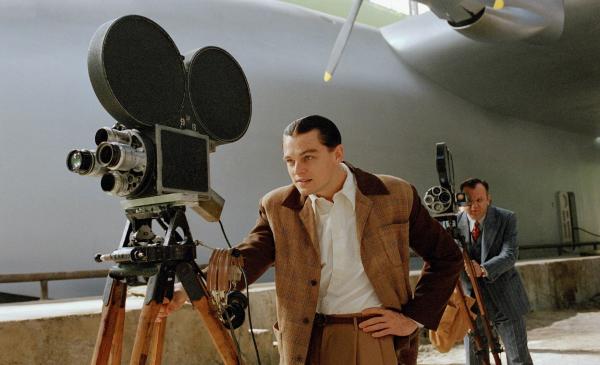
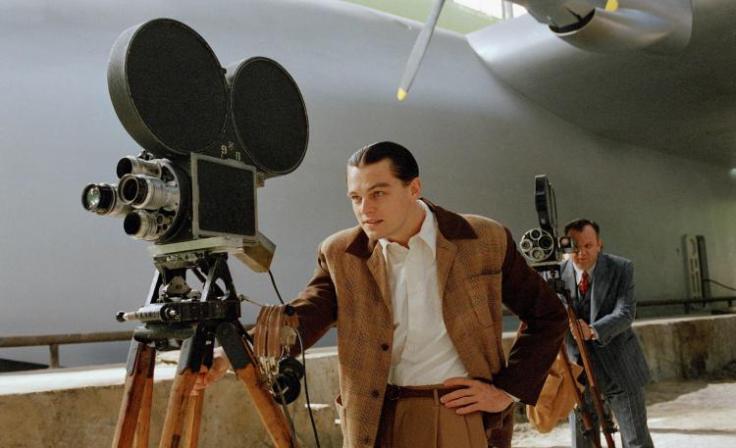
Martin Scorsese’s latest film Silence reportedly continues the thematic thread of faith that began with The Last Temptation of Christ (1988) and continued with Kundun (1997). Looking back at the auteur’s career (now nearly half a century long), it’s easy to identify a number of recurring fixations and impulses. The director has always shown expertise at representing subject experience through form (from the unharnessed camera movement and woozy voice-over of Mean Streets [1973] to the hyper-discordant editing of The Wolf of Wall Street [2013]). Scorsese rarely employs a shot or a cut simply for the purpose of documentation or function, focusing much more instead on the connection between technique and subject. That the director’s technique so often draws in a tapestry of endless music cues (e.g. GoodFellas [1990] and Casino [1995]) or period details (e.g. The Age of Innocence [1993] and Gangs of New York [2002]) speaks to the ways in…

View original post 1,360 more words

James Benning’s ‘Stemple Pass’: Minimalist Horror for Trump’s America

Unknown's avatarVague Visages (Vawg-Vee-Sawj)

stemple-pass-one

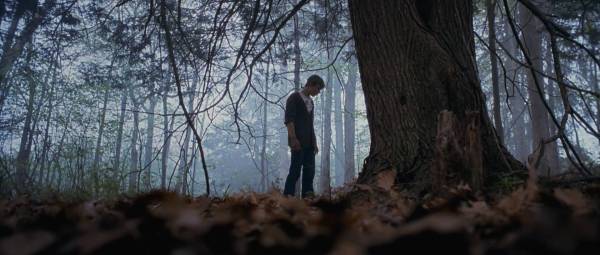
Although President Elect Donald Trump has not yet been sworn into office, the term “Trump’s America” has already become a usual suspect in film criticism. Indeed, it’s difficult to avoid reflecting on this seismic political event when viewing contemporary American films. Recently, I’ve found myself thinking back to James Benning’s Stemple Pass, an experimental film released in 2012 (incidentally, midway through Barack Obama’s eight-year presidency). Benning’s film deals with distinctly American subject matter, and those sociopolitical fixations warrant close analysis. Those fixations include the obsessive lust for “returning to the past,” an intensifying fear of the outsider and the tenuous connection between the human and the nonhuman (this last topic underpins issues like factory farming and capital expansion at the cost of environmental damage).

I caution against referring to Stemple Pass simply as a work of “non-narrative” cinema, because its progression is so rigorously and specifically designed. The film…

View original post 642 more words

Create a website or blog at WordPress.com

Up ↑